

Many Shopify store owners invest time in social media posts, paid ads, and audience engagement, yet still see flat sales. The problem is rarely effort. It is usually a handful of repeatable mistakes in Shopify social media marketing that quietly break the connection between traffic and revenue.
Fixing those mistakes matters most when the full funnel works together, from the first social touchpoint to the product page where the sale is won or lost. Shopify Marketing Automation can close much of that gap, but even well-targeted traffic can be lost to a weak landing page. Store owners who want to stop that leak can build faster, higher-converting product pages with an AI page builder.
Table of Contents
Why Most Shopify Social Media Marketing Fails
What Successful Shopify Social Media Marketing Looks Like
9 Shopify Social Media Marketing Mistakes That Kill Sales
Why Speed Has Become a Competitive Advantage
How Better Product Pages Improve Social Media Performance
PagePilot Helps Shopify Stores Test and Scale Faster.
Start a FREE Trial and Generate 3 Product Pages with Our AI Page Builder today
Summary
- Social media engagement metrics frequently mislead Shopify merchants into thinking their marketing is working. Impressions, follower counts, and likes have no direct relationship to revenue, and stores that optimize for visibility rather than conversion stay busy while sales remain flat. A campaign generating fewer clicks but more purchases is objectively more valuable than one that looks impressive on a dashboard.
- The structural failure in most Shopify social media strategies occurs after the click, not before. A well-targeted ad can earn attention and drive traffic, but if the product page uses supplier copy, stock images, and no clear offer, the purchase intent the ad created disappears within seconds. According to Branvas, 95% of new Shopify stores fail, and a weak post-click experience is one of the most consistent reasons behind that number.
- Platform context shapes how content is received before a single word is read. TikTok rewards raw, creator-style authenticity, Instagram rewards visual cohesion, and Facebook rewards direct-response clarity with a defined offer. Posting identical creative across all three does not save time efficiently. It underperforms on all three simultaneously, and platform algorithms actively deprioritize content that feels out of place, meaning you pay more to reach fewer people with a message that resonates less.
- Original visual content is one of the most overlooked conversion levers in social commerce. According to Wyzowl's 2023 video marketing research, 73% of consumers are more likely to buy after watching a product video on social media. Merchants using the same supplier catalog images as dozens of competing stores signal interchangeability rather than trust, which pushes buyers toward price comparisons rather than purchases.
- Speed of execution has become a genuine competitive advantage in social commerce, not just an operational preference. A trending product can move from discovery to full market saturation in under a month, and merchants who spend days manually building product pages before running a single test consistently arrive late. The stores collecting the most data points fastest find winning products sooner, scale them harder, and exit losing tests before budget damage compounds.
- Cart abandonment sits at nearly 70% across ecommerce, according to the Baymard Institute's 2023 research, which means most stores are already losing most interested buyers somewhere between the product page and checkout. Scaling ad spend into a funnel with that level of leakage does not solve the problem. It scales the loss. The merchants who grow profitably fix conversion rate problems first, then increase spend once the funnel proves it can convert at a viable rate.
- PagePilot's AI page builder addresses the post-click gap directly by letting merchants generate brand-matched, conversion-focused product pages in minutes, so the page social traffic lands on continues the same message, tone, and promise the ad already established.
Why Most Shopify Social Media Marketing Fails
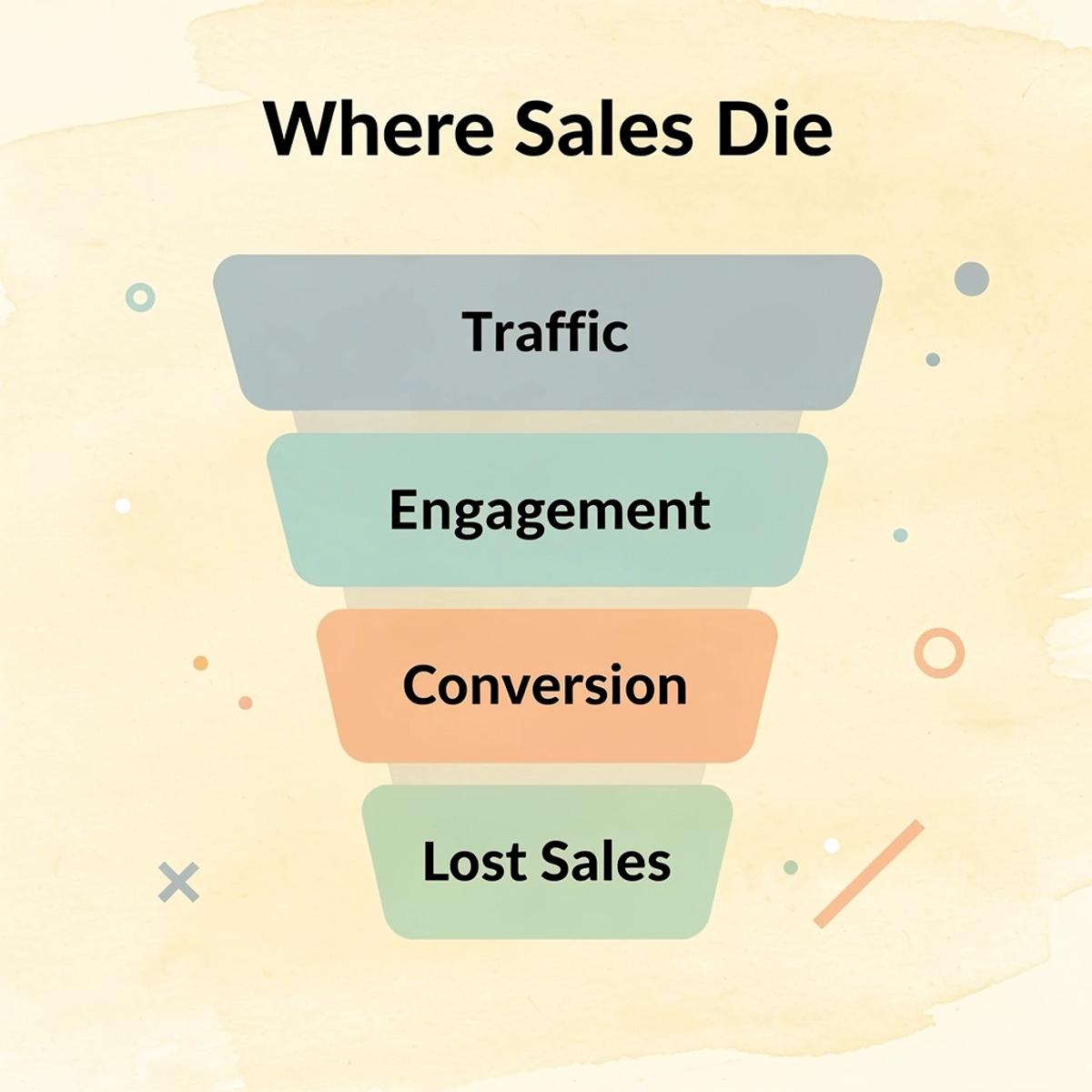
Social media marketing fails most Shopify stores, not because ads or content are weak, but because the funnel breaks after the click. Visitors arrive, the page loads, and then nothing happens. Healthy engagement numbers never become revenue.
"The real failure isn't getting traffic — it's what happens after the click that kills conversions and wastes every dollar spent on social." — Core Principle of Funnel Optimization
⚠️ Warning: If your social media metrics look healthy but your sales are flat, the problem isn't your content — it's your post-click experience.
🎯 Key Point: Engagement numbers and revenue are not the same metric. A store can have thousands of clicks and zero conversions if the funnel is broken at the landing page level.
Content
Where Most Stores Think They Fail
- Weak ads or posts
Where They Actually Fail
- Rarely the real issue
Traffic
Where Most Stores Think They Fail
- Not enough clicks
Where They Actually Fail
- Usually sufficient
Post-Click
Where Most Stores Think They Fail
- Often ignored
Where They Actually Fail
- The #1 conversion killer
Revenue
Where Most Stores Think They Fail
- Blamed on social media
Where They Actually Fail

- Caused by a broken funnel
What happens when the post-click experience breaks the sale?
A store runs a well-targeted Instagram campaign, creative performs, click-through rates look encouraging—then the product page loses the sale. The page loads slowly, copy feels generic, images look supplier-sourced, and the offer lacks urgency. A visitor with real purchase intent leaves in under two minutes. According to Craftberry, 90% of Shopify stores fail within the first few months, and a weak post-click experience is one of the most consistent reasons. Traffic without conversion infrastructure is not a marketing strategy; it is an expensive experiment with a predictable outcome.
The failure point is structural, not creative. Merchants treat social media as the destination when it is the entrance. The ad gets someone to the door; the product page, offer, brand experience, and copy close the sale. When misaligned or underdeveloped, no ad spend fixes the problem. Scaling budget into a weak funnel only confirms the funnel is broken.
Why does optimizing ads fail to solve the real problem?
Most merchants respond to slow sales by changing their target audience, testing new ads, or switching platforms. These address the wrong problem. The issue is rarely where traffic comes from—it's what traffic encounters after the click. A store converting 3% of 5,000 monthly visitors generates three times the revenue of a store converting 1% of the same traffic, without additional ad spend.
The familiar approach is to build product pages once, launch campaigns, and optimize ads when results disappoint. But as traffic sources diversify across Instagram, TikTok, and Facebook, each audience arrives with different expectations and product awareness. A single static product page cannot speak to all effectively. Tools like the AI page builder let merchants build brand-matched, high-converting product pages in minutes so the post-click experience aligns with campaigns. Misalignment between ad and landing page costs customers who may never return.
What separates the stores that survive from those that fail?
Branvas reports that 95% of new Shopify stores fail. Surviving stores treat social media as the first step in a system, not the entire system. Every platform, ad, and post derives value from the customer experience that follows the click.
But knowing the funnel is broken is only half the problem. The harder question is what a working funnel looks like in practice.
What Successful Shopify Social Media Marketing Looks Like
Successful Shopify social media marketing is a system, not just one channel. Top-converting stores treat every platform touchpoint as a step in a sequence, in which content, messaging, and product pages work together rather than independently.
"The most effective Shopify stores don't treat social media as a standalone tactic — they build a connected system where every touchpoint moves the customer closer to conversion." — Shopify Commerce Trends
💡 Tip: Think of your social media strategy as a funnel, not a feed — every post, story, and ad should serve a specific role in the customer journey.
Content
Role in the Sequence
- Attracts and educates your audience
Messaging
Role in the Sequence
- Builds trust and drives intent
Product Pages
Role in the Sequence
- Converts interest into purchases
🎯 Key Point: The difference between stores that struggle and stores that scale is whether their social media works as a unified system — not a collection of disconnected posts.

How intent shapes the entire funnel
The failure point is usually a mismatch between what the content promises and what the customer experiences after the click. A TikTok video that hooks someone with a relatable problem needs to land on a page that addresses that same problem, not a generic product catalog. Awareness-stage content earns attention. Consideration-stage content builds the case. Purchase-stage content removes the last reason to hesitate. When each piece serves its specific role in the buying journey, engagement becomes a revenue signal.
Why does platform strategy determine what content actually converts?
Platform strategy matters significantly. According to the Shopify Enterprise Blog, 76% of consumers have bought a product they saw in a brand's social media post. Creator-style content builds trust on TikTok. Strong visual storytelling drives engagement on Instagram. Direct-response creative with social proof closes sales on Facebook. Posting identical content across all channels undermines performance.
Where most product pages break the chain
The most overlooked conversion lever in social media marketing is the product page itself. High-performing stores treat it as the final chapter of a sales conversation that started in a social feed, featuring benefit-driven copy, visual proof, objection handling, and a clear call to action aligned with the specific hook that drove the click. Message consistency from ad to landing page is essential for conversion.
Why can't a single product page serve every campaign?
Most merchants build product pages once and run traffic to them indefinitely. The hidden cost is that a single page cannot serve every audience, angle, or campaign without friction. Tools like PagePilot's AI page builder address this directly, letting merchants build brand-matched, conversion-focused landing pages in minutes so the page experience matches the speed of the campaigns driving traffic to them.
What separates top-tier conversion rates from average ones?
Brenton Way reports that Shopify merchants using social media marketing see up to 80% of their traffic driven through social channels, making the product page the funnel itself. Stores closing the gap between average and top-tier conversion rates aren't those with the largest ad budgets; they're the ones testing new angles, audiences, and page experiences faster than competitors.
Knowing what a working system looks like is only half the equation. The specific mistakes quietly dismantling it are harder to see until they cost real money.
Related Reading
- Shopify Marketing Automation
- How To Set Up Email Marketing On Shopify
- Shopify Email Marketing Vs Klaviyo
- How To Advertise a Shopify Store
- Shopify Social Media Marketing
- Seo Marketing Shopify
9 Shopify Social Media Marketing Mistakes That Kill Sales
Most Shopify stores don't have a traffic problem — they have a conversion problem that comes from nine specific, repeatable mistakes that silently drain every campaign before it has a chance to succeed.
"The difference between a store that scales and one that stalls isn't traffic volume — it's the repeatable mistakes baked into every campaign." — Shopify Marketing Insight
🚨 Warning: If your social media ads are bringing visitors but not sales, you're almost certainly committing at least one of these nine mistakes — and the fix starts with knowing which one.
💡 Tip: Before launching your next campaign, audit your current strategy against these nine failure points to stop bleeding budget and start driving real conversions.
Wrong Audience Targeting
Impact on Sales
- High — wasted spend
Fix Priority
- 🔴 Immediate
Inconsistent Posting
Impact on Sales
- Medium — lost momentum
Fix Priority
- 🟡 Short-term
No Clear CTA
Impact on Sales
- High — zero conversions
Fix Priority
- 🔴 Immediate
Ignoring Analytics
Impact on Sales
- Medium — blind scaling
Fix Priority
- 🟡 Short-term
Poor Creative Quality
Impact on Sales
- High — low engagement
Fix Priority
- 🔴 Immediate
No Retargeting Strategy
Impact on Sales
- High — lost warm leads
Fix Priority
- 🔴 Immediate
Platform Mismatch
Impact on Sales
- Medium — wrong audience
Fix Priority
- 🟡 Short-term
Skipping Social Proof
Impact on Sales
- Medium — low trust
Fix Priority
- 🟠 Mid-term
Ignoring DMs/Comments
Impact on Sales
- Low-Medium — poor retention
Fix Priority
- 🟠 Mid-term
Mistake #1: Chasing Metrics That Cannot Pay Your Bills
The failure point is usually measurement. Merchants celebrate impressions, follower growth, and engagement rates while revenue stays flat. A campaign generating 3,000 visitors and 100 sales is objectively more valuable than one generating 10,000 visitors and 50 sales, yet most dashboards reward the second because the numbers look bigger. Optimizing for visibility rather than profitability keeps stores busy while incurring losses.
Mistake #2: Sending Paid Traffic to Generic Product Pages
Social media content creates a specific emotional state in the viewer. When that viewer clicks and lands on a page built from a supplier description and stock photo grid, that emotional state collapses immediately. The ad made a promise. The page ignored it. That gap is where conversions die, and no amount of retargeting budget recovers what a weak landing page destroys at first contact.
Why should the product page be ready before the first ad goes live?
Most merchants launch ads first and fix pages later, treating the product page as secondary. Every dollar spent driving traffic to an unoptimized page teaches visitors to buy from competitors instead. Tools like AI page builders let merchants build on-brand product pages focused on conversions in minutes, so the page is ready before the first ad goes live.
Mistake #3: Using the Same Images as Every Competing Store
Merchants often start with supplier catalog images that dozens of competing stores use simultaneously. Consumers recognize those images, and recognition doesn't build trust—it signals that products are interchangeable. When your product looks identical to three competing ads in the same feed, buyers default to price, a race you don't want to win.
According to Wyzowl's 2023 video marketing research, 73% of consumers are more likely to buy after watching a product video on social media. Original visual content is the primary trust signal that separates converting stores from those that get scrolled past.
Mistake #4: Describing Products Instead of Solving Problems
Customers buy the version of themselves that owns the product. A posture corrector is not plastic; it is confidence in a meeting, relief after a long shift, or a back that stops aching by noon. When copy leads with specifications instead of the problem being solved, visitors must connect the product to their lives themselves. Most will not.
Weak positioning makes paid social less efficient at every level. Lower click-through rates increase your cost per click, while lower conversion rates increase your cost per acquisition. This compounds across every dollar you spend.
Mistake #5: Recycling Identical Content Across Every Platform
Where you post changes how people receive your message before they even read it. TikTok rewards content that feels authentic and creator-made. Instagram rewards posts that look cohesive and aspirational. Facebook rewards direct-response clarity with a clear offer. Posting identical creative across all three platforms underperforms on each.
Platform algorithms reward behavior that fits the platform. Content that feels out of place receives reduced distribution, meaning you pay more to reach fewer people with a message that connects less.
Mistake #6: Testing One Angle and Calling It Research
A product can fail under one positioning angle and thrive under another. The same item marketed around pain relief attracts a different buyer than one marketed around performance or aesthetics. Abandoning a product after testing one creative concept is not market validation; it's a sample size of one.
The stores that find winning products fastest run three to five distinct creative angles simultaneously, read the data, and focus on what the market responds to.
Mistake #7: Building Pages While the Trend Is Already Moving
Social commerce moves at a speed that punishes slow execution. A product with genuine trend momentum in week one may be saturated by week three. Merchants who spend a week building a product page before running a single test incur unnecessary costs in a category where speed is critical.
The speed of validation matters as much as the quality of execution. The goal in early testing is a fast, credible page that proves whether demand exists before you invest in optimization.
Mistake #8: Creating Friction Between the Ad and the Landing Page
A customer clicks because of a specific promise. When the landing page emphasizes something different, doubt sets in immediately. The ad highlighted convenience; the page leads with technical specifications. The ad addressed a specific pain point; the page barely mentions it. That mismatch is a trust problem, and trust lost in the first three seconds almost never recovers.
Consistent narrative from ad to page means maintaining the same emotional register, problem framing, and implied promise throughout the entire path from impression to checkout.
Mistake #9: Scaling Ad Spend Before Proving the Funnel Works
According to the Baymard Institute's 2023 research, the average cart abandonment rate across ecommerce sits at nearly 70%. Increasing ad spend into a funnel with such significant loss exacerbates the problem rather than solving it.
Merchants who grow their business profitably fix conversion rate problems first: improving the offer, page experience, and checkout flow until the funnel converts at a viable rate. Then they increase spending, since more traffic generates more revenue.
The Pattern Hiding Inside All Nine Mistakes
Looking at these nine mistakes, almost none are advertising problems. The ad got the click. What broke down was everything after: the page, copy, visuals, and message consistency.
This pattern matters because it changes where you focus. The merchants closing the gap between average and exceptional have better targeting or bigger budgets: they treat the after-click experience with the same urgency and precision as the ad itself.
What separates stores that fix these mistakes quickly from those that stay stuck is something most people underestimate.
Related Reading
- Shopify Marketing Strategies
- Best Shopify Marketing Apps
- Best Marketing Tools For Shopify
- Best Shopify Marketing Agency
- Best Shopify Email Marketing Apps
Why Speed Has Become a Competitive Advantage
Speed is the real advantage in modern ecommerce. The stores pulling ahead are not the ones with the most refined product research process. They are the ones moving from idea to live test before their competitors have finished writing a brief.
"The stores pulling ahead are not the ones with the most refined product research process: they are the ones moving from idea to live test before competitors have finished writing a brief."
🎯 Key Point: In modern ecommerce, execution velocity is the competitive moat, not superior research or better instincts.

The math is straightforward. A merchant testing 30 products per month does not need a higher win rate than one testing 10 products per month. They simply need to collect more data points faster. That gap in test volume adds up over time, and the store running more experiments consistently finds winners sooner, scales them harder, and stops losing tests before the budget damage becomes serious.
Monthly Tests
Low-Volume Tester (10/mo)
- 10
High-Volume Tester (30/mo)
- 30
Data Points Collected
Low-Volume Tester (10/mo)
- Low
High-Volume Tester (30/mo)
- 3x Higher
Time to First Winner
Low-Volume Tester (10/mo)
- Slower
High-Volume Tester (30/mo)
- Significantly Faster
Budget Risk Per Cycle
Low-Volume Tester (10/mo)
- Higher per insight
High-Volume Tester (30/mo)
- Lower per insight
🔑 Takeaway: A 3x increase in testing volume doesn't require a 3x better win rate — it compounds over time, surfacing winners faster and cutting losses earlier.
⚠️ Warning: Optimizing your research process while your competitors are already running live tests is one of the most common — and costly — mistakes in ecommerce growth.
How does social commerce raise the pressure on testing speed?
Social commerce accelerates this pressure. A product can trend on TikTok and Instagram Reels within 48 hours, attract competitors within a week, and reach saturation within a month. Merchants who spend three days manually building a product page before launching traffic fall behind. According to LinkedIn Pulse contributor Len Jessup, speed is a strategic advantage, and in social media marketing, that advantage becomes concrete and measurable.
The familiar approach of building every product page carefully before running a single ad feels responsible but quietly costs days per test and compresses the number of opportunities any store can evaluate. Tools like the AI page builder from PagePilot address this bottleneck, letting merchants publish brand-matched product pages in minutes rather than days, so the gap between spotting a trend and collecting real conversion data shrinks from 72 hours to almost nothing.
Why does the speed advantage compound beyond the first test?
The speed advantage strengthens further when considering creative fatigue. Even high-performing ads have finite lifespans. Merchants who maintain profitable campaigns aren't those who found one great creative—they're those who continuously refresh hooks, angles, and offers fast enough to sustain performance. TriNet's research on small-business competitiveness notes that speed of execution has become a defining advantage that separates growing businesses from stagnant ones.
Sellers who have watched competitors copy a winning offer within weeks understand this instinctively. The first mover advantage in ecommerce is real but short-lived. The more durable edge belongs to the merchant who can test the next product, angle, and audience segment before the current one gets crowded. Speed is not the absence of strategy; it is strategy applied at the pace the market moves.
Moving fast only creates an advantage if what you launch converts when social traffic arrives.
How Better Product Pages Improve Social Media Performance
Better product pages close the conversion gap between click and sale by continuing the story your ad started. They decide whether social media marketing works at all — making them the single most critical factor in turning social traffic into real revenue.
"Better product pages close the conversion gap between click and sale — deciding whether social media marketing works at all." — Core Insight
🎯 Key Point: Your social media ads are only as powerful as the product page they lead to. A weak landing experience wastes every dollar spent on social campaigns.
🔑 Takeaway: The conversion gap is where social media ROI is won or lost. Investing in better product pages isn't optional — it's essential to making your entire marketing funnel perform.
Compelling Product Copy
Impact on Social Performance
- Continues the ad story, reduces bounce
High-Quality Images/Video
Impact on Social Performance
- Matches social creative, builds trust
Clear Call-to-Action
Impact on Social Performance
- Converts social traffic into buyers
Fast Page Load Speed
Impact on Social Performance

- Prevents drop-off from mobile users
Why does ad traffic lose momentum after the click?
Most merchants build ad creatives carefully, then send traffic to a generic page assembled from supplier copy and stock images. The emotional momentum from a well-crafted TikTok or Instagram ad evaporates on arrival. An AI page builder like PagePilot closes that gap by generating brand-matched pages in minutes, allowing visitors to experience a natural continuation of the ad rather than a detour into a catalog.
How does a stronger landing page make every ad dollar work harder?
Every dollar spent on social ads works harder when the landing page converts at 4% instead of 1%. That improvement requires no additional ad spend: just a stronger post-click experience built around the same message, tone, and promise your creative has already established.
PagePilot Helps Shopify Stores Test and Scale Faster.
Most Shopify stores don't lack visitors—they struggle to test, validate, and improve fast enough. Social media trends shift rapidly, winning creatives fatigue, and competitors copy successful products. Every day spent building pages by hand is a day not spent collecting data. Speed has become a valuable advantage in modern ecommerce.
"Every day spent building pages by hand is a day not spent collecting data. In ecommerce, data is the difference between scaling and stalling."
⚠️ Warning: If your team is manually building product pages, you're falling behind competitors who launch, test, and iterate in a fraction of the time.
PagePilot was built to help Shopify merchants move faster. Instead of spending hours creating product pages from scratch, merchants can generate pages focused on driving sales quickly, launch tests sooner, and make better decisions based on real performance data.
💡 Tip: The fastest-growing Shopify stores treat every product page as a live experiment — the sooner you launch, the sooner you collect the data that drives real growth.
🎯 Key Point: PagePilot removes the bottleneck between idea and execution, giving merchants the speed advantage needed to stay ahead in a fast-moving market.
Traditional Page Building
- Hours spent on manual setup
- Delayed testing cycles
- Decisions based on guesswork
- Competitors copy before you scale
With PagePilot
- Pages generated in minutes
- Launch tests sooner
- Data-driven performance insights
- Move faster than the competitionHow does PagePilot remove the biggest bottleneck in ecommerce testing?
One of the biggest bottlenecks in ecommerce testing is page creation. Before a product can be approved, merchants typically need to research competitors, write descriptions, create headlines, structure the page, build sections manually, and format the design—a process that can take hours or days. PagePilot dramatically reduces that workload. Simply provide a competitor or supplier URL, and the AI Page Builder generates a complete product page using the information available on that website.
When dozens of stores use the same product photos, products become difficult to distinguish, and customers encounter identical images across multiple websites, eroding trust. PagePilot's AI Product Image functionality helps merchants upgrade product visuals and compete with unique assets rather than supplier defaults, creating stronger differentiation while maintaining consistency between social media creatives and product pages.
How does faster page creation allow merchants to test more products?
Successful ecommerce businesses find winning products by testing them, not by making perfect predictions. Creating pages slowly limits testing volume: if it takes hours to create a page, store owners can test only a limited number of products each month. PagePilot generates pages quickly, enabling merchants to test more products, collect more data, and find winners faster.
Many Shopify stores rely too heavily on supplier descriptions, resulting in generic messaging, weak differentiation, and limited emotional appeal. PagePilot helps merchants create compelling product pages by writing unique copy and positioning that transcends basic supplier content, making it easier to match pages with specific audiences and marketing angles.
How does PagePilot make testing different positioning angles easier?
One of the biggest lessons from successful social media marketing is that products often win because of positioning, not the product itself. The same product can appeal to different audiences depending on the message: a posture corrector could be marketed around pain relief, productivity, confidence, or fitness performance. PagePilot makes testing these angles easier by reducing the time required to create and launch new page variations.
The biggest advantage of PagePilot is not automation itself, but what automation enables. Instead of spending hours creating pages manually, merchants can focus on testing more products, exploring positioning angles, launching campaigns faster, and gathering performance data sooner. More tests yield more insights. More insights drive better decisions. Better decisions produce stronger products, higher conversion rates, and more profitable scaling. In a marketplace where opportunities disappear quickly, speed often determines the difference between finding a winner and missing it entirely.
Start a FREE Trial and Generate 3 Product Pages with Our AI Page Builder today
If your Shopify social media marketing gets clicks but not sales, the problem might not be your traffic. The real culprit is often a weak product page that fails to convert warm, ready-to-buy visitors into paying customers.
"Getting traffic is only half the battle: a conversion-focused product page is what turns clicks into revenue." — PagePilot
💡 Tip: Before spending more on ads or content, audit your product pages first. A single high-converting page can change your results.
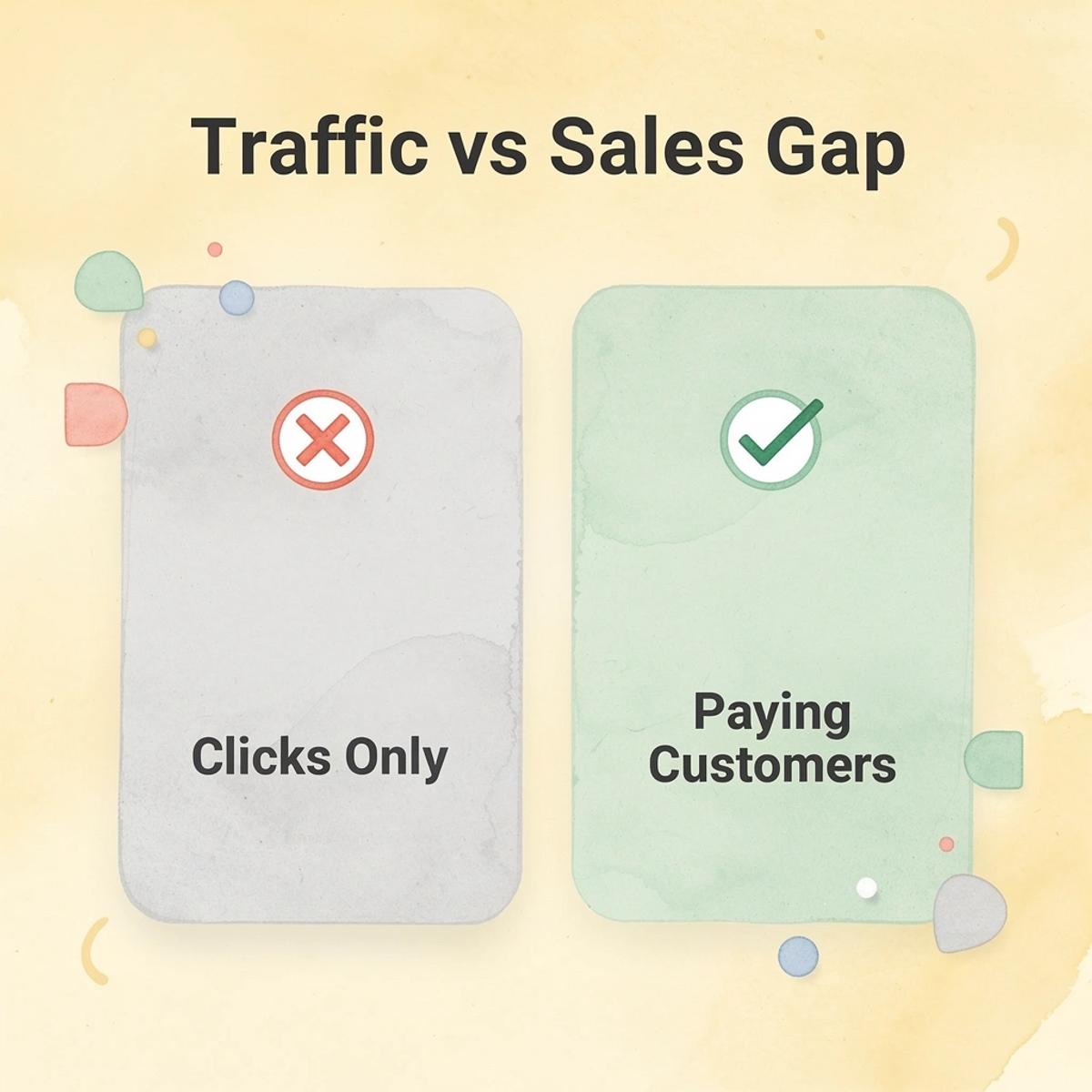
Start a free PagePilot trial today and create up to three product pages with no credit card needed. Just enter a competitor or supplier URL, and PagePilot instantly generates customized product pages, better visuals, and new positioning angles ready to test with your social traffic.
✅ Best Practice: Use competitor URLs to reverse-engineer what's already working in your niche — then let PagePilot build you a smarter, higher-converting version.
Competitor or Supplier URL
What PagePilot Delivers
- Customized product page copy
Your Niche or Product Focus
What PagePilot Delivers
- Optimized visuals & layout
Social Traffic Source
What PagePilot Delivers
- New positioning angles to test
By the end of your first session, you'll have multiple conversion-focused product pages ready to launch, giving you more chances to find winning products before competitors do. This enables faster testing, smarter iteration, and a real edge in a crowded market.
🎯 Key Point: Three ready-to-launch product pages in a single session means you can immediately start split-testing and identifying your highest-converting offer.
⚠️ Warning: Every day without a high-converting product page wastes your social traffic budget on pages that don't close the sale.

Related Reading
- Yotpo Alternatives
- Lucky Orange Alternatives
- Best Shopify Theme For Seo
- Best Seo App For Shopify