

Most Shopify store visitors leave without buying and never return unless merchants actively re-engage them. Email marketing transforms these missed opportunities into revenue by nurturing one-time browsers into loyal customers through strategic follow-up messages. Shopify marketing automation streamlines this process, delivering targeted emails at optimal moments without requiring manual intervention for each message. Proper setup creates campaigns that generate sales while store owners focus on other business priorities.
Successful email marketing depends not only on compelling messages but also on where those email clicks lead customers. High-converting landing pages and product pages ensure that automated email traffic translates into actual purchases rather than additional bounces. Store owners who pair strategic email sequences with optimized pages create complete conversion systems that guide prospects from initial contact through final checkout, and an AI page builder can help create these high-performing pages that align perfectly with email campaign goals.
Table of Contents
Why Most Shopify Stores Leave Money on the Table With Email Marketing
What Shopify Email Marketing Actually Includes
How to Set Up Email Marketing on Shopify Step by Step
The Most Important Shopify Email Automations to Build First
Why Most Shopify Email Marketing Underperforms
The Real Growth Lever: Testing More Products, Offers, and Angles
How PagePilot Helps You Launch and Test Faster
Start a FREE Trial and Generate 3 Product Pages with Our AI Page Builder today
Summary
- Email marketing generates approximately $36 in revenue for every $1 spent, representing a 3,600% return on investment, with some ecommerce brands reporting returns of $45- $72 per dollar when automation and segmentation are properly implemented. Despite these returns, many Shopify merchants treat email as an afterthought while pouring budgets into paid advertising channels where they must continuously pay for attention rather than building owned communication channels.
- Acquiring a new customer costs 5 to 25 times more than retaining an existing one, depending on industry and business model. Repeat buyers account for 48% to 72% of future revenue within ecommerce cohorts, yet most stores allocate the majority of their marketing budget toward acquisition while overlooking systematic retention efforts. This creates a pattern where merchants believe they have a traffic problem when they actually have a retention problem.
- Welcome email sequences consistently outperform standard promotional campaigns by several multiples in both open rates and conversion rates because they reach subscribers when interest peaks. Abandoned cart automations achieve open rates of 42% to 50% and conversion rates exceeding 10% in some industries, while post-purchase flows frequently reach 50% to 70% open rates because customers expect these messages and are highly motivated to engage.
- Testing velocity matters more than optimization precision when it comes to discovering what actually drives revenue. A landing page that converts at 3% instead of 1% triples sales from the identical email campaign without changing a single word of email copy. The page is the multiplier; email is the distribution channel, which means conversion optimization on landing pages often produces larger gains than endless email campaign refinement.
- Manual page creation creates a bottleneck that limits how many products, offers, and angles merchants can actually test. When building each product page requires hours of image sourcing, copywriting, layout structuring, and formatting, most stores test one product instead of ten, which compounds into slower learning and missed opportunities to discover winning products before competitors.
- AI page builder addresses this by generating complete, brand-quality product pages in under 90 seconds from supplier or competitor URLs, allowing merchants to launch multiple tests in an afternoon instead of spending a week preparing three product tests.
Why Most Shopify Stores Leave Money on the Table With Email Marketing
Most Shopify merchants know that email marketing is important but never fully commit to it. Many set up a basic welcome email, then stop, sending only occasional promotional campaigns during holidays or product launches.
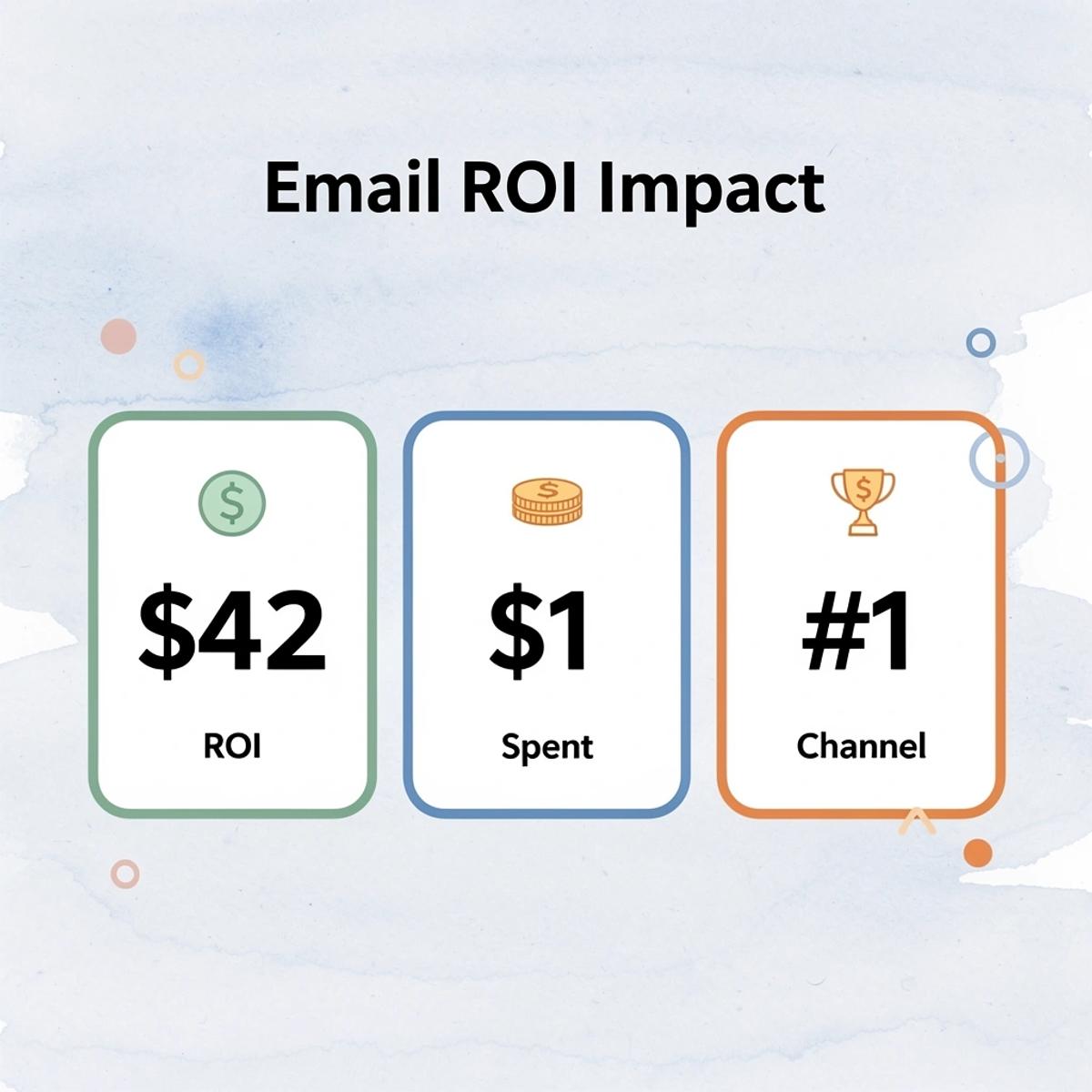
🎯 Key Point: Email marketing generates $42 for every $1 spent, yet most Shopify stores barely scratch the surface of this revenue goldmine.
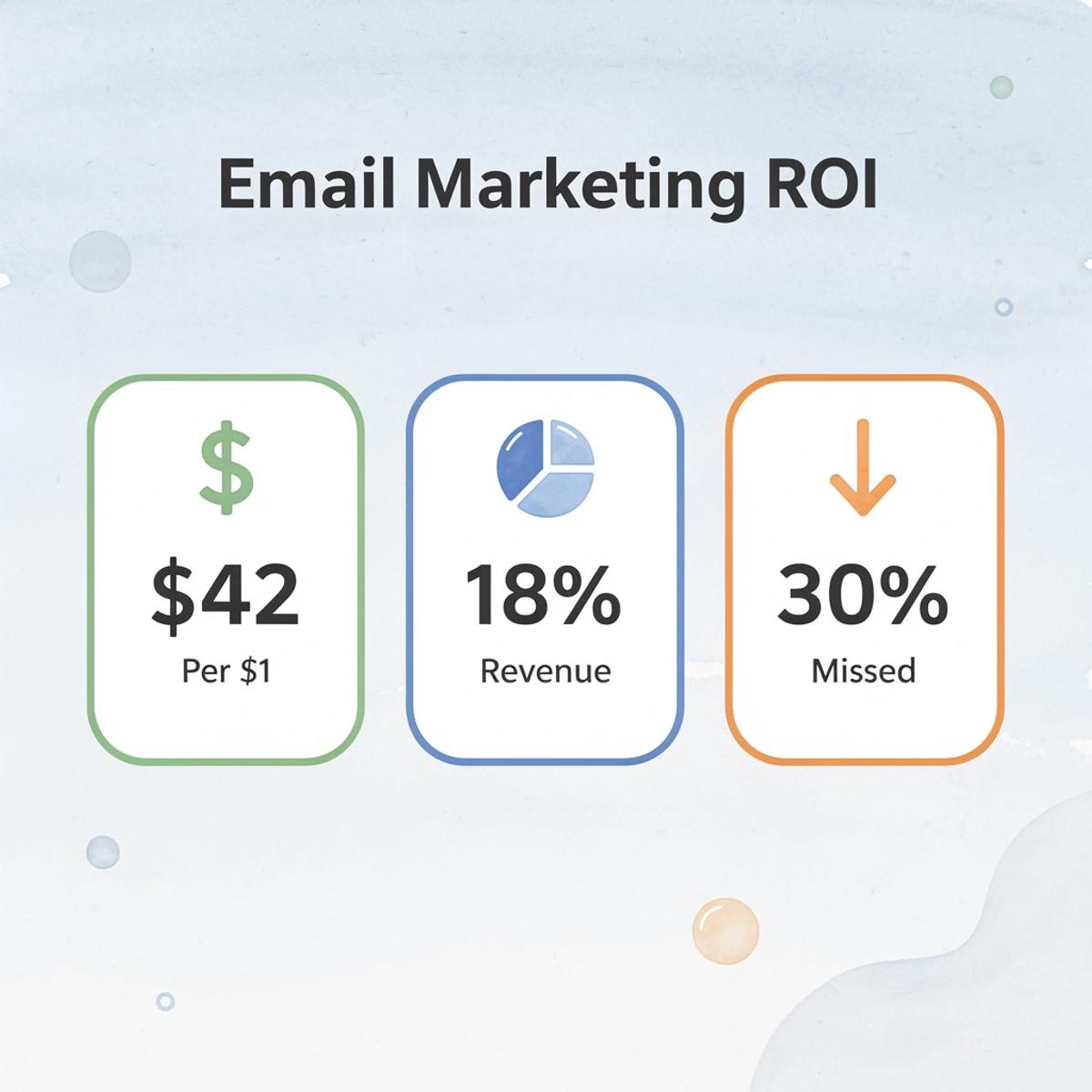
"Email marketing drives 18% of total ecommerce revenue for successful online retailers, making it the highest ROI channel available." — DMA Email Marketing Metrics Report, 2024
Most focus on acquiring new customers through Facebook, TikTok, Google, or influencer marketing while treating email as an afterthought. This approach leaves massive revenue on the table: existing customers are 5x more likely to purchase again than new prospects.
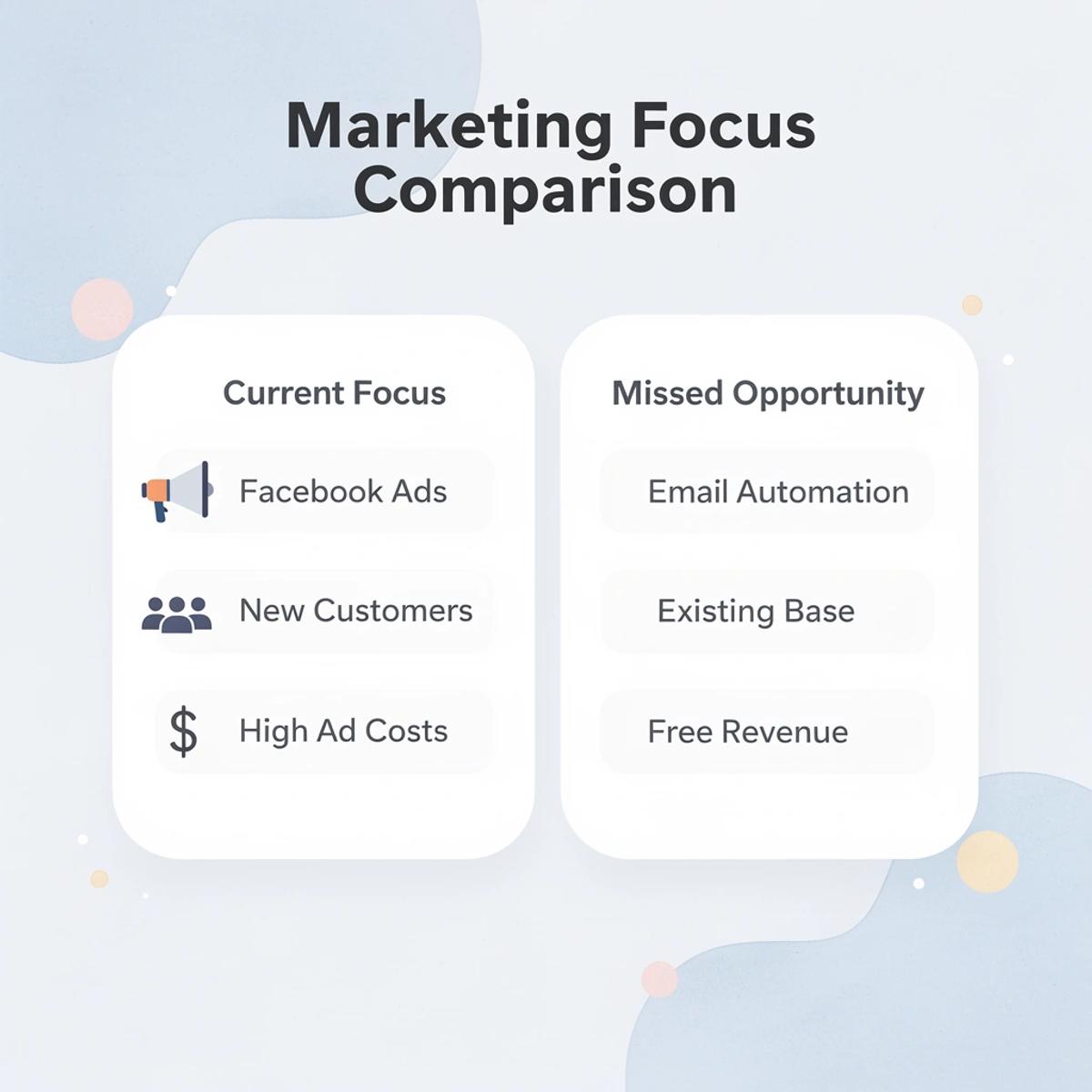
⚠️ Warning: Neglecting email automation means missing out on 25-30% of potential revenue that could be generated from your existing customer base without spending a dime on ads.
What kind of returns can email marketing actually deliver?
This is a costly mistake. Email remains one of the highest-return marketing channels available to ecommerce businesses, generating approximately $36 in revenue for every $1 spent, a 3,600% return on investment.
Ecommerce brands often perform even better, with some studies reporting returns of $45–$72 per dollar invested when effective automation and segmentation are in place. As traffic grows, email becomes more valuable, not less.
How do rising customer acquisition costs change the economics?
Getting customers through paid advertising costs more each day, and every sale requires continuous spending. Email offers a direct communication channel with customers at no per-message cost once they're on your list.
Why do profitable businesses view email as a force multiplier?
Many successful online stores view email as a force multiplier rather than another customer channel. Ads bring visitors into the ecosystem; email extracts maximum value from them over time.
According to the Shopify Blog, 44% of marketing professionals say email is their most effective marketing channel, yet many stores still spend most of their budgets on platforms that rent attention rather than own it.
Why are existing customers more valuable than new ones?
Many merchants spend most of their marketing budget acquiring new customers while overlooking repeat buyers. Getting a new customer costs 5 to 25 times as much as keeping an existing one, depending on the industry. Existing customers also spend more over time: repeat buyers account for 48% to 72% of future revenue within ecommerce cohorts.
How does email marketing unlock customer value?
Email marketing unlocks this value through welcome sequences, post-purchase emails, product recommendations, replenishment reminders, and win-back campaigns. Without these systems, stores start from zero with each purchase.
Many invest heavily in driving traffic but land visitors on pages misaligned with their email sequences. Platforms like PagePilot help merchants create high-converting landing pages that align with automated emails, ensuring customers reach pages designed to convert rather than losing momentum at the final step.
Why Profitable Stores Rarely Depend on Ads Alone
Successful stores focus on acquiring customers and retaining them, understanding that profitability comes from customer value over months and years, not from first purchases alone. Email marketing supports this by recovering abandoned carts, converting first-time visitors, increasing repeat purchases, launching new products, re-engaging inactive customers, and strengthening loyalty—all without the advertising spend required for new customer acquisition.
How does email marketing function as a revenue system?
Email marketing is a revenue system, not merely a communication tool. Every visitor who leaves without joining your email list and every customer who buys once and never hears from you again represents lost future revenue. Merchants who believe they have a traffic problem often have a retention problem.
But knowing email matters and building the systems that make it work are two different things.
What Shopify Email Marketing Actually Includes
Shopify email marketing is a behavioral response system that sends different messages based on where customers are in their relationship with your business, not a newsletter tool for sending promotions to everyone. It creates a communication plan that moves people from new visitors to repeat buyers automatically, without manual effort for each person.
[IMAGE: https://im.runware.ai/image/os/a01d21/ws/3/ii/5740e0c0-1b9e-4f8f-be46-eec9612cdf7c.webp] Alt: Robot icon representing behavioral automation system
🎯 Key Point: Shopify email marketing operates on behavioral triggers rather than mass broadcasting, making it a personalized automation system that responds to customer actions and purchase history.
"Behavioral email marketing generates 3x higher click-through rates compared to traditional broadcast emails because it delivers relevant messages at the right moment in the customer journey." — Email Marketing Benchmarks, 2024
💡 Tip: Think of Shopify email marketing as your digital sales assistant that never sleeps—it watches customer behavior and sends the perfect message at the perfect time to drive conversions and build long-term relationships.
The Foundation: Capturing Visitors Before They Disappear
Most Shopify stores lose 97% of their traffic without capturing a single email address. A visitor lands on a product page, browses for three minutes, and leaves—becoming a statistic in your analytics dashboard instead of a future customer.
How does email capture transform visitor behavior?
Email capture changes that equation. Popups, embedded forms, exit-intent overlays, and checkout opt-ins convert anonymous sessions into contacts you can reach. Offer value in exchange for permission to continue communicating: a 10% discount for first-time buyers, early access to new drops, or free shipping on the next order.
Once someone joins your list, you can guide them through a sequence designed to build trust before requesting a purchase.
What makes email marketing so effective for ecommerce?
According to the Shopify Blog, 44% of marketing professionals say email is their most effective marketing channel. This effectiveness stems from sending the right emails to the right people at the right time: dividing your audience into groups, automating your emails, and understanding customer lifecycle stages.
Welcome Sequences: The First Conversation That Shapes Everything
A welcome email is not a thank-you note: it's the start of a story that explains why your brand exists, what makes your products different, and why someone should care enough to buy. Most merchants waste this moment by immediately pushing a discount code. Strong welcome sequences take a different approach.
How should welcome sequences be structured for maximum impact?
The sequence typically unfolds as follows: the first email introduces the brand story; the second highlights customer results or social proof; the third addresses objections or explains product benefits; and the fourth offers an incentive once trust is established. Because these emails reach subscribers when interest peaks, they generate higher open and conversion rates than any other store automation.
Abandoned Cart Recovery: Converting Existing Intent
Cart abandonment emails recover existing demand rather than create it. A customer who added a product to their cart showed interest before something interrupted them: a phone call, second thought, or price comparison.
These emails remind customers what they left behind and reinforce their original interest. A simple reminder often works; customer reviews, answers to common questions, or limited-time offers can boost recovery. Send the first email within an hour, the second after one day, and the third after two to three days. Recovery likelihood drops significantly after that.
Post-Purchase Flows: Turning Buyers Into Repeat Customers
The biggest mistake happens after the sale. Merchants treat a purchase as the finish line when it should be the starting point of a longer relationship. Post-purchase emails help customers get more value from their purchase through usage tips, care instructions, styling ideas, recipes, installation guides—whatever makes the product more useful.
How can post-purchase flows drive additional sales?
These emails create opportunities for cross-sells, upsells, review requests, and referral incentives. A customer who bought running shoes might need socks or a water bottle; one who bought skincare might want layering guidance. By staying present and helpful, your store becomes the first place customers think of when ready to buy again.
Retention Campaigns and Lifecycle Marketing
Getting a new customer costs more than retaining an existing one. Keeping customers happy yields better returns than acquiring new ones. You can achieve this through product recommendations, educational content, loyalty rewards, exclusive access, and updates that reinforce purchase decisions.
How should you segment customers for lifecycle marketing
Segmentation is critical. A customer who buys monthly should receive different emails than someone who buys annually. High-value customers deserve more personalized attention than single, low-ticket purchasers.
The system should recognize these differences and adjust messaging accordingly, which is why successful Shopify stores adopt platforms that handle conditional logic, dynamic content, and behavioral triggers.
What tools simplify retention campaign setup
Many merchants believe building this system requires weeks of setup, significant developer costs, or marketing automation expertise. Tools like PagePilot's AI page builder now create high-converting product pages and connect them to email flows in minutes, without design skills or technical setup.
Speed and automation don't hurt quality; they reduce setup time so you can focus on profitable work. Knowing what email marketing includes and building the system are two different challenges.
Related Reading
- Shopify Marketing Automation
- Shopify Email Marketing Vs Klaviyo
- Shopify Social Media Marketing
- How To Advertise a Shopify Store
- Shopify Social Media Marketing
- Seo Marketing Shopify
How to Set Up Email Marketing on Shopify Step by Step
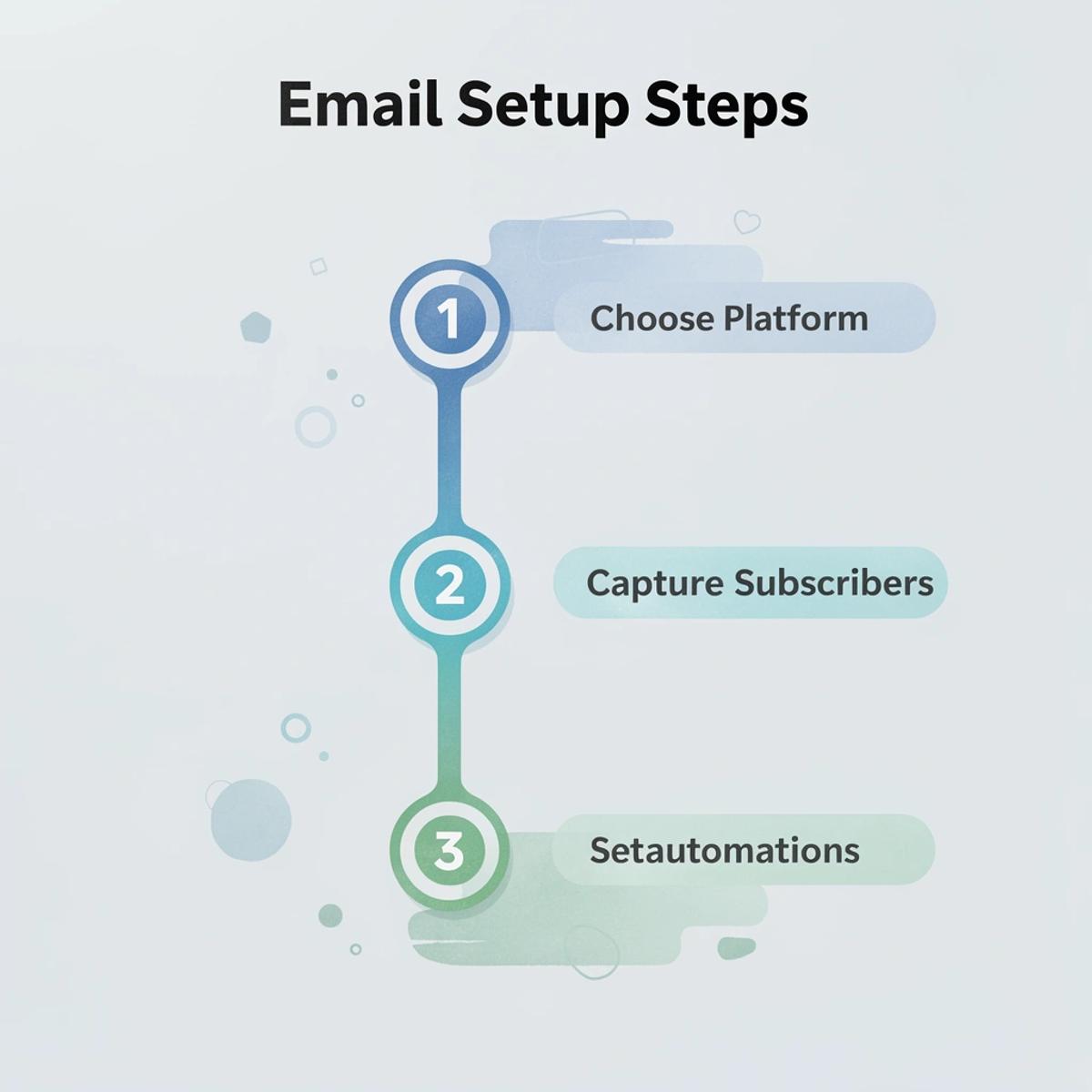
Building the email marketing system requires four core steps: choosing a platform, capturing subscribers, setting up essential automations, and creating campaign templates. Each step builds on the previous one, creating infrastructure that generates revenue without constant manual effort.
Step 1
Focus Area
- Choose Platform
Key Outcome
- Email service integration
Step 2
Focus Area
- Capture Subscribers
Key Outcome
- Growing email list
Step 3
Focus Area
- Set Up Automations
Key Outcome
- Hands-free sequences
Step 4
Focus Area
- Create Templates
Key Outcome
- Scalable campaigns
🎯 Key Point: The foundation of successful Shopify email marketing lies in systematic setup rather than random campaign sending.
"Email marketing delivers an average ROI of $42 for every $1 spent, making it one of the most profitable digital marketing channels." — DMA Economic Impact Study, 2023
⚡ Pro Tip: Complete each step fully before moving to the next- an incomplete setup leads to broken automations and lost revenue opportunities.
Choose Your Email Marketing Platform
Your email platform determines what you can do later, so choosing the right one matters more than most business owners realize.
Which platform works best for new stores?
Shopify Email works well for newer stores because it is built into the Shopify dashboard and requires minimal technical setup. You can create campaigns, build basic automations, and segment customers without learning a separate system.
When should you consider advanced platforms?
As stores grow past their first few hundred orders, many move to platforms like Klaviyo or Omnisend. These tools offer superior automation, advanced segmentation, stronger personalization, and revenue-tracking reports.
The tradeoff is complexity: more features mean more choices, longer setup times, and steeper learning curves.
What features matter most when choosing a platform?
Four areas deserve attention regardless of which platform you choose: Automation capabilities determine how effectively you can create customer journeys that run without manual intervention. Segmentation allows you to target different customer groups with messaging that matches their behavior and purchase history. Deliverability affects whether emails reach inboxes instead of spam folders. Reporting helps you understand what drives revenue and where improvements create the biggest impact.
The best platform is the one you will use consistently. Choose something that matches your current skill level and revenue stage, then focus on execution.
Set Up Email Capture
Before you can send emails, you need subscribers. Many Shopify stores spend heavily on paid ads to drive traffic but fail to convert visitors into email subscribers. This represents a missed opportunity: once visitors leave, they become far harder to reach again.
What are the most effective email capture methods?
Common ways to capture emails include popups, embedded forms, checkout opt-ins, discount offers, and lead magnets. For most online stores, a first-purchase discount remains one of the simplest and most effective incentives, offering immediate value.
When should you ask visitors to subscribe?
Timing matters more than most merchants expect. Asking visitors to subscribe upon arrival rarely works because they haven't viewed products or understood your business. Better timing means waiting until visitors have browsed a product, spent time on the site, or shown signs of leaving. Context makes the request relevant.
How do you optimize capture forms for better results?
The offer itself matters significantly. Generic messages like "Join our newsletter" perform poorly compared to specific benefits: "Get 15% off your first order" or "Early access to new releases" gives people a reason to act. Mobile optimization is equally important—since a large percentage of ecommerce traffic comes from mobile devices, forms that are difficult to close, poorly formatted, or disruptive hurt both user experience and conversion rates.
Many merchants build elaborate capture systems before they have products worth promoting. The opposite sequence works better: get the products right, drive traffic, then optimize capture based on real visitor behavior.
Configure Essential Automations
Automation helps your business run better once subscribers join your system, and you need fewer workflows than most merchants assume.
What should your welcome series accomplish?
The first automation every Shopify store should build is a welcome series. This sequence introduces new subscribers to the brand, highlights key products, builds trust, and encourages a first purchase. According to Glen Allsopp's LinkedIn analysis, 169 out of 250 search results now feature AI-generated content, meaning generic welcome emails no longer stand out. Your welcome series must feel specific to your brand, not like a template pulled from a tutorial.
How do cart and browse abandonment campaigns work?
Abandoned cart recovery should come next. Shoppers who add products to their cart have shown strong purchase intent, and recovering even a small percentage of them can significantly impact revenue.
Browse abandonment campaigns target visitors who looked at products but left without adding anything to their cart. Quick follow-ups often bring them back. Post-purchase sequences extend the customer relationship after the sale through education, support, reviews, and introductions to complementary products.
Why focus on infrastructure before design?
Win-back campaigns re-engage customers who have stopped buying. Rather than focusing solely on new customers, these automations recover value from people who already know and trust the brand. Together, these workflows support customers throughout their lifecycle.
Many merchants design elaborate email templates before building the infrastructure that drives revenue. The opposite sequence works better. Our AI page builder at PagePilot creates high-converting product pages in minutes and feeds them into email flows without requiring design skills or technical setup. Focus first on capturing subscribers and creating automations. Once that system is in place, every new visitor becomes part of a process designed to generate long-term value.
Create Core Campaign Templates
Making every email from scratch takes considerable time. Successful merchants create templates they can reuse and customize as needed.
What types of promotional and product campaigns work best?
Promotional campaigns support sales events, limited-time offers, and special discounts. Product launch campaigns create excitement around new releases and drive early sales from engaged subscribers. Educational content—product tutorials, buying guides, usage tips, and customer success stories—creates value beyond active shopping, strengthening relationships while reinforcing product value.
How do seasonal campaigns drive revenue growth?
Seasonal campaigns connect with customers during major shopping periods. Black Friday, Cyber Monday, holiday promotions, back-to-school events, and other seasonal opportunities drive significant revenue for ecommerce brands. Prepared templates enable merchants to launch campaigns quickly while maintaining consistent branding and messaging.
Once the infrastructure is in place, email marketing becomes a scalable growth engine. Knowing which automations to build first determines how quickly that system generates revenue.
The Most Important Shopify Email Automations to Build First
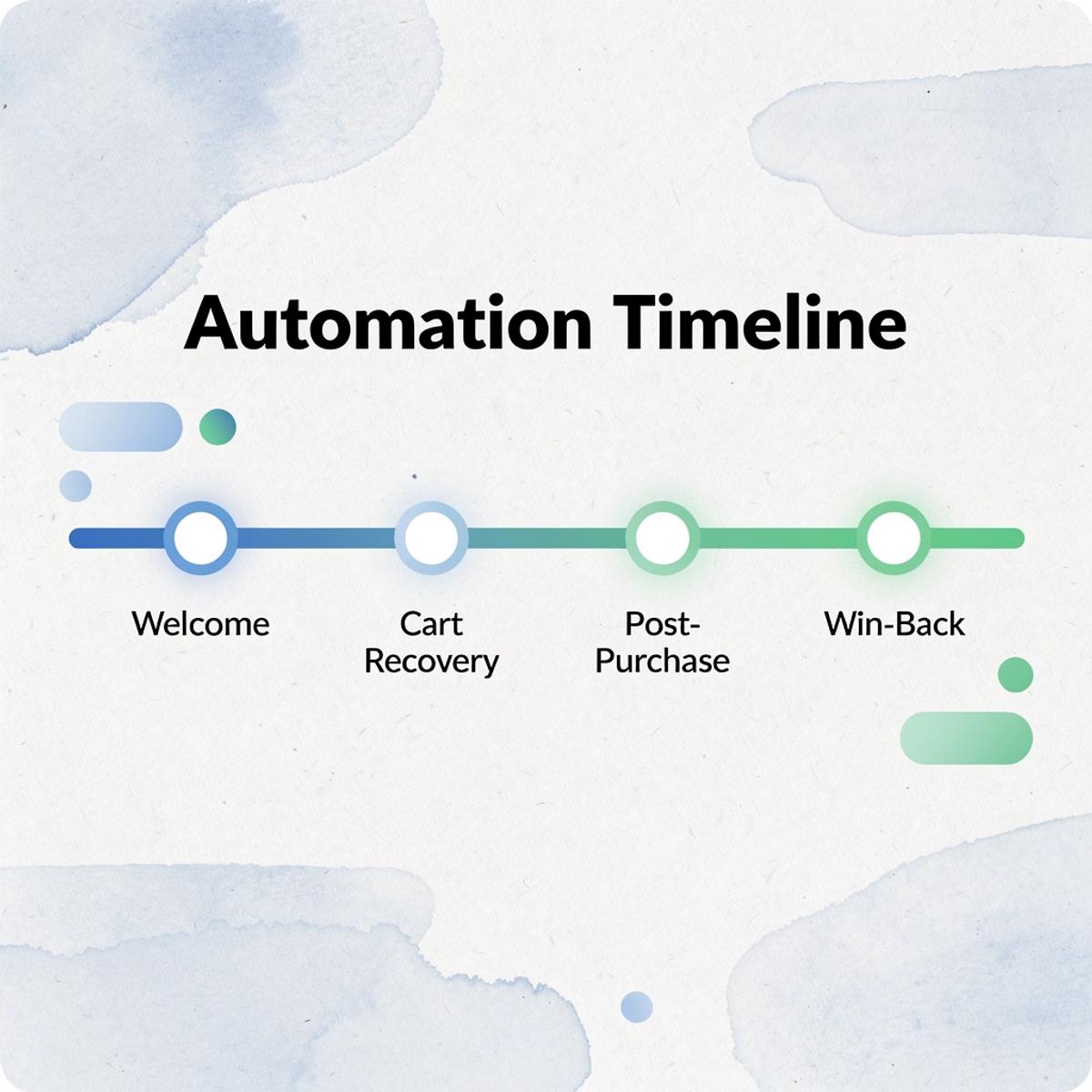
Four automations cover the moments when customers are most likely to act: a welcome series converts new subscribers, an abandoned cart flow recovers lost sales, a post-purchase sequence builds repeat buyers, and a win-back campaign reactivates dormant customers. Together, these workflows handle most of the revenue-generating opportunities in an ecommerce lifecycle, and most stores can build all four in less than a week.

🎯 Key Point: These four core automations form the foundation of any successful Shopify email strategy - they target customers at critical decision moments when engagement rates and conversion potential are highest.
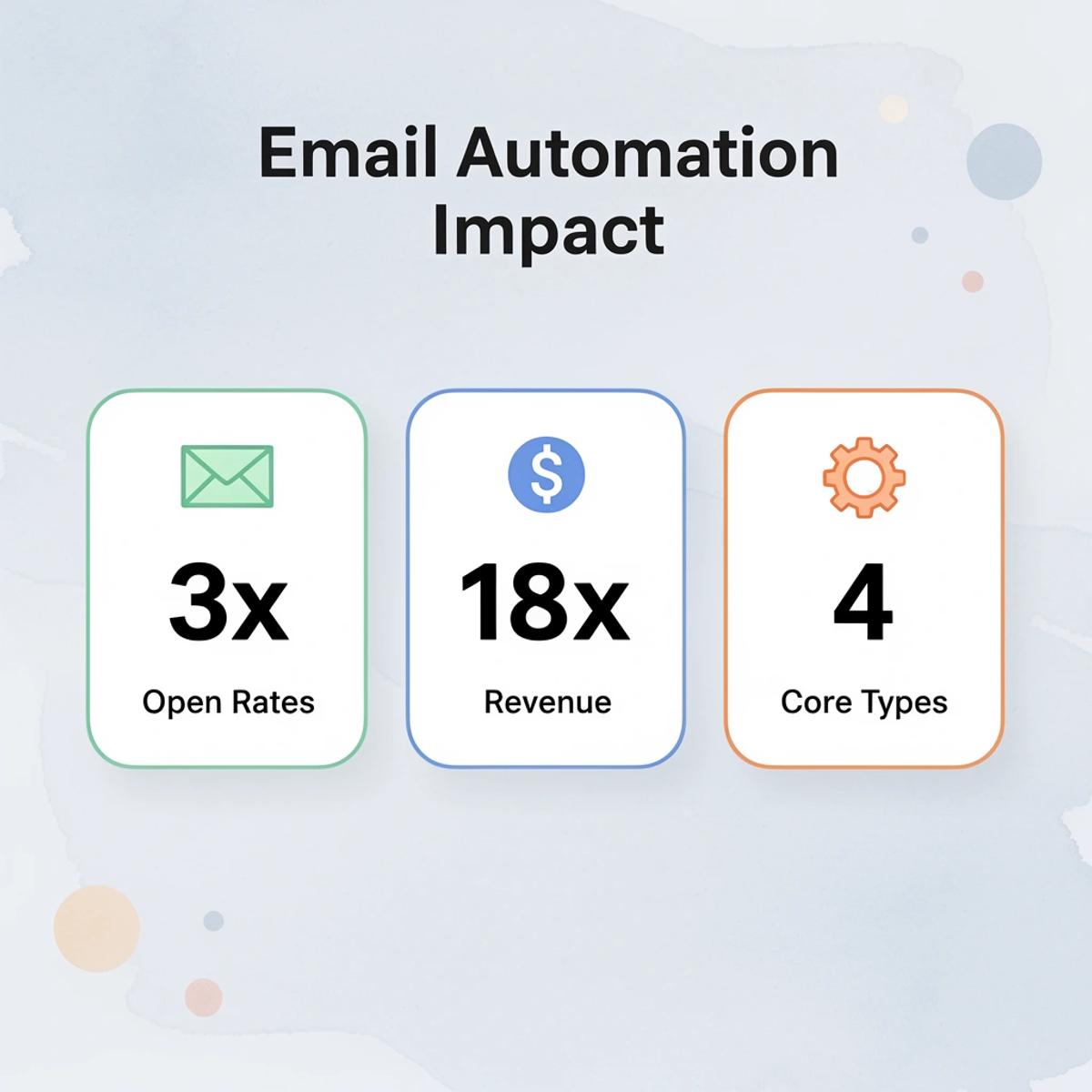
"Email automation drives 3x higher open rates and 18x more revenue than broadcast emails alone." — Campaign Monitor, 2024
Welcome Series
Primary Goal
- Convert subscribers
Typical Timeline
- 3-5 days
Abandoned Cart
Primary Goal
- Recover lost sales
Typical Timeline
- 24-72 hours
Post-Purchase
Primary Goal
- Build loyalty
Typical Timeline
- 1-4 weeks
Win-Back Campaign
Primary Goal
- Reactivate customers
Typical Timeline
- 30-90 days
💡 Tip: Start with abandoned cart recovery first - it typically generates the fastest ROI since these customers have already shown purchase intent and just need a gentle nudge to complete their order.
Welcome Series
When someone joins your email list, they are paying attention in a way they might never again. That moment of curiosity is fragile. Most stores send a discount code and consider the job done. The subscriber either buys immediately or drifts away, and the chance to build a relationship disappears.
How should a welcome sequence build trust and drive conversions?
A strong welcome sequence introduces your brand story, explains what differentiates your products, highlights best sellers, showcases customer reviews, and addresses objections preventing first purchases. The goal is to convert interest into trust before that interest fades. According to the AiTrillion Blog, email marketing automation increases sales, engagement, and customer retention. Welcome flows consistently outperform standard promotional campaigns in both open and conversion rates.
Abandoned Cart Recovery
Cart abandonment rarely happens because customers lose interest. Customers add products and then get distracted by phone calls, price comparisons, or time constraints. Without a reminder, that sale disappears.
Abandoned cart emails work because customers have already shown they want to buy. A sequence of two or three emails spaced over several days outperforms a single reminder, providing multiple re-engagement opportunities without feeling pushy. Recent ecommerce benchmarks show that abandoned cart automations achieve open rates of 42% to 50% and conversion rates exceeding 10% in some industries.
Post-Purchase Sequence
Most merchants treat a completed purchase as the finish line, when it's actually the starting point for the most valuable part of the customer relationship. Customers who have already purchased are significantly more likely to buy again than first-time visitors, making post-purchase automations critical for long-term growth.
What are the main objectives of post-purchase flows?
After someone buys something, post-purchase flows serve two important functions: they enhance the customer experience through order confirmations, shipping updates, onboarding content, and product education (which reduces buyer's remorse) and create opportunities for future sales through complementary products, review requests, usage recommendations, or replenishment reminders. These sequences achieve some of the highest engagement rates in email marketing, with open rates frequently reaching 50% to 70%, because customers expect these messages and are highly motivated to engage.
Win-Back Campaigns
Every store accumulates inactive customers who no longer open emails or make purchases. Win-back campaigns reactivate dormant relationships, and because these people have already purchased, they convert more easily and at a lower cost than new prospects.
How do effective win-back campaigns recover inactive customers?
Good win-back campaigns remind customers why they initially bought from you. They introduce new products, showcase recent improvements, or offer incentives to encourage return purchases. The goal is to reactivate enough inactive customers to improve retention and customer lifetime value. Even small increases in repeat purchasing generate meaningful revenue growth by leveraging existing relationships.
What else matters beyond automation setup?
But having the right automations in place solves only half the problem.
Related Reading
- Shopify Marketing Strategies
- Best Shopify Marketing Agency
- Best Marketing Tools For Shopify
- Best Shopify Email Marketing Apps
- Best Shopify Marketing Apps
Why Most Shopify Email Marketing Underperforms
Email automations solve only half the problem. Email is a distribution channel, not a correction mechanism: it can bring people back to your store, present offers, and encourage action. It cannot fix a weak product, weak offer, or weak conversion system. If customers aren't excited about what they see after clicking an email, automation sophistication won't consistently solve the problem.

🎯 Key Point: Email marketing can only amplify what's already working—it can't fix fundamental problems with your product-market fit or conversion funnel.
"Email is a distribution channel, not a correction mechanism—it cannot fix a weak product, weak offer, or weak conversion system."

⚠️ Warning: Many Shopify store owners invest heavily in complex email sequences while ignoring the real issue: their post-click experience isn't compelling enough to convert visitors into customers.
Weak Offers Create Weak Results
Customers open emails seeking value, not out of love for email itself. Many merchants optimize email performance while neglecting the offer—a backward approach. If the offer is unremarkable, excellent email execution cannot generate meaningful results.
Consider two stores selling similar products. The first sends highly optimized emails promoting a standard 10% discount. The second sends simple emails promoting a compelling bundle, an exclusive bonus, a limited-edition variation, or a unique value proposition. The second often outperforms the first because the offer itself creates demand. The email delivers the message; the offer drives the decision.
Poor Product-Market Fit Limits Everything
Email marketing cannot compensate for products customers don't want. When a product fits the market well, it creates genuine excitement: customers talk about it, share it, recommend it, and return to buy again. Email marketing amplifies that demand.
Why do conversions disappoint despite email's effectiveness?
Weak product-market fit creates the opposite problem. According to Shopify's 2025 email marketing analysis, 44% of marketing professionals say email is their most effective marketing channel, yet conversions remain disappointing for many stores due to limited underlying demand.
No welcome sequence can create genuine market demand where it doesn't exist. This is why successful ecommerce brands focus on product testing before investing in lifecycle marketing: finding products that resonate often yields larger gains than optimizing email workflows.
Generic Messaging Reduces Relevance
Many ecommerce emails use vague claims such as premium quality, best-in-class performance, innovative design, or industry-leading features. The problem is that nearly every brand says the same thing, and customers who see thousands of marketing messages daily tune out generic language.
Strong messaging clearly explains who the product is for, what problem it solves, why it is different, and why the customer should care now. When messaging lacks specificity, email performance suffers because customers lack a compelling reason to act. The issue is not the automation; it's the message being automated.
Low-Converting Landing Pages Destroy Email Performance
Many merchants focus on email metrics while ignoring what happens after someone clicks. Imagine a store improves email click-through rates from 2% to 3%. If the landing page converts only 1% of visitors, the overall business impact remains limited.
How does improving landing page conversion impact revenue?
Now consider improving the landing page conversion rate from 1% to 3% while keeping email performance the same. The revenue impact is substantially larger because every traffic source benefits from the improvement. This is why conversion optimization experts prioritize landing pages, offers, and customer experience before addressing channel-specific metrics. Email can only perform as well as the destination it sends traffic to.
For stores struggling with low-converting product pages, our PagePilot AI page builder creates high-converting, brand-quality landing pages in minutes, not weeks. When the destination improves, email performance often improves because customers arrive with greater clarity and confidence.
Email Amplifies What Already Exists
Email marketing is an amplifier. If customers love the product, email generates more sales. If the offer is compelling, email reaches more people. If the landing page converts effectively, email drives additional revenue. Weak underlying elements get amplified as well.
Poor email results often don't indicate an email problem; they reveal bottlenecks elsewhere in the business. The question isn't whether your automations are sophisticated enough, but whether you're testing the right things to find what works.
But random testing creates as many problems as no testing at all.
The Real Growth Lever Testing More Products, Offers, and Angles
Testing velocity matters more than optimization precision. Merchants who run 20 experiments in a month learn faster than competitors who perfect a single campaign. Speed of discovery beats sophistication every time.

🎯 Key Point: The fastest learners in e-commerce aren't the ones with the most sophisticated campaigns—they're the ones testing multiple products, offers, and angles at maximum velocity.
"Speed of discovery beats sophistication when it comes to finding winning products and profitable angles." — E-commerce Growth Principle
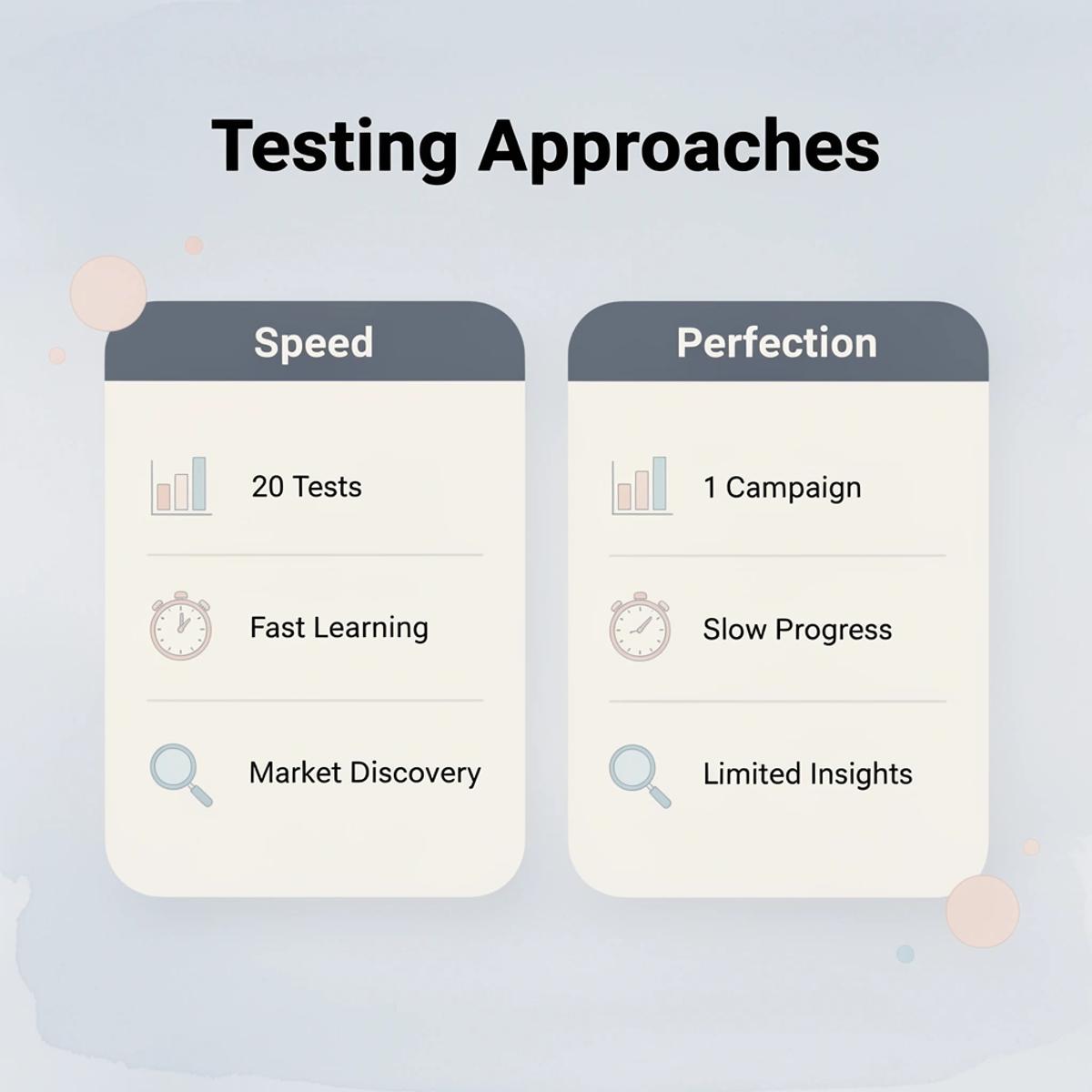
💡 Tip: Focus on rapid iteration rather than perfect execution. 20 quick tests will teach you more about your market than 1 perfectly optimized campaign ever could.
Email Amplifies What You Promote, Not What You Hope Works
Email cannot fix a mediocre product page; it only sends traffic to it. A landing page converting at 1% turns 1,000 email clicks into 10 sales. At a 3% conversion rate, the same email generates 30 sales. The revenue difference came entirely from what happened after the click, not from subject lines, send times, or copy.
This is why improving conversion systems often produces larger gains than optimizing email campaigns. Every visitor benefits from a better landing page regardless of traffic source: email, paid ads, organic search, or social media. The page is the multiplier. Email is the distribution channel.
The Offer Changes How Customers Decide
Many merchants test email copy for months without testing the offer itself, yet the offer frequently determines whether someone buys. A standard product listing at full price, a bundle offer, a limited-time discount, a bonus incentive, or a risk-reversal guarantee each creates a different decision framework.
Glen Allsopp's analysis of 'best X software' search results found that 169 of the top 250 pages were affiliate list posts rather than product pages. Customers seek comparison frameworks before buying, and the offer shapes that framework. Changing it can shift conversion rates more dramatically than any subject line.
Creative Testing Reveals What Resonates
Customers judge how products are presented, not the products themselves. Different pictures, videos, hooks, headlines, demonstrations, and story angles create different perceptions of the same item. A product that underperforms with one creative approach may become profitable with another.
Merchants often spend weeks optimizing email sequences while using the same tired product photos and generic descriptions. Creative assets shape perception. Stronger creative makes every campaign more effective; weak creative cannot be compensated for with email optimization alone.
Product Testing Creates the Largest Upside
No amount of optimization can compensate for limited demand. A product with weak market fit will underperform regardless of how sophisticated its email automation is. Finding a product with stronger demand transforms business performance almost immediately. This is why high-growth operators prioritize testing velocity over campaign perfection.
They continuously test new opportunities rather than assuming their current catalog contains the next winner. A small increase in conversion rate generates incremental growth, while finding a significantly stronger product generates exponential growth.
Testing without a system to validate and scale quickly creates as many problems as not testing at all.
Related Reading
- Best Seo App For Shopify
- Best Shopify Theme for SEO
- Yotpo Alternatives
- Lucky Orange Alternatives
How PagePilot Helps You Launch and Test Faster
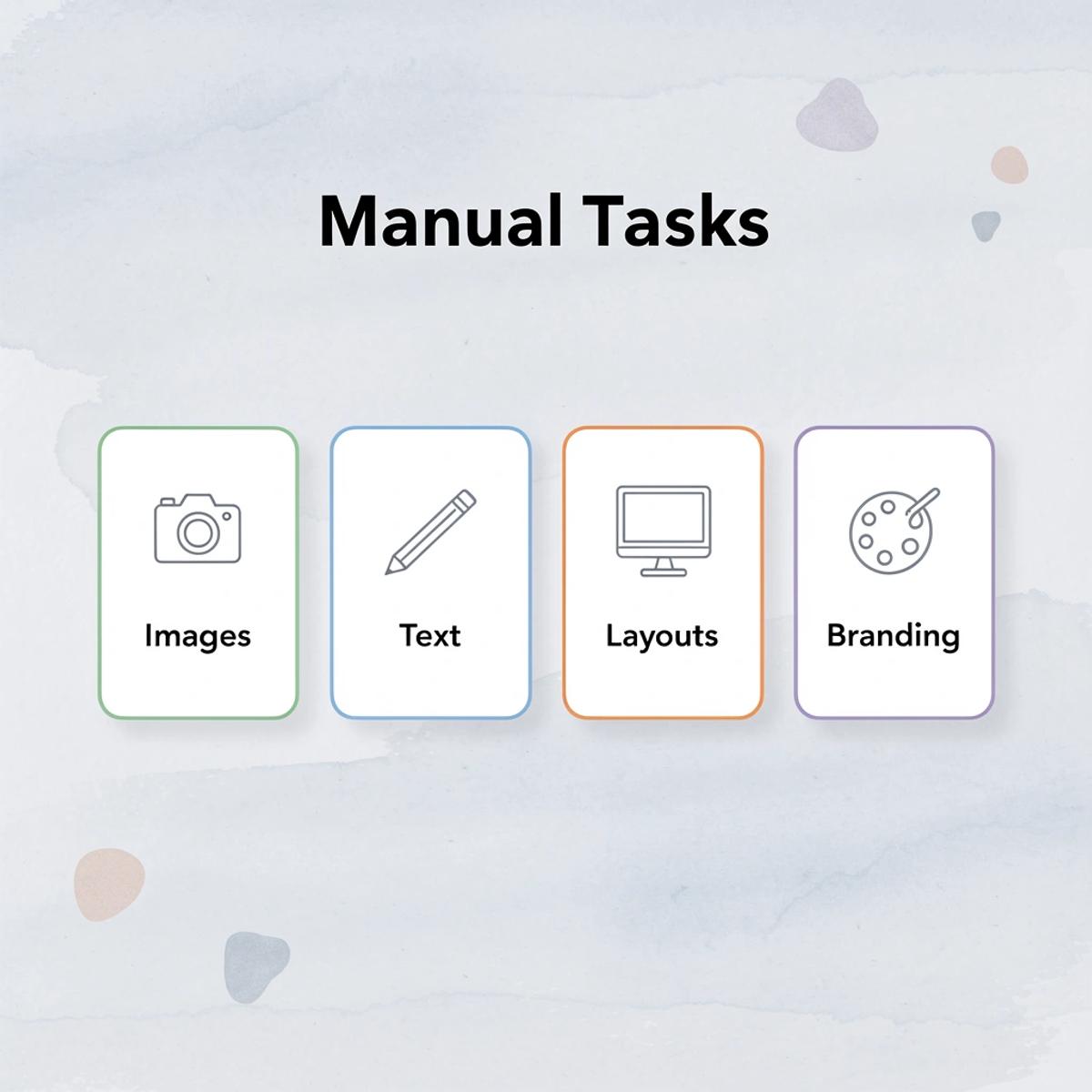
The problem isn't figuring out what to test—it's the time spent preparing each test. Building pages by hand requires finding images, creating text, organizing layouts, and ensuring everything matches your brand. Most store owners end up testing a single product instead of ten.
🎯 Key Point: Manual page creation is the biggest bottleneck preventing comprehensive product testing.
While you're working on a single page, your competitors are launching multiple tests, collecting real information from customers, and discovering what works.
💡 Tip: The fastest way to scale your testing is to eliminate the manual work keeping you stuck on one product at a time.
"Store owners who can test multiple products simultaneously have a significant advantage in discovering winning products before their competition." — E-commerce Testing Research, 2024
The Speed Problem Most Merchants Don't Quantify
Testing sounds productive until you measure how long each experiment takes. Before a product page goes live, merchants must download images, edit them for consistency, write descriptions, structure layouts, add trust elements, and format everything correctly. This process takes several days, and by launch, the initial momentum has faded.
This creates a predictable pattern: merchants test carefully because each test takes considerable time, refine repeatedly before launching, and run fewer experiments. The result is slower learning and missed opportunities to discover winning products while available.
How does AI page generation save time for merchants?
PagePilot's AI Page Builder creates complete product-focused pages from a supplier or competitor URL. According to PagePilot's product announcement by Alex Minecan, the platform generates brand-quality product pages in under 90 seconds. Rather than spending a week preparing three product tests, merchants can launch ten tests in an afternoon.
Why does faster page creation improve testing results?
This speed accelerates testing. When merchants move from product idea to a live page in minutes, they can try products they might have skipped, test different messages they wouldn't have prioritized, and collect real customer behavior data faster than competitors who build pages by hand. More tests generate more data, revealing patterns that inform better decisions.
Differentiation Without Starting From Scratch
Many merchants source products from the same suppliers and use identical product images and descriptions. Creating unique copy and visuals requires strong writing skills or hired help, both of which slow down testing.
PagePilot creates unique product copy and improves visuals using AI Product Images, letting merchants stand out without spending hours rewriting or editing photos. This matters especially for email campaigns: a welcome email might drive clicks, but if the product page looks identical to competitors', conversion rates stagnate.
Does faster page creation actually drive better results?
Speed and differentiation matter only if the output drives results, not faster mediocrity.
Curiosity loop
The real question isn't whether you can build pages faster, but whether you're ready to see what happens when you do.
Start a FREE Trial and Generate 3 Product Pages with Our AI Page Builder today
Start a free PagePilot trial today and generate your first three product pages at no cost. No credit card required.

Most merchants delay testing new products because creating a page feels like a commitment. You source images, write copy, format layouts, and hope the effort pays off. When it doesn't, the sunk cost makes you hesitant to try again. PagePilot's AI page builder removes that friction by generating complete, brand-quality pages in under 90 seconds from a supplier URL or competitor link. You can test three products in the time it took to build one, letting you learn faster and find winners sooner.
The real value is permission to experiment without guilt. When page creation takes minutes instead of hours, you test boldly rather than cautiously. That shift in behavior separates stores that grow from stores that stagnate.
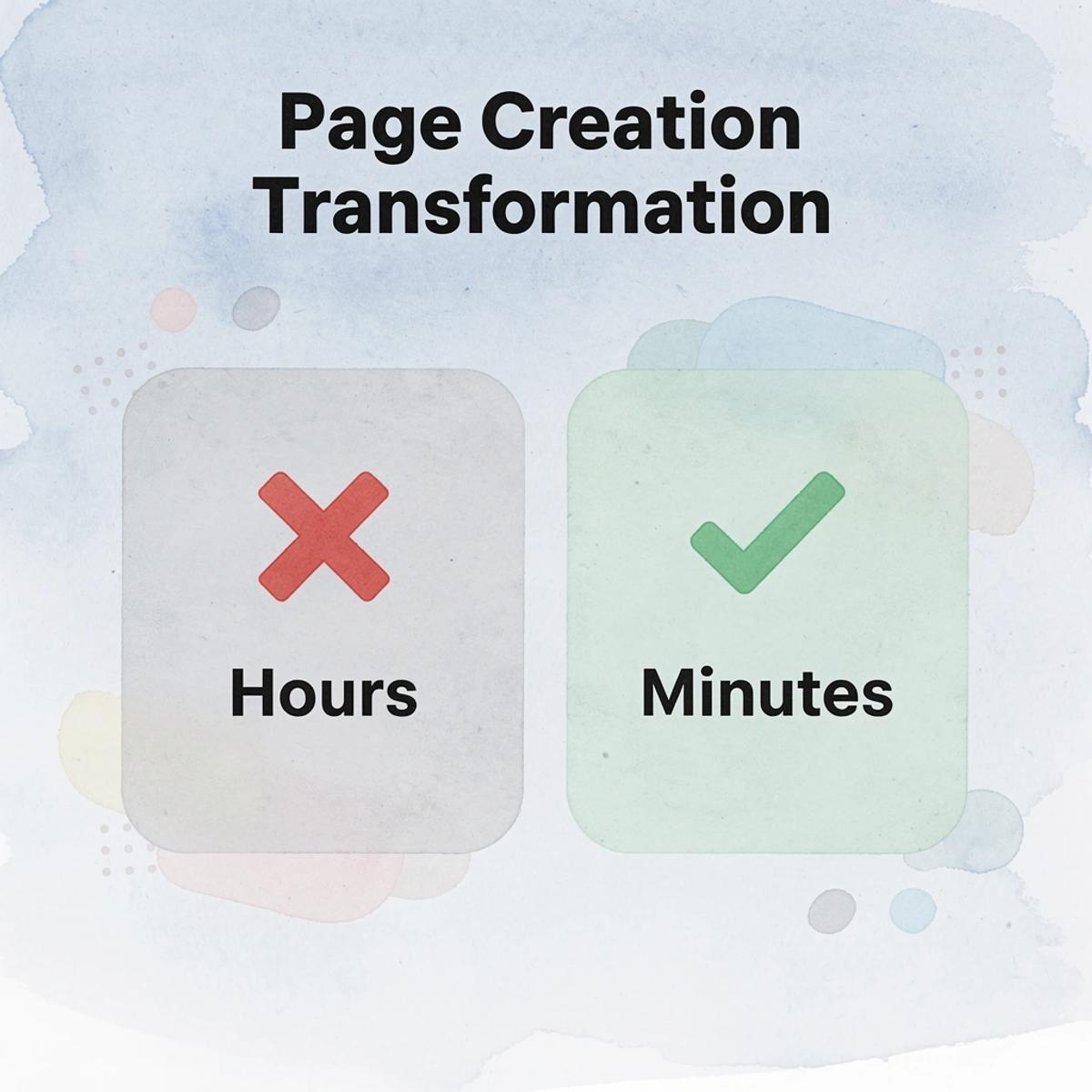
🎯 Key Point: Testing multiple products quickly is the fastest path to finding profitable winners in your store.
"When page creation takes minutes instead of hours, you test boldly rather than cautiously." — PagePilot Success Framework

💡 Tip: Use your free trial to test products in different categories—you might discover unexpected niches that perform better than your main focus areas.