
Advertising a Shopify store without a clear strategy means paying for traffic that rarely converts. Shopify marketing automation has shifted how store owners reach buyers, target the right audiences, and turn ad spend into measurable revenue. Still, many merchants lose budget quietly to avoidable mistakes before they see meaningful results. Knowing where those gaps exist is the first step toward fixing them.
Effective ads are only part of the equation. The product pages those ads lead to must be built to convert, or the spend is wasted. Stores that close that gap see a direct lift in sales from the same traffic they were already buying. For merchants who want pages that perform without the slow build time, PagePilot offers an AI page builder designed specifically to turn Shopify clicks into customers.
Table of Contents
- Why Most Shopify Store Advertising Fail
- What Successful Shopify Advertising Actually Looks Like
- 9 Mistakes People Make When Advertising a Shopify Store
- Why Speed Has Become a Competitive Advantage
- Why Better Product Pages Improve Advertising Performance
- How PagePilot Helps Shopify Stores Advertise More Effectively
- Start a FREE Trial and Generate 3 Product Pages with Our AI Page Builder today
Summary
- Paid traffic arrives with higher purchase intent than organic traffic, making the product page the most consequential variable in any Shopify advertising strategy. Research from Shopify's PPC data shows that PPC visitors are 50% more likely to purchase than organic visitors, meaning a weak landing page wastes the highest-quality traffic a store will ever receive. The ad earns the click, but the page determines whether that click becomes revenue.
- Most Shopify stores fail before they have a chance to scale, and the cause is structural rather than creative. Around 70% of e-commerce stores fail in their first year, and 90% never surpass $1 million in revenue. The common thread is not poor ad targeting but a funnel in which the product page was treated as an afterthought, while ad budgets received most of the attention and iteration.
- Message continuity between an ad and its landing page is one of the most overlooked conversion factors in paid advertising. When a shopper clicks an ad promising a specific outcome and lands on a page with generic copy or supplier images used by competing stores, the brain registers a mismatch and trust erodes before a single line of copy is read. That gap is invisible in most ad dashboards but shows up clearly in conversion rates.
- Page speed is a revenue variable, not a technical one. A one-second delay in load time can reduce conversions by 7%, which means slow pages silently tax every campaign running against them. Combined with the average landing page conversion rate of 5.89% across industries, there is meaningful room between what most pages deliver and what well-structured, fast-loading pages can achieve.
- Speed of iteration has become a structural competitive advantage in e-commerce advertising. Merchants who can move from product idea to live page to real conversion data in hours rather than days run more tests, find winning angles faster, and avoid staying inside uncertainty longer than necessary. Creative fatigue, trend windows, and competitor copying all operate on the same clock, and slower workflows simply stay exposed to those risks longer.
- AI page builder addresses this by generating product pages and ad creatives from a single source in minutes, so the message, tone, and imagery stay consistent from the first ad impression through the purchase decision.
Why Most Shopify Store Advertising Fail
Shopify advertising fails most often not because of bad ads, but because merchants send paid traffic to pages that were never built to convert. The ad gets the click. The page loses the sale.
"The ad gets the click, but the page loses the sale. Paid traffic without a conversion-ready page is burning budget." — Core Principle of Shopify Advertising
⚠️ Warning: Pouring money into paid traffic without fixing your landing page first is the single most common and most costly mistake Shopify merchants make.
🎯 Key Point: The problem is rarely your ad creative, targeting, or budget — it's the destination page that breaks the sale.
Why does a click rarely turn into a sale?
A merchant launches a Meta or TikTok campaign, watches the clicks arrive, and assumes the funnel is working. But a click is curiosity. A product page is where curiosity either becomes conviction or disappears. When the page uses generic templates, supplier images identical to competitors, and carries no distinct brand voice, visitors feel nothing. People who feel nothing do not buy.
According to Upsella, 70% of e-commerce stores fail in their first year. The culprit is not poor ad targeting or weak creative, but a funnel that treats the product page as an afterthought. Merchants spend weeks perfecting ad copy and audience segmentation, then send that traffic to a page assembled in an afternoon.
What happens when ads and product pages are built separately?
The familiar approach treats the page and ads as independent projects. When they lack a shared foundation, the experience fractures. A visitor clicks an ad promising one thing and lands on a page communicating something different, less polished, less convincing. Tools like PagePilot close that gap by generating the product page and ad creatives from the same source in minutes, ensuring the brand voice that earns the click closes the sale.
Most merchants track the wrong metrics for too long. They monitor impressions, click-through rates, and traffic volume—numbers that appear encouraging while the store loses money. Stellar Soft reports that 90% of Shopify stores fail to scale past $1M in revenue, with a significant portion due to structural weakness: the page was never designed to convert at volume. Scaling ad spend on a weak conversion foundation accelerates losses.
How does page quality determine whether a Shopify store scales?
The fix is not more money or a better audience. It is building the page with the same care as it does for the ad. Brand-quality pages that feel custom-built rather than assembled from a template library change how visitors respond. They create trust before a single word of copy is read. That signal separates a store converting at 3% from one converting at 1.3%.
Failing stores are not failing because the product is wrong or the market is too competitive. They are failing because the click and the page exist in two different worlds.
Related Reading
- Shopify Marketing Automation
- How To Set Up Email Marketing On Shopify
- Shopify Email Marketing Vs Klaviyo
- How To Advertise a Shopify Store
- Shopify Social Media Marketing
- Seo Marketing Shopify
What Successful Shopify Advertising Actually Looks Like
Successful Shopify advertising is not a single tactic — it's a complete system where every piece — from audience targeting to landing pages — works together smoothly and intentionally.
"The most effective Shopify advertising strategies treat every touchpoint — from audience targeting to landing page conversion — as an interconnected system, not a series of isolated efforts."
🎯 Key Point: No single ad, audience, or landing page wins alone — it's the seamless connection between all components that drives real, scalable results.
💡 Tip: Before launching your next campaign, audit your full advertising funnel — identify where the weakest link is between your targeting, ad creative, and landing page experience.
Audience Targeting
- What it does: Reaches the right people
- Why it matters: Eliminates wasted ad spend
Ad Creative
- What it does: Captures attention and intent
- Why it matters: Drives qualified clicks
Landing Pages

- What it does: Converts visitors into buyers
- Why it matters: Completes the revenue loop
Why does the page come before the ad
The failure point is usually invisible to merchants deep in their ad accounts. They optimize click-through rates, adjust bidding strategies, and refresh creatives while the product page remains unchanged. According to the Shopify Blog's PPC research, PPC visitors are 50% more likely to purchase than organic visitors. A page that fails to meet that readiness wastes your highest-intent traffic.
What happens when the ad and page share the same message?
The best stores treat the product page as the first creative choice, not the last. They build pages with the same voice, visual logic, and emotional promise as the ad that preceded them. When a shopper clicks an ad about a specific problem and lands on a page that addresses it, the buying decision feels easy.
How does building the page and ad together improve performance?
Most merchants build their page once, then spend months fixing performance through ads alone. A better approach is to build the page and ad creative together, so the message never breaks. Our PagePilot generates the product page and ad creatives from the same source, keeping tone, imagery, and copy aligned without separate workflows.
What separates scalable stores from stalled ones
Stores that grow quickly test fast and stick with what works. They launch campaigns, review data within days, and stop underperforming initiatives. According to the Shopify Blog, businesses make an average of two dollars for every dollar spent on Google Ads, but that average masks a wide range. Stores that exceed that average run organized tests across audiences, offers, and creatives rather than launching one campaign and hoping for success.
Why does treating testing as a habit keep stores ahead?
Speed matters because creative fatigue is real. An ad that converts well in week one often flattens by week four. Merchants who treat testing as a continuous habit stay ahead of that curve by building systems that enable fast iteration, not perfect execution.
But knowing what a successful system looks like is only half the picture. Specific, repeatable mistakes quietly drain budgets before anyone notices.
9 Mistakes People Make When Advertising a Shopify Store
These nine mistakes share a common thread: the problem is rarely the ad itself, but everything the ad points to.
"The ad is never the whole story — it's the entry point to a system that either converts or collapses." — Shopify Marketing Insight
- Weak Landing Pages
- Root cause: Ad points to poor destination
- Impact: Low conversions
- No Differentiation
- Root cause: Positioning is generic
- Impact: High bounce rates
- Message Mismatch
- Root cause: Creative vs. page disconnect
- Impact: Wasted ad spend
- Untargeted Traffic
- Root cause: Wrong audience reached
- Impact: Zero ROI
- No Retargeting
- Root cause: Single-touch strategy
- Impact: Lost warm leads
- Poor Offer Structure
- Root cause: No compelling hook
- Impact: Ads get ignored
- Weak Social Proof
- Root cause: No trust signals
- Impact: Abandoned carts
- Ignoring Analytics
- Root cause: Blind optimization
- Impact: Repeated mistakes
- Scaling Too Fast
- Root cause: No validated foundation
- Impact: Burned budget
💡 Tip: Before launching your next campaign, audit every touchpoint the ad leads to — not just the creative itself.

Traffic without conversion is noise. Positioning without differentiation is description. Creatives without message continuity are interruptions. Each mistake compounds the others, which is why stores that fix only one funnel element rarely achieve expected results.
⚠️ Warning: Fixing a single funnel element while ignoring the rest is one of the most common and costly errors Shopify store owners make. The funnel is a system, not a checklist.
🔑 Takeaway: Every mistake in this list is interconnected. A holistic approach—addressing ad creative, landing page experience, positioning, and audience targeting together—is the only reliable path to sustainable store growth.
Mistake #1: Focusing on Traffic Instead of Revenue
Clicks are easy to count, which makes them dangerous. They create momentum without proof. A campaign generating thousands of visitors can feel like a win until the revenue report arrives.
Stores that grow profitably measure success by cost per acquisition and return on ad spend, not traffic volume or cost per click. Optimizing for the wrong metric attracts the wrong outcomes.
Mistake #2: Sending Visitors to Generic Product Pages
The ad gets the click. The page makes the sale. Most merchants invest creative energy into the first part and neglect the second.
Why do generic product pages kill conversions?
Product pages built with supplier templates and stock descriptions fail to sustain the conversation the ad initiated. Customers arrive curious but leave unconvinced because the page doesn't explain why this product from this brand deserves their trust.
How does a message mismatch erode trust between the ad and the page?
When the ad promises one thing, and the page delivers something generic, the visitor's trust erodes in seconds. Our AI page builder addresses this by generating product pages and ad creatives from a single source, ensuring consistent copy, tone, and imagery from the first impression to the final click.
Mistake #3: Using Supplier Images That Competitors Also Use
When the same product photographed identically is sold by a dozen different stores, it becomes invisible. Customers encounter these images across marketplaces, stores, and ads. Familiarity without differentiation breeds indifference, not trust.
Unique visuals are essential for standing out in paid advertising, where every scroll reveals another option.
Mistake #4: Creating Weak Product Positioning
The failure point is usually not the product, but the story around it. Merchants who describe features write spec sheets; those who explain outcomes build desire.
Weak positioning forces price comparisons because customers lack other ways to evaluate differences. Strong positioning makes price secondary by making the emotional outcome feel specific and real.
Mistake #5: Ignoring Platform-Specific Content Styles
TikTok users want personalized content. Meta audiences prefer direct, story-driven formats. Google captures people actively searching, requiring different messaging and framing for each level of intent.
Using the same creative across all platforms saves time initially but wastes money over time. The mismatch rarely appears as a clear failure; it quietly degrades performance until merchants blame the algorithm rather than the creative.
Mistake #6: Testing Too Few Creative Angles
No one knows which angle will resonate until it's tested. Convenience, social proof, urgency, transformation, and fear of missing out appeal to different customers. The only way to discover which one wins is to test them deliberately.
Launching one ad with one message and one audience is a guess, not a test. Stores that systematically rotate hooks, formats, and emotional angles find winners faster and waste less money.
Mistake #7: Launching Products Too Slowly
According to Bigbuda's analysis of common Shopify mistakes, mobile devices account for over 60% of eCommerce traffic. Every day spent perfecting a desktop layout before launch is a day competitors spend collecting mobile data and learning what converts.
The stores that won launched first, learned fastest, and iterated while others were still writing copy.
Mistake #8: Creating Disconnects Between Ads and Landing Pages
When someone clicks an ad about solving a specific problem, they expect to land on a page that continues that conversation. A mismatch, even a small one, breaks trust before a word is read.
This disconnect usually happens because ads and pages are built by different people without a shared brief. The fix is to treat them as a single continuous experience with a single narrative thread rather than optimizing them separately.
Mistake #9: Scaling Before Validating Conversion Rates
Spending more money before validating your funnel is the costliest mistake on this list. A page converting at 1% and losing $100 per day will lose 10 times as much at $1,000 per day.
When early traffic numbers look good, the natural instinct is to spend more money. The better choice is to stop, confirm the conversion rate is sustainable, and only then scale what is already working.
The Hidden Cost Nobody Tracks
Bigbuda reports that a 1-second delay in page load time can reduce conversions by 7%. Technical performance directly impacts revenue: a slow page undermines all other optimizations.
Why does every friction point between click and purchase compound?
The same logic applies to every friction point between the ad click and the purchase confirmation. Each small failure compounds. Stores that understand this treat the entire post-click experience as the product, not just the item being sold.
Why do these mistakes persist until you run the numbers at scale?
What makes these nine mistakes so persistent is that none feel catastrophic in the moment until you run the numbers at scale and realize the budget was never the problem.
The merchants who fix these mistakes first can move faster than everyone else.
Related Reading
- Shopify Marketing Strategies
- Best Shopify Marketing Agency
- Best Shopify Email Marketing Apps
- Best Marketing Tools For Shopify
- Best Shopify Marketing Apps
Why Speed Has Become a Competitive Advantage
Speed doesn't help you win races; it changes which races you're allowed to enter.
"Speed has become one of the defining factors separating businesses that grow from those that stall because faster iteration produces more decision-making data in less time." — TriNet, Small Business Competitive Strategy Analysis
🎯 Key Point: Speed isn't a performance metric—it's a gatekeeping force that determines which opportunities are available to you.

The merchants who move fastest aren't cutting corners on quality. They're compressing the distance between an idea and the data that tells them whether it works. According to TriNet's analysis of small business competitive strategy, speed has become one of the defining factors separating businesses that grow from those that stall, precisely because faster iteration produces more decision-making data in less time.
🔑 Takeaway: The real advantage of speed isn't moving fast for its own sake; it's that rapid iteration generates more data faster, creating a compounding feedback loop that slower competitors cannot match.
⚠️ Warning: Businesses that treat speed as optional aren't falling behind—they're being disqualified from high-growth opportunities before they realize the race has started.
How does faster iteration change what a store learns about its market?
The store that tests ten product angles in a month finds winners faster and builds a clearer picture of its customer, messaging, and market position. Each test, even a failed one, narrows the uncertainty. Slower stores don't avoid that uncertainty; they simply remain in it longer while paying for the privilege.
Most merchants handle product launches sequentially: page build, copy, visuals, then campaign. This results in days or weeks without data or learning as the window for seasonal spikes closes. Our AI page builder collapses that sequence by generating the product page, ad creative, and copy together in minutes, enabling a unified launch.
Why is speed a strategic choice rather than a byproduct of planning?
The critical difference isn't how much a store spends on ads, but how quickly it cycles from launch to learning to adjustment. According to Len Jessup's piece on speed as a competitive advantage, stores that treat speed as a strategic asset consistently outpace those that treat it as a byproduct of planning. Speed isn't recklessness; it's a deliberate choice to value real feedback over imagined perfection.
Creative fatigue, trend windows, and competitor copying operate on the same clock. A product generating strong early data can saturate within weeks if the store doesn't move fast enough to scale, improve, or pivot from it. The merchants who understand this stop asking "is this ready?" and start asking "is this strong enough to learn from?" These are fundamentally different questions, and they produce different results.
Why Better Product Pages Improve Advertising Performance
The page where your traffic lands is your advertising strategy. Every dollar you spend driving clicks gets evaluated the moment a visitor arrives, and the page either justifies that spend or wastes it.
"The page where your traffic lands is your advertising strategy: it either justifies that spend or wastes it entirely." — Core Principle
🎯 Key Point: Your product page is the single most critical factor determining whether your ad spend delivers a return or disappears.
💡 Tip: Before increasing your advertising budget, audit your landing page quality first. A stronger page makes every existing dollar work harder for you.

What the numbers actually tell you
According to Salesgenie's Landing Page Statistics, the average landing page conversion rate across industries is 5.89%. The difference between average and excellent is a design and positioning problem. Closing that gap lowers cost per acquisition without increasing ad spend, creating leverage that compounds quickly.
Why is friction invisible until it costs you
A visitor clicks an ad, lands on a generic page, and leaves within seconds. No error message, just a quiet exit that registers as a lost conversion. Page speed carries real weight: Salesgenie's research shows a single one-second delay in load time can reduce conversions by 7%. Most merchants never connect the two because the ad dashboard doesn't reveal why people left.
The familiar approach treats product pages as fixed inputs while focusing entirely on ad creative and audience testing. As ad costs rise and competition tightens, the page becomes the variable that separates profitable campaigns from expensive ones. Tools like PagePilot address this by generating brand-quality product pages and ad creatives together in minutes, so the page and campaign launch as a unified system rather than two separate efforts built at different times.
The real cost of a disconnected page
When ads and pages tell different stories, visitors must work harder to trust you. That extra cognitive load breaks buying decisions for a significant portion of your audience. Strong pages maintain the same tone, imagery, and promise from ad to call to action, removing friction, improving conversion rates, and reducing wasted ad spend from uncertain arrivals.
Why does positioning reduce price sensitivity?
How you position something affects how price-sensitive customers are. A page that explains what results customers will get, rather than listing specs, gives the product context that competitors can't copy. Shoppers who understand why something matters are less likely to search for cheaper alternatives. That's the difference between selling a product and solving a problem.
What happens when everything fits inside a repeatable workflow?
What happens when all of this comes together inside a single, repeatable workflow is something most merchants haven't considered yet.
How PagePilot Helps Shopify Stores Advertise More Effectively
Advertising a Shopify store effectively comes down to how quickly you can build a page that converts, test a message that resonates, and move to the next idea. The stores that answer fastest tend to win — not because they have bigger budgets, but because they shorten the distance between idea and data.
"The stores that win aren't the ones with the biggest budgets — they're the ones that shorten the distance between idea and data the fastest." — PagePilot Insight
🎯 Key Point: Speed-to-insight is the real competitive advantage in Shopify advertising. Every hour spent waiting on a new landing page is an hour your ad spend isn't being optimized.
💡 Tip: Use PagePilot to go from a raw product idea to a fully built, conversion-ready landing page in minutes — so you can test more messages, kill losers faster, and scale winners sooner.

- Page Build Time
- Slow stores: Hours to days
- Fast stores (PagePilot): Minutes
- Message Testing
- Slow stores: Infrequent
- Fast stores: Rapid and continuous
- Idea-to-Data Distance
- Slow stores: Long feedback loop
- Fast stores: Dramatically shortened
- Budget Requirement
- Slow stores: Larger budget needed to compensate inefficiency
- Fast stores: Leaner, more efficient spend
Where most merchants lose time
The familiar approach is to build pages by hand, one product at a time: research the competitor, write the copy, format the layout, find the images, then launch. By the time the page goes live, the window for that product or trend may have closed. The process creates a bottleneck that slows every campaign from the start.
Why does paid traffic underperform on manually built pages?
When merchants run paid traffic to manually built pages, the real problem often isn't the ad. The copy sounds generic because it was written hastily. The images look identical to those of competitors selling the same product. The offer doesn't address a specific buyer or motivation. Customers arrive, scan the page in under ten seconds, and leave.
Where does the real differentiation gap show up?
Most merchants respond by changing ad targeting or switching campaign goals, assuming traffic is the issue. But experienced advertisers point to the same problem: the product page is where differentiation is won or lost. A page built on supplier content and rushed copy will underperform regardless of ad optimization. That's the gap our AI page builder closes. PagePilot generates brand-quality product pages from a competitor or supplier URL in minutes, complete with unique copy, upgraded visuals, and positioning built around customer outcomes rather than product specifications. Since the page and ad creative come from the same workflow, message continuity happens automatically.
Why unified workflows change advertising outcomes
The Shopify App Store gives PagePilot a 5.0-star rating out of 5 based on 133 reviews. Store owners find that faster workflows transform testing. Instead of spending hours on a single page before launching, they create multiple versions, test different hooks and positioning angles, and let real customer behavior reveal what works. Faster testing yields more information, which means fewer wasted ad dollars on ineffective messaging.
How does faster iteration affect how many products you can validate?
Merchants can check more products in the same amount of time it previously took to build one page. In ecommerce, testing more angles increases your chances of finding what works. According to the PagePilot AI Blog, businesses earn roughly $2 for every $1 spent on Google Ads when the underlying offer and page convert qualified traffic. The ad spend isn't the variable: the page is.
Why do scaling stores treat page creation and ad creation as one?
Stores that grow treat page creation and ad creation as one project, not separate ones. This shift separates merchants who scale from those stuck optimizing campaigns that were never designed to convert.
Related Reading
- Lucky Orange Alternatives
- Yotpo Alternatives
- Best Shopify Theme For Seo
- Best Seo App For Shopify
Start a FREE Trial and Generate 3 Product Pages with Our AI Page Builder today
If your product pages aren't built to convert before you spend the first dollar on ads, your campaign is already working against itself. PagePilot solves this by bringing together page and ad creation into one seamless workflow, eliminating the gap between what you promise in your ads and what visitors actually see.
"If your product pages aren't built to convert before you spend the first dollar on ads, your campaign is already working against itself." — PagePilot
⚠️ Warning: Launching paid ad campaigns to unoptimized product pages is one of the most expensive mistakes eCommerce brands make. Fix your pages first, then scale your spend.
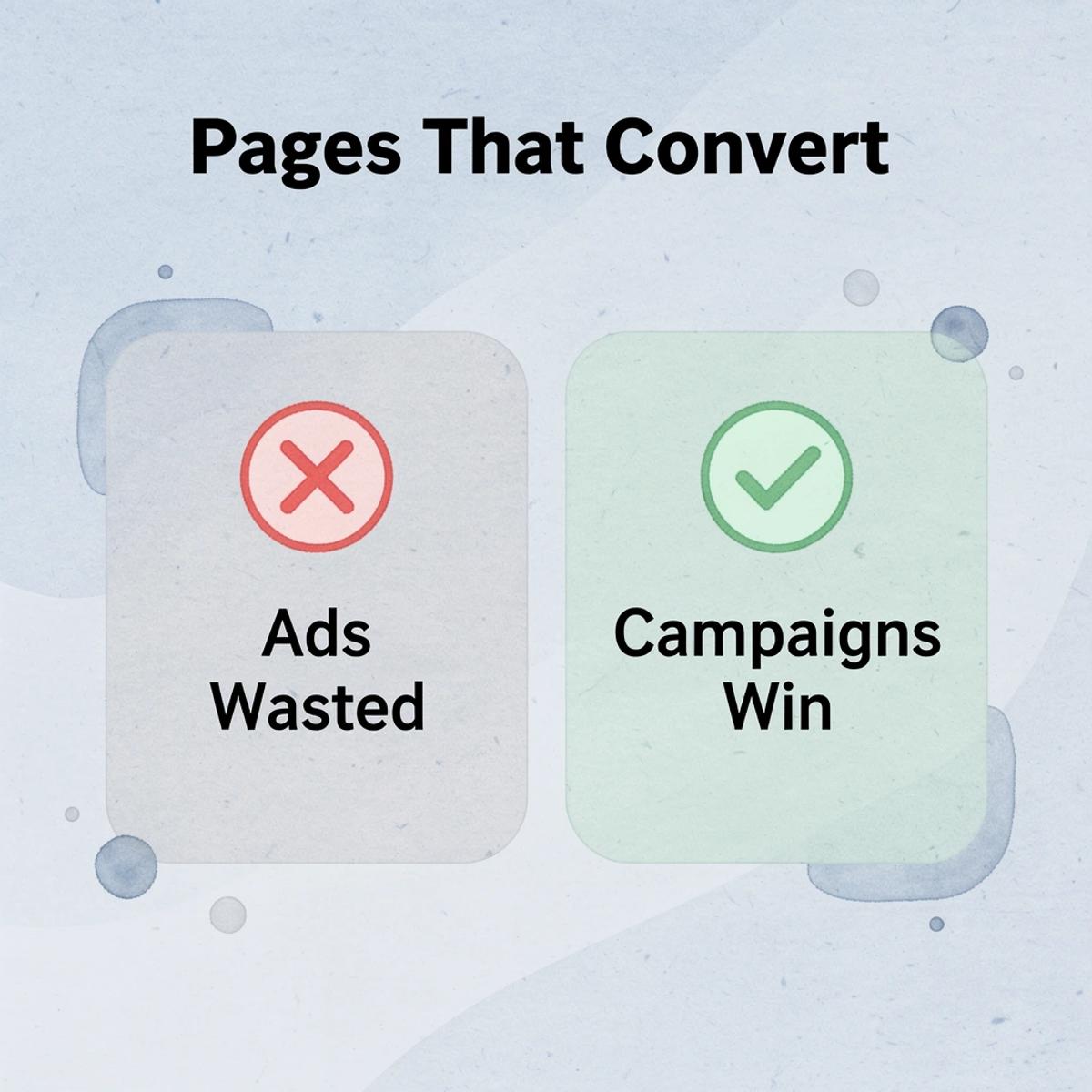
Start a free trial at PagePilot and generate up to three product pages at absolutely no cost. Simply enter a competitor or supplier URL, and within minutes you'll have brand-quality pages complete with better visuals, stronger positioning angles, and high-converting copy — all ready to immediately support your ad campaigns.
💡 Tip: Use your free three pages to test different positioning angles — compare which copy and visuals drive the highest click-through and conversion rates before committing to a full build.
🎯 Key Point: PagePilot's AI Page Builder compresses what would normally take hours of design and copywriting work into a minutes-long workflow — so you can launch faster and spend smarter.
Feature
Without PagePilot
With PagePilot
Page Creation Time
Hours to days
Minutes
Ad + Page Alignment
Manual, inconsistent
Unified workflow
Cost to Start
Designer + copywriter fees
Free trial (3 pages)
Conversion Readiness
Hit or miss
Brand-quality output