

Shopify, WooCommerce, BigCommerce, Wix, Squarespace, Sellfy, Square Online, and Adobe Commerce are eight Ecwid alternatives worth comparing in 2026.
Shopify is a strong choice for businesses building a dedicated online store. WooCommerce gives WordPress users more control, while BigCommerce suits complex catalogs and B2B operations.
But switching platforms isn't always an upgrade.
Ecwid still makes sense when you want to sell through an existing website without rebuilding it. It supports physical and digital products, subscriptions on eligible plans, and multiple sales channels.
The better question is what your current setup can't do. Below, we'll compare each alternative by pricing, customization, marketing features, and the kind of business it serves best.
Ecwid Alternatives at a Glance
Pricing checked October 8, 2026. Prices are in USD where stated. Shopify, BigCommerce, and Sellfy figures above use month-to-month billing. WooCommerce's free core software doesn't include hosting or paid extensions. Wix and Squarespace pricing varies by location and billing arrangement.
Why Look for an Alternative to Ecwid?
An Ecwid alternative is worth considering when you need more control over your storefront, a different marketing or integration setup, or ecommerce features that your current plan doesn't provide economically. Ecwid can handle more than a basic shopping cart, so switching should solve an identifiable problem.
According to Ecwid's pricing and feature comparison, its current plans include:
- Starter, with up to 10 products.
- Venture, with up to 100 products and digital goods.
- Business, with up to 2,500 products, subscriptions, marketplace selling, and additional reporting features.
- Unlimited, with unlimited products and additional staff and POS capabilities.
Ecwid also charges 0% additional platform transaction fees, although payment processors still charge their own fees.
For a business already running a WordPress, Wix, or other website, Ecwid's ability to add a store without rebuilding the site is a meaningful advantage.
The reasons to move usually become clearer when ecommerce starts taking up more of the business.
You might want more freedom to customize product and checkout experiences, a larger selection of specialized apps, a different content-management system, or more advanced B2B and inventory workflows.
Those are valid reasons to compare platforms. Simply increasing your product count or wanting to sell on social media isn't necessarily enough, because Ecwid already supports both.
What Are the 8 Best Ecwid Alternatives?
1. Shopify: Best for Building a Dedicated Ecommerce Business
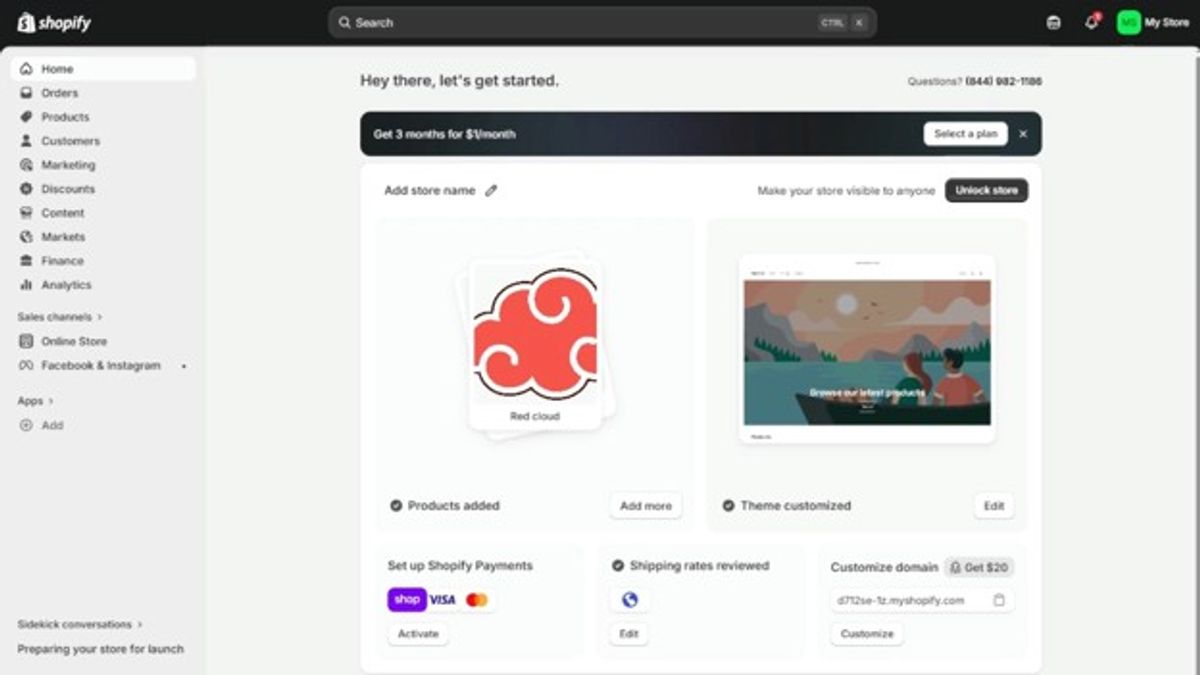
Best for: Merchants who want a dedicated online store with a broad ecosystem of ecommerce apps, marketing tools, and product-page customization options.
Shopify is the strongest all-around Ecwid alternative for businesses that want their online store to become the center of their operations.
Where Ecwid is particularly convenient for adding ecommerce to an existing website, Shopify is designed around running the store itself.
You can manage products, inventory, payments, orders, shipping, and customer information in one environment. Its app ecosystem also covers subscriptions, reviews, loyalty programs, sourcing, fulfillment, and advanced product-page design.
Shopify's main advantages include:
- Dedicated ecommerce themes and storefront customization.
- Multichannel selling through supported marketplaces and social platforms.
- Shopify Email and integrations with marketing platforms such as Klaviyo.
- Product, order, and sales analytics.
- A large selection of page builders and conversion optimization apps.
- APIs and headless storefront capabilities for more advanced businesses.
That app ecosystem is particularly useful once your needs become more specific.
For example, a merchant testing several products each month may need landing pages tailored to different audiences, rather than using the same product-page template for every campaign.
Building and Testing Product Pages With Shopify
Shopify gives merchants access to specialized tools for building product pages without creating every layout manually.
PagePilot is one example. Its AI Shopify page builder lets merchants generate product-page drafts from supported product links, including copy, layouts, and visuals that can be edited before importing into Shopify.
This is useful when launching products frequently, particularly for dropshipping stores that want to prepare several pages without repeating the same manual setup.
Page generation is only the starting point, though. Product photos, descriptions, pricing, reviews, and shipping information still need to be accurate. You also need real traffic and conversion data to establish which version performs better.
For practical design inspiration, see these Shopify product page examples and the elements worth testing on your own store.
Shopify can charge additional third-party transaction fees when merchants use an external payment provider instead of Shopify Payments. Payment processing and paid apps can also add to the total cost.
Where Ecwid may be better: You already have a website you like and only need a relatively straightforward store attached to it.
Verdict: Choose Shopify when ecommerce is the main business and you expect to invest in store design, marketing, product launches, and integrations over time.
2. WooCommerce: Best for WordPress Stores and Customization

Best for: Businesses already using WordPress that want greater control over their online store, content, and hosting environment.
WooCommerce is an open-source ecommerce platform built for WordPress.
Unlike Ecwid, which can be embedded into different websites, WooCommerce becomes part of the WordPress installation itself.
That provides considerable flexibility.
You can choose a hosting provider, change themes, add extensions, customize templates, and build content around products using WordPress's publishing tools.
WooCommerce works especially well for businesses where articles, guides, educational resources, or organic search contribute significantly to sales.
Its strengths include:
- Extensive WordPress theme and plugin compatibility.
- Control over hosting and much of the site architecture.
- Flexible product and category pages.
- Digital goods and subscription capabilities through extensions.
- Strong blogging and content-management functionality.
- Numerous integrations for payments, shipping, and marketing.
There is a cost to that freedom.
WooCommerce's core software is free, but running the store isn't. Hosting, premium extensions, backups, security, development, and ongoing maintenance may all require separate spending.
The business is also responsible for keeping the WordPress environment healthy.
Where Ecwid may be better: You already have a WordPress website and want to add commerce without taking responsibility for a more extensive WooCommerce setup.
Verdict: WooCommerce is an excellent alternative when WordPress content, customization, and technical control matter more than having a fully managed ecommerce platform.
Pricing: Free core software, with variable hosting, extension, and maintenance costs.
Official website: https://woocommerce.com/
3. BigCommerce: Best for Complex Catalogs and B2B Operations
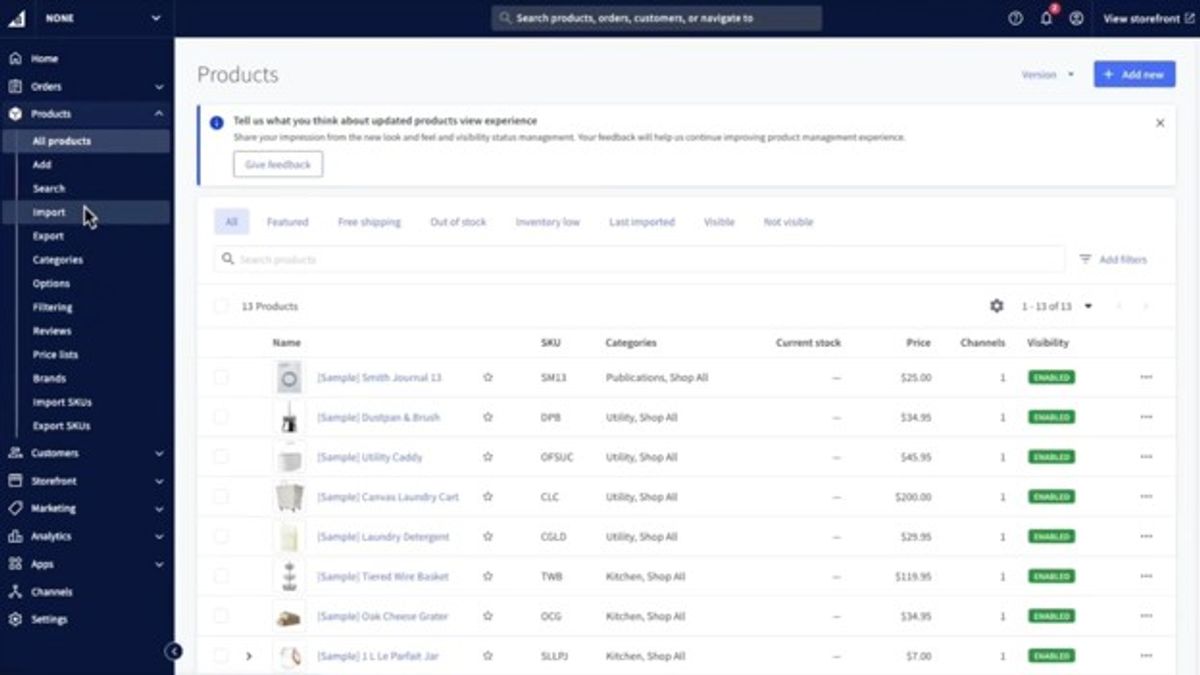
or significant integration needs.
BigCommerce offers a managed ecommerce platform with extensive catalog, sales-channel, and integration functionality.
It makes sense for merchants who need more than a standard storefront but don't necessarily want to maintain an open-source commerce installation.
BigCommerce supports:
- Advanced product catalogs and variants.
- Multichannel selling.
- Multiple storefronts.
- B2B capabilities.
- API integrations.
- Headless commerce.
- Advanced reporting and operational workflows.
Its suitability becomes clearer when a business needs different storefront experiences, customer-specific pricing, or connections with existing operational systems.
The new structure also introduces important GMV and payment-provider rules.
Core has a $30,000 trailing-12-month GMV threshold, while Growth has a $100,000 threshold. Exceeding those thresholds can trigger an automatic plan upgrade.
Scale has a $33,333 monthly GMV threshold and a 0.9% overage rate on GMV above that threshold.
BigCommerce also charges additional fees for eligible orders processed through Open Payment Providers: 2% on Core, 1% on Growth, and 0.6% on Scale. These are separate from payment-processing fees. Embedded Payment Providers are treated differently.
That means a merchant should not compare BigCommerce and Ecwid using subscription prices alone.
For a wider look at similar platforms, our BigCommerce alternatives guide covers other options and their trade-offs.
Where Ecwid may be better: Your store doesn't need advanced catalog management, B2B workflows, or multiple storefronts, and you value simpler operations.
Verdict: BigCommerce is worth evaluating for operational complexity, not merely because sales are increasing.
4. Wix: Best for Small Businesses That Need a Website and Store

Best for: Service businesses, local brands, and smaller merchants that want a website builder with ecommerce included.
Wix combines drag-and-drop website design with tools for selling products, accepting payments, marketing, and managing a business online.
Its appeal is straightforward: you can build a website, publish content, showcase services, and run an online store without managing a separate hosting environment.
For a local bakery selling gift boxes, a photographer offering prints, or a service business selling a small collection of products, that can be enough.
Wix includes ecommerce capabilities alongside:
- Website templates and visual editing.
- SEO settings and blogging.
- Marketing and email tools.
- Product and inventory management.
- Booking and service-business functionality.
- Third-party integrations.
The limitation is not that Wix cannot support serious ecommerce. It's that merchants with more specialized commerce requirements may prefer an ecosystem built primarily around selling products.
Pricing also needs care. Wix's plans and displayed prices vary by location, billing period, and applicable taxes. Check the local plan page for an accurate quote.
A business considering Wix and Shopify can use our Wix vs Shopify ecommerce comparison to examine the difference in store functionality and available tools.
Where Ecwid may be better: You already have a functioning website and simply need to embed a store instead of rebuilding it.
Verdict: Wix works well when the website serves several business purposes and online sales are only one of them.
Official website: https://www.wix.com/
5. Squarespace: Best for Design-Led and Content-Focused Brands
Best for: Creative brands, service businesses, and merchants who place considerable value on website presentation and content.
Squarespace is known for its website templates, visual design tools, blogging, and integrated commerce features.
It's particularly appealing when a store is part of a broader brand website.
Think of a photographer selling prints, a design studio offering merchandise, or a wellness business selling a limited product range alongside appointments and educational content.
Squarespace supports physical and digital products, website content, customer-facing pages, and marketing tools.
Its advantages include:
- Visually polished templates.
- Integrated blogging and website management.
- Product sales and digital offerings.
- Email marketing options.
- Service-business functionality.
- Relatively straightforward site maintenance.
Squarespace is less attractive when a business needs highly customized inventory, B2B, or fulfillment operations.
Its commerce capabilities also vary between plans, including transaction fees and certain selling features.
Review Squarespace's current pricing for your region and compare the actual plan features rather than relying on the lowest advertised rate.
Where Ecwid may be better: You're satisfied with your existing website and don't need a new site builder. Ecwid can also be added to an existing Squarespace site.
Verdict: Squarespace makes sense when content, branding, and website design are just as important as the online store.
6. Sellfy: Best for Digital Products and Subscriptions
Best for: Creators selling downloadable products, subscriptions, print-on-demand merchandise, or relatively straightforward physical products.
Sellfy focuses on helping creators sell without building a complex ecommerce operation.
Its core functionality includes digital downloads, subscriptions, print-on-demand, product management, and email marketing.
That makes it useful for businesses selling ebooks, design resources, presets, educational downloads, and recurring digital content.
Sellfy's main strengths are:
- Digital product delivery.
- Subscription products.
- Print-on-demand functionality.
- Integrated email marketing.
- Simple storefront setup.
- No additional Sellfy platform transaction fee.
Stripe and PayPal processing charges still apply.
The Starter plan works out to $29 per month when purchased annually.
But Sellfy isn't automatically a better choice for digital products simply because Ecwid is associated with physical ecommerce.
Ecwid also supports digital goods and subscriptions on eligible plans.
The deciding question is whether Sellfy's simpler creator-focused workflow is more useful than the flexibility of your current store.
Where Ecwid may be better: You already sell both physical and digital products successfully, or use Ecwid's existing-site integration and don't want another storefront.
Verdict: Choose Sellfy when digital selling is your main business and simplicity matters more than extensive commerce customization.
7. Square Online: Best for Retailers Using Square POS
Best for: Physical retailers, restaurants, and local businesses already using Square for payments and point-of-sale operations.
Square Online connects online selling with Square's broader commerce ecosystem.
This is particularly relevant for businesses that need online orders and in-person transactions to work together.
For example, a local store might want customers to browse inventory online, place an order, and collect the product in person.
Square supports online and in-person workflows such as:
- Product and inventory management.
- POS-connected sales.
- Pickup and local delivery.
- Online payments.
- Customer accounts.
- Shipping.
Square offers a free online selling option, subject to applicable processing charges, alongside paid plans with additional features.
Its current Square Online pricing page explains the available plan structure and payment costs.
The main consideration is whether you want to build your business around Square's ecosystem.
Where Ecwid may be better: You're using a different POS provider, want more choice over your existing website, or already have an Ecwid setup that handles local and online sales effectively.
Verdict: Square Online is a particularly sensible Ecwid alternative for merchants whose in-person sales already run through Square.
8. Adobe Commerce: Best for Highly Customized Enterprise Ecommerce
Best for: Larger businesses with complex catalogs, advanced B2B requirements, multiple storefronts, or substantial development resources.
Adobe Commerce is fundamentally different from lightweight store builders.
It offers a highly configurable commerce environment for businesses that need to control detailed aspects of their storefront and operational architecture.
Its capabilities include:
- Advanced catalog management.
- B2B commerce.
- Customer-specific pricing and account structures.
- Multiple storefronts.
- APIs and headless commerce.
- Extensive integration possibilities.
- Custom business workflows.
This flexibility also introduces complexity.
An Adobe Commerce implementation may require developers, solution architects, hosting and infrastructure planning, custom integrations, and ongoing maintenance.
That makes it inappropriate as a generic recommendation for a small store that has outgrown its original template.
Pricing: Custom. The full cost includes far more than the software agreement.
Official website: https://business.adobe.com/products/magento/magento-commerce.html
Where Ecwid may be better: Almost any business without complex enterprise requirements will find Ecwid simpler to operate and maintain.
Verdict: Consider Adobe Commerce when your business requirements justify custom architecture and you have the resources to support it.
Ecwid vs Shopify: Which Is Better for a Growing Store?
Shopify is generally the stronger choice for a business that wants a dedicated ecommerce platform and a large selection of specialized commerce tools. Ecwid is often the more practical choice for adding a store to an existing website. Neither platform guarantees better sales or SEO rankings.
When Should You Switch From Ecwid to Shopify?
A move is worth considering when the existing setup makes ordinary ecommerce work unnecessarily difficult.
Perhaps your team needs several paid apps to achieve the storefront layout it wants. Maybe every new product launch requires extensive manual page building, or your marketing team needs integrations that are easier to manage within Shopify.
Those are stronger reasons to switch than a vague desire to scale.
Shopify's ecosystem also makes specialized ecommerce product page optimization more accessible. Merchants can use apps to create different layouts, improve product information, and prepare pages for testing.
However, product-page quality isn't exclusive to Shopify. A clear offer, useful imagery, accurate descriptions, and a reliable checkout matter on every platform.
The right platform is the one that makes those improvements practical for your business.
Which Ecwid Alternative Is Best for Your Needs?
The best Ecwid replacement comes down to what your current setup cannot deliver.
Before choosing a replacement, identify the exact workflow causing the problem. A more sophisticated platform is only valuable if your business will use the additional capabilities.
How Much Does It Cost to Switch From Ecwid?
Switching from Ecwid costs more than the new platform's subscription. You may also need to pay for migration tools, applications, technical work, design changes, and payment processing. The exact total depends on the size and complexity of your existing store.
A useful way to compare ongoing costs is:
Monthly operating cost = platform subscription + paid apps or extensions + hosting and maintenance + applicable platform payment fees + payment-processing charges + recurring services.
Treat one-time migration costs separately.
Other platforms have different cost structures.
WooCommerce may have no core software charge but require hosting, paid extensions, or development support.
BigCommerce's updated plans can introduce additional charges based on qualifying GMV and payment-provider choices.
Ecwid may be less expensive for a simple embedded store, particularly when the alternative would require rebuilding the website.
Compare the Costs Against Actual Requirements
Before deciding, write down which apps, integrations, and workflows your business needs.
Then request or calculate the cost of meeting those requirements on each platform.
A higher subscription price may be acceptable if it replaces several tools. A cheaper plan may be poor value if it requires expensive development work.
Cost should be evaluated against the work the platform needs to do.
How to Migrate From Ecwid Without Losing Sales or SEO
A successful Ecwid migration requires more than transferring products. You need to preserve essential content, customer and order information where supported, payment functionality, and the URLs that customers and search engines already use.
The safest approach is to prepare the destination store before sending visitors to it.
1. Export and Audit Your Product Catalog
Start with your products, categories, variants, SKUs, pricing, stock quantities, and images.
Check for duplicate items, missing descriptions, inconsistent variants, and outdated prices.
This is also a good opportunity to decide which products should remain in the catalog.
2. Plan Customer and Order Data Migration
Determine whether the destination platform can import the customer fields and order history you need.
Not every platform supports the same fields or import methods.
Pay particular attention to customer accounts, tax records, subscription information, and historical orders.
Don't assume that passwords or payment credentials can be transferred between providers.
3. Map Your Existing URLs
Create a list of the current product, category, and important content URLs.
Map each existing URL to its most relevant destination.
Where URLs change, implement permanent redirects on the system controlling the old URLs.
Don't redirect every old product page to the homepage. That creates a poor experience for customers and can make it harder for search engines to understand the move.
Follow Google's site migration guidance when changing URLs.
4. Preserve Important Content and Metadata
Transfer useful product descriptions, page titles, meta descriptions, and relevant informational content.
Avoid copying old content blindly if it's inaccurate or no longer useful.
Also check collection structures, internal links, canonical URLs, and structured product information.
5. Reconnect Payments, Shipping, and Taxes
Set up the destination platform's payment providers, shipping methods, taxes, and transactional email settings.
Check any integrations used for fulfillment, inventory, accounting, or customer communication.
A storefront can look complete while important operational processes remain disconnected.
6. Test Before Launch
Place test orders using the available checkout testing tools.
Review the full purchasing process on desktop and mobile.
Check product variants, shipping charges, discounts, confirmation emails, order notifications, and payment behavior.
After launch, monitor broken links, indexing, organic landing pages, and checkout problems.
A migration can cause temporary search visibility fluctuations even when handled carefully. There is no reliable guarantee that rankings will remain unchanged.
Is Switching From Ecwid Worth It?
Switching from Ecwid is worth it when another platform solves a specific problem that your current setup cannot handle efficiently. That might mean better storefront customization, integrations, complex catalog workflows, or a dedicated ecommerce environment.
For many merchants, Shopify is the strongest starting point. WooCommerce makes more sense when WordPress control matters, while BigCommerce is worth considering for complicated commerce operations.
But a new platform won't automatically fix a weak product offer, poor images, unclear shipping policies, or underperforming product pages.
For businesses moving to Shopify, PagePilot can help with the next part of the process: generating product-page drafts, copy, and visuals that merchants can review, customize, and publish.
Moving to Shopify? Explore PagePilot's AI Shopify page builder to prepare product pages without creating every layout from scratch.
Frequently Asked Questions
What Is the Best Alternative to Ecwid?
Shopify is a strong overall Ecwid alternative for merchants building a dedicated ecommerce store. WooCommerce is a better fit for WordPress-based businesses wanting greater control, while BigCommerce supports more complex commerce operations. Wix, Squarespace, and Square Online can be better choices when ecommerce is only one part of a broader business website.
Is Shopify Better Than Ecwid?
Shopify is generally better suited to dedicated ecommerce operations that need extensive apps, storefront customization, and specialized selling tools. Ecwid is often more convenient for adding a store to an existing website. Shopify isn't automatically cheaper or more effective at converting visitors, so compare the capabilities and total costs your business actually requires.
What Is Cheaper Than Ecwid?
WooCommerce has free core software, and Square offers a free online selling option, but neither necessarily costs less to operate. Hosting, extensions, processing charges, and other services can increase expenses. Compare each platform's total cost against your Ecwid plan, including the features and integrations you already use.
Which Ecwid Alternative Is Best for SEO?
WooCommerce is particularly attractive for WordPress businesses that want extensive control over their content and website structure. Shopify also provides strong ecommerce SEO features for products, collections, and blog content. Wix and Squarespace support fundamental SEO tasks. No platform guarantees better rankings; content quality, technical implementation, and site structure still matter.
Can I Sell Digital Products and Subscriptions Without Ecwid?
Yes. Sellfy supports digital downloads and subscriptions, while Shopify and WooCommerce offer digital selling through their ecosystems. Other platforms provide similar capabilities through native features or integrations. Ecwid itself also supports digital products and subscriptions on eligible plans, so you may not need to migrate solely to sell these products.
Does Ecwid Charge Transaction Fees?
Ecwid charges 0% additional platform transaction fees across its current plans. However, that doesn't make every sale fee-free. Payment providers still apply their own processing charges, and some third-party integrations may have costs. Compare both subscription and payment expenses when evaluating Ecwid against Shopify, BigCommerce, or other alternatives.