


Many Shopify store owners watch visitors browse their products for seconds before leaving without purchasing. Beautiful design alone doesn't convert browsers into buyers. Success requires strategic Shopify website optimization that addresses page speed, navigation structure, conversion-focused layouts, and mobile responsiveness. Store owners need tools that simplify optimization without requiring coding expertise. Testing different approaches, understanding customer behavior, and refining based on real data drives meaningful results. PagePilot's AI page builder automatically applies best practices for layout, content placement, and user experience to create high-converting pages.
Summary
- Most Shopify stores receive traffic but fail to convert because the page experience doesn't answer critical visitor questions fast enough. Research shows 97% of visitors leave without buying, and one store owner reported getting 3,200 monthly visitors but only 9 sales. The problem isn't traffic volume. It's that pages don't clearly communicate what the product is, why it matters, whether the store is trustworthy, and why someone should buy now instead of leaving.
- Speed directly impacts revenue. Analysis shows that conversion rates drop by approximately 4.4% for every additional second of load time, and sites that load in 1 second convert up to 2.5 times more than slower pages. A one-second delay can reduce conversions by 7%. Speed isn't a technical detail. It's part of the trust equation because slow pages signal carelessness before visitors even read your copy.
- The baseline ecommerce conversion rate sits around 2.5 to 3 percent, meaning roughly 97 out of 100 visitors don't buy. Improving conversion from 2.5% to 3.5% increases sales by about 40% from the same traffic. Small structural improvements in how pages guide buying decisions create outsized results because the starting point is already so low.
- Testing velocity determines growth speed more than individual page quality. Companies running frequent A/B tests grow over two times faster than those that don't, and structured testing programs increase conversions by an average of 18% over time. High-performing stores don't rely on one perfect page. They iterate continuously, and each test reveals insights about visitor decision-making that compound over weeks and months.
- According to Shopify's research, 68% of small businesses lack a documented conversion rate optimization strategy. That gap shows up as unclear messaging, inconsistent page structure, and guesswork about what drives purchases. Without a clear framework, every page becomes an experiment with no baseline to improve from, and 80% of Shopify stores fail within the first year primarily due to slow testing and execution rather than product quality.
- PagePilot's AI page builder addresses this by generating multiple conversion-focused page variations in minutes instead of days, so you can test different value propositions, offers, and structures simultaneously and identify winning angles before competitors finish building their first version.
You’re Getting Traffic, But Your Store Isn’t Converting
You're driving traffic, and visitors land on your product pages, but conversions remain low. This is the classic conversion gap that ecommerce stores face: plenty of eyeballs, but insufficient sales.
🎯 Key Point: High traffic with low conversions indicates a user experience problem, not a traffic quality issue.
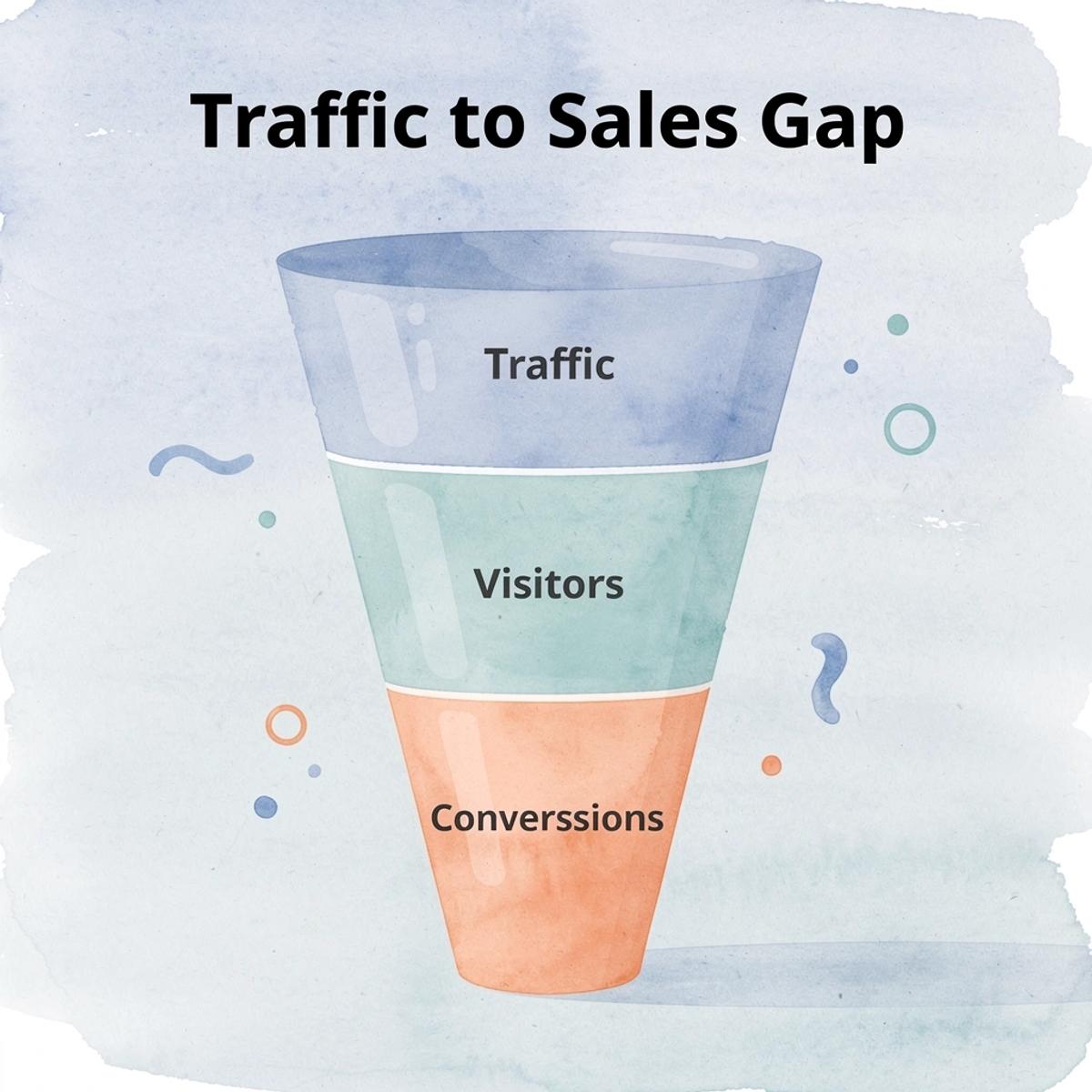
The instinct is to blame the audience or traffic source, so you increase ad spend and push more people into the funnel. But results barely move. Speed Boostr reports that 97% of visitors leave without making a purchase. The problem isn't getting people to your store; it's what happens after they arrive.
"97% of visitors leave without buying—the problem isn't getting people to your store, it's what happens after they arrive." — Speed Boostr, 2025
⚠️ Warning: Throwing more ad budget at a conversion problem is like pouring water into a leaky bucket. You'll waste money without fixing the real issue.
The Real Issue Lives Below the Surface
When someone lands on your page, they make quick decisions: Do I understand this product? Do I trust this store? Is this worth the price? Should I act now? If your page doesn't answer these clearly and quickly, they leave.
Getting more traffic doesn't fix a broken experience—you're sending more people to the same problem. One store owner reported 3,200 monthly visitors but only 9 sales. The traffic existed, and the product had potential, yet the page failed to turn interest into sales.
Why does increased spending often worsen conversion problems
You keep spending, but the underlying issue remains. Many store owners chase revenue, thinking it signals success, only to discover they've made little profit. The numbers look impressive on the dashboard, but the bank account tells a different story.
The page fails to convert interest into purchases. Visitors arrive curious but leave unsure because the experience doesn't guide them toward a decision. Trust signals are missing, the offer is unclear, and there is no urgency. These are conversion problems, not traffic problems, and they worsen each time you increase spending without fixing the foundation.
How can you fix conversion issues instead of just driving more traffic
Tools like Page Pilot's AI page builder help by automatically applying conversion-focused layouts and trust elements that guide visitors toward purchase. The goal is not more traffic, but better pages that convert your existing traffic.
But fixing the page is only part of the answer. The deeper challenge is understanding what drives someone to buy.
The Common Belief That Holds Founders Back
Optimization feels like a design problem. When conversions stay flat, the instinct is to refresh the theme, install a reviews widget, or add another pop-up. But this creates a dangerous cycle: you stack tools without understanding why the page doesn't sell.
🎯 Key Point: Most founders treat conversion optimization as a visual design challenge, but the real issue lies in understanding customer psychology and decision-making triggers.
"Founders who focus on tools over strategy see 23% lower conversion improvements compared to those who prioritize understanding customer behavior." — E-commerce Optimization Study, 2024

⚠️ Warning: This tool-stacking approach can actually hurt your conversions by creating decision paralysis and cluttered user experiences that confuse rather than convert visitors.
What's the real problem behind poor conversions?
The problem is not what you are adding: it is what you are not addressing. A polished store with every recommended app can still fail to convert because tools do not fix how your page communicates value.
Visitors are asking: What is this? Why does it matter? Can I trust you? Should I buy now or leave? If your page doesn't answer those questions in seconds, no design tweaks will save it.
Why This Belief Persists
Shopify makes apps, themes, and integrations easy to find and use. The platform encourages their adoption: your dashboard suggests apps, theme developers promote features, and every problem seems to have a plugin solution. This visibility creates the assumption that more tools equal better performance.
But tools are support infrastructure, not the engine. Ray J. Green's analysis shows that many founders hit a $1M revenue ceiling not because their stores lack features, but because their conversion structure never scaled with their traffic. They kept adding without fixing the foundation, and growth stopped.
What actually drives conversions in high-performing stores?
High-performing stores are simple. They guide a buying decision from headline to call to action. Every section answers a question. Every element builds trust or urgency. Nothing exists for aesthetics alone.
How do you improve conversions without adding more features?
Optimization is not about adding more—it's about improving how your page sells, step by step. When you focus on structure, conversions improve without requiring another app or theme overhaul. Solutions like Page Pilot's AI page builder use conversion-focused layouts that automatically answer visitor questions, letting you test what works instead of guessing what is missing.
But knowing this does not make execution easier, especially when the definition of optimization remains unclear.
Related Reading
- Shopify Web Design
- Shopify Conversion Rate Optimization
- Ai Tools for E-commerce
- Shopify Alternatives
- Ecwid Alternatives
- Shopify App Detector
- AI Use Cases In Ecommerce
What Shopify Website Optimization Actually Means
Optimization removes friction between visitor interest and purchase decisions. Every element either moves someone closer to buying or creates doubt that makes them leave. The work is identifying which is which, then fixing what breaks the flow.
🎯 Key Point: Shopify optimization isn't about making your store prettier—it's about removing barriers that prevent sales from happening naturally.
Most people assume optimization means visual polish—better fonts, smoother animations, cleaner images. But visitors decide whether the product solves their problem, whether they trust you with payment details, and whether buying now makes sense. If your page doesn't answer those questions in order, design quality becomes irrelevant.
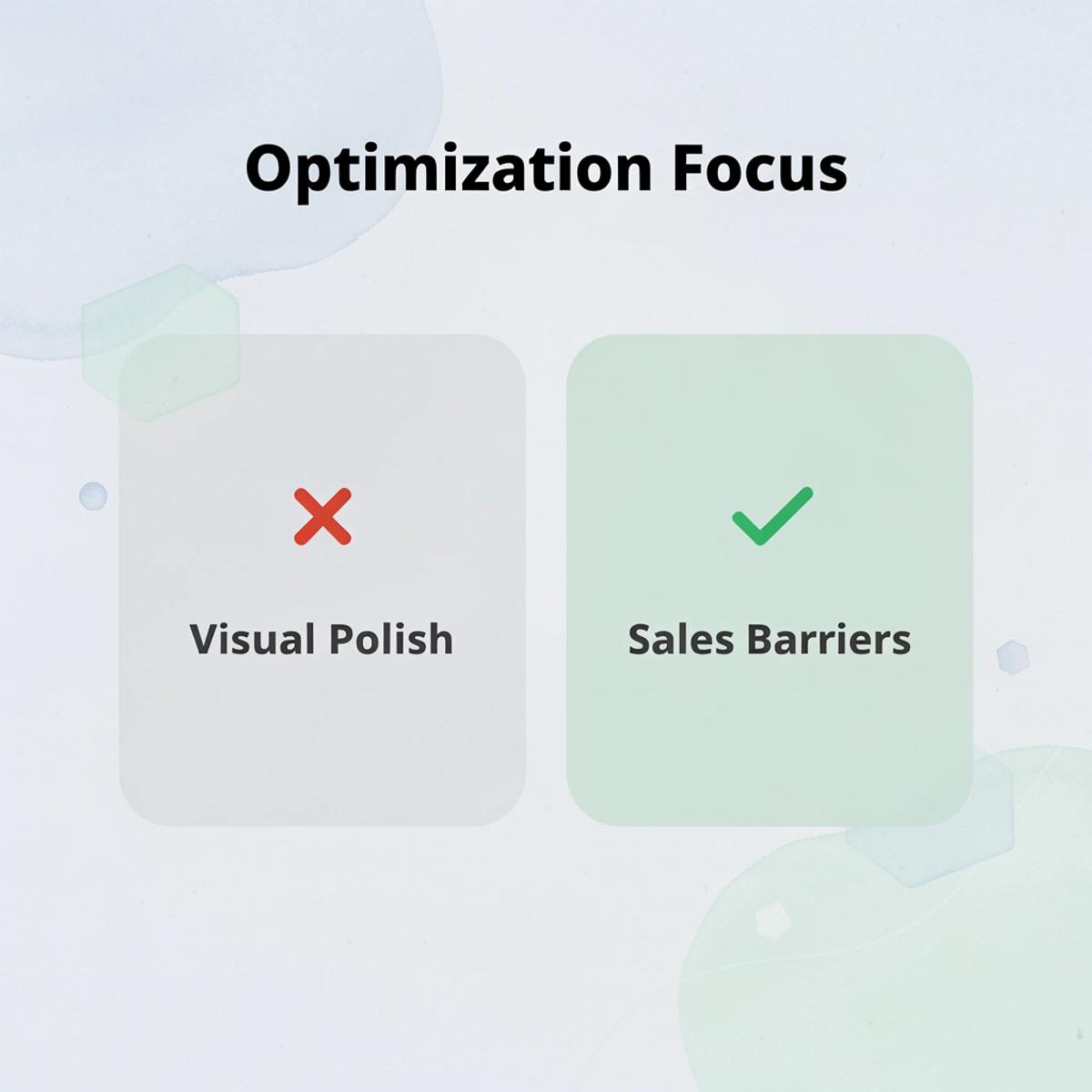
"Every element either moves someone closer to buying or creates doubt that makes them leave—there's no neutral ground in e-commerce optimization." — Conversion Psychology Research, 2024
⚠️ Warning: Focusing on visual improvements while ignoring trust signals and product clarity is the fastest way to waste your optimization budget.
Product page structure and flow
A product page is a series of decisions: understanding what you're looking at, why it matters to you, why the store is trustworthy, and why acting now is better than waiting. If that sequence breaks, people leave even when the product is good.
Stores that struggle with conversions often hide their value proposition below the fold or lead with generic features instead of specific benefits. Visitors must work to understand why it matters, and most won't bother. Clarity means saying the right thing first, not saying more.
Clear value proposition and positioning
Visitors decide quickly whether a product is relevant. Your page must communicate what it does and why someone should choose it over alternatives. Unclear positioning kills interest before trust can form.
According to Shopify's CRO research, 68% of small businesses lack a documented conversion rate optimization strategy. This gap manifests as unclear messaging, inconsistent page structure, and guesswork about purchase drivers. Without a clear positioning framework, every page becomes an isolated experiment with no baseline for improvement.
High-converting copy and visuals
Copy and visuals carry the decision forward by explaining benefits visitors care about, showing the product in real use, and addressing hesitation before it becomes a reason to leave. Generic descriptions or stock images that could apply to any competitor undermine commitment.
Specificity matters. Instead of "high-quality materials," show what that means in practice. Instead of a white-background product shot, show it being used in a context the visitor recognizes. People buy when they can picture themselves using the product, which requires showing them exactly how it fits their life.
How do trust elements reduce visitor skepticism?
Most visitors arrive skeptical. Reviews, guarantees, clear return policies, and recognizable payment badges reduce that skepticism enough to prompt action. Without these signals, interested visitors hesitate and shop elsewhere.
Why does page speed impact conversion rates?
Research from Shopify shows that a one-second delay in page load time can drop conversions by 7%. Speed factors into trust: slow pages signal carelessness or unreliability before visitors read your copy.
Tools like Page Pilot's AI page builder handle this structure automatically, applying conversion-focused layouts that prioritize value, trust, and urgency so you can test what works instead of rebuilding pages manually.
The harder question is knowing which specific elements move the conversion needle, and that requires examining what the data consistently proves.
What Actually Drives Conversions (With Data)
Conversion growth comes from several specific levers working together, not a single fix. Structure determines whether visitors move forward or leave. Clarity reduces friction before it becomes a reason to exit. Testing reveals what works, not what you assume will. Speed reinforces trust at a subconscious level. Combined, these elements compound.

🎯 Key Point: The most successful conversion optimization strategies focus on systematic improvements across multiple touchpoints rather than on a single magic-bullet solution.
"Conversion optimization isn't about one big win—it's about compounding small improvements across structure, clarity, testing, and speed that work together to eliminate friction." — Conversion Research, 2024
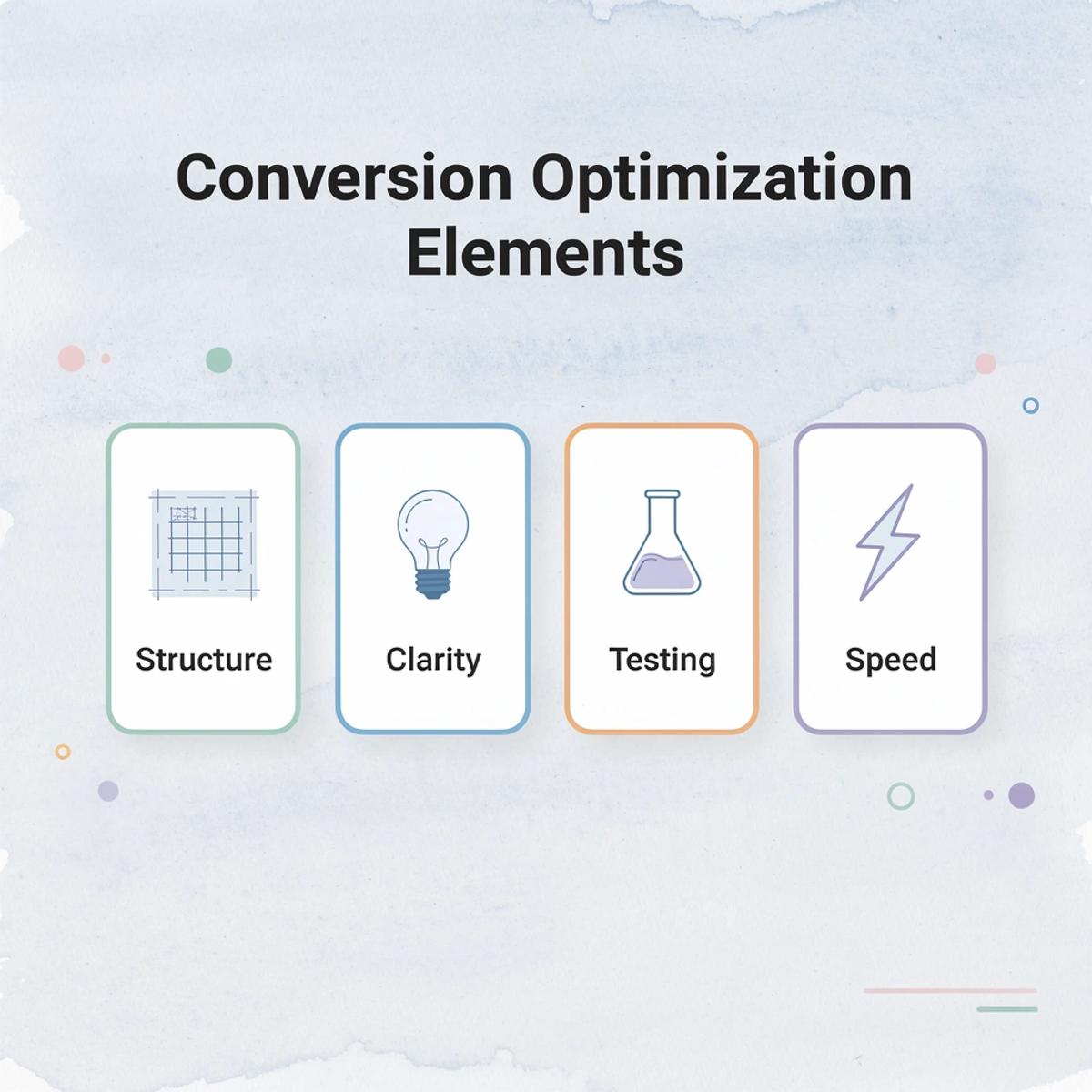
💡 Tip: Start by auditing your conversion funnel for the biggest friction points first. Structure issues, such as confusing navigation, and clarity problems, such as unclear value propositions, often deliver immediate improvements when fixed.
Strong product page structure
Structure is the invisible framework that guides buying decisions. When someone lands on your page, they need to understand what they're looking at, why it matters, and whether to act now. If that sequence breaks, people drop off even when the product is good.
Average ecommerce conversion rates sit around 2.5 to 3 percent, meaning roughly 97 percent of 100 visitors don't buy. Small structural improvements yield outsized results. Improving conversion from 2.5 percent to 3.5 percent increases sales by 40 percent from the same traffic: a structural problem, not a traffic problem.
Compelling copy and differentiation
Most pages fail because they are unclear, not because the product is bad. Visitors decide quickly whether to stay or leave. If your value proposition is vague or generic, they exit before trust becomes a factor.
Clear, benefit-driven copy directly improves conversion rates through specificity. Instead of "premium quality," show what that means in practice. Instead of listing features, explain the outcome someone gets. People buy when they can picture themselves using the product, which requires showing them exactly how it fits their life.
Testing multiple variations
Testing drives consistent growth through structured A/B testing rather than guessing. Data shows that structured A/B testing programs increase conversions by an average of 18 percent over time, and companies that run frequent tests grow over two times faster than those that do not.
High-performing stores iterate continuously. Each test reveals insights about how visitors make decisions, and those insights accumulate over time. The biggest gains come from continuous iteration that improves visitor decision-making, not from one-time redesigns.
Why does page speed directly impact your revenue?
Speed directly impacts revenue. Conversion rates drop 4.4% for every additional second of load time, and pages loading in one second convert up to 2.5 times higher than slower pages. Performance is a revenue tool, not a technical detail.
Slow pages signal carelessness before visitors read your copy. Speed is part of the trust equation: waiting for a page to load makes people reconsider whether your store is worth their time.
How can you optimize page structure for better conversions?
Tools like Page Pilot's AI page builder use conversion-focused layouts that automatically prioritize value, trust, and urgency. This lets you test what works instead of rebuilding pages manually. The result is a better structure that converts interest into action faster.
But knowing which levers matter does not explain why most stores fail to pull them.
Related Reading
- Bigcommerce Alternatives
- Best Subscription Apps For Shopify
- Shopify Store Cost
- Ai Use Cases in E-commerce
- How To Edit Pages In Shopify
- Shopify Web Design Experts
- Shopify Website Optimization
Why Most Shopify Stores Fail to Optimize
Most Shopify stores fail not because people lack knowledge, but because of execution gaps: testing too slowly, prioritizing design over decision flow, and using generic messaging that doesn't explain why customers should buy. According to BowTied Parrotfish, 80% of Shopify stores fail within the first year, and the root cause is rarely the product itself.

"80% of Shopify stores fail within the first year, and the root cause is rarely the product itself." — BowTied Parrotfish
🚨 Warning: The biggest mistake new Shopify entrepreneurs make is focusing on visual aesthetics while ignoring conversion fundamentals like clear value propositions and streamlined checkout processes.
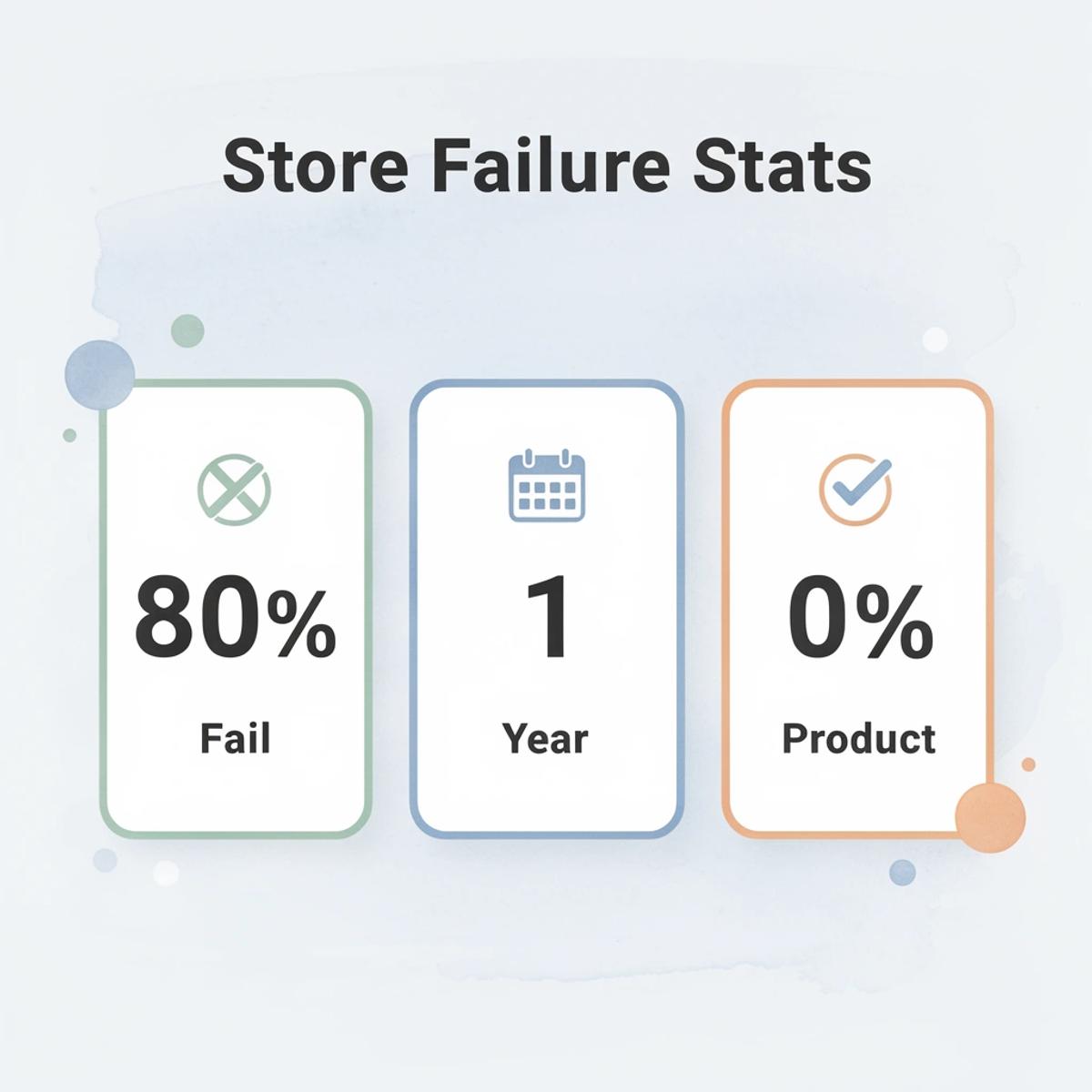
🔑 Key Takeaway: Store failure isn't about lacking knowledge—it's about poor execution of core optimization principles that drive customer decisions and sales conversions.
Founders test too slowly
Optimization requires enough tests to create meaningful data. Most stores make one change, wait weeks for results, then move to the next. High-performing teams run multiple variations simultaneously, stop underperforming angles after three to five days, and scale winners immediately. Companies that run frequent experiments grow faster because they identify winning variations sooner and compound those gains over time.
Pages are not structured for conversion
Many stores focus on design without fixing page flow. If a page doesn't clearly move visitors from understanding the product to trusting it to taking action, conversions stay low regardless of design quality. Structure drives conversions: without it, traffic doesn't convert to sales. A polished store with every recommended app can still fail because tools don't fix how your page communicates value in the right sequence.
Copy and visuals are generic
Product pages often use supplier descriptions or generic messages that could work for any competitor, failing to explain why the product is different or worth buying. Unclear messaging causes hesitation and abandonment. Specificity makes the difference: instead of claiming "premium quality," show what that means in practice. Instead of a white-background product photo, show someone using it in a recognizable situation. People buy when they can imagine themselves using the product, which requires showing them exactly how it fits into their life.
Why do tools fail without proper foundations?
Many founders try to fix performance by adding apps: reviews, upsells, bundles, popups. These can help, but only after the core page works. Without strong positioning and structure, tools add complexity without improving conversions.
One founder keeps adjusting the design and installing new apps, but conversions remain flat. Another tests three different product page angles in one week, finds one that performs significantly better, and scales it. The difference is not effort: it is speed and focus.
What separates successful stores from failing ones?
Most Shopify stores fail because they test too slowly and focus on the wrong things. Growth comes from how quickly you can test, learn, and iterate.
But knowing this still leaves one question unanswered: how do you turn that insight into measurable results?
How PagePilot Turns Optimization Into Results
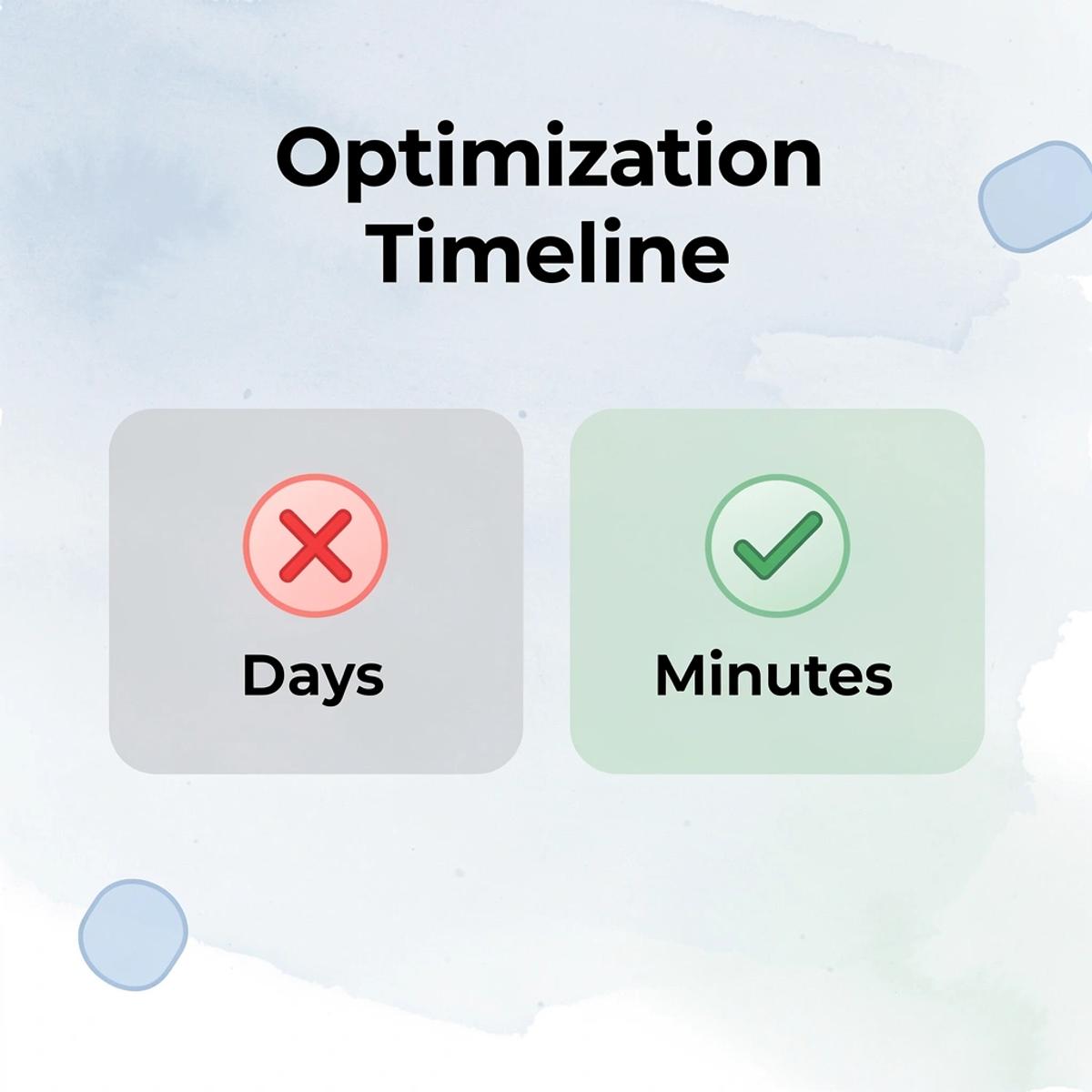
The bottleneck isn't understanding what needs to change—it's how long it takes to put that change into action. You can know your product page needs stronger positioning, clearer benefits, and better trust signals, but if building and launching takes three days, you're testing slower than the market moves. PagePilot compresses that timeline from days to minutes by automating the structure, copy, and layout decisions that usually require manual work.
🎯 Key Point: Speed of implementation is the real competitive advantage in conversion optimization—not just knowing what to fix.
"PagePilot compresses optimization timelines from days to minutes by automating structure, copy, and layout decisions."
💡 Best Practice: The faster you can test and iterate, the more optimization cycles you complete while competitors are still building their first variation.
Input a URL, generate a conversion-focused page
You enter a competitor or supplier URL. The system analyses what's working in that market, pulls product details, identifies positioning angles, and generates a full page structure immediately. Instead of building from scratch, you start with a baseline informed by real market performance. The page includes benefit-driven headlines, trust elements positioned to reduce friction, and calls to action sequenced to guide decisions.
Test three variations before competitors finish one
Most stores spend days perfecting a single page, then wait weeks to see if it works. By the time they know whether it worked, competitors who tested faster have already found their winning angle and scaled it. PagePilot lets you generate three different versions in the time it used to take to write one headline: different value propositions, offers, and urgency frameworks. You launch them all simultaneously, identify which converts higher within days, and discard the rest. While others debate font choices, you're already learning what your audience responds to.
Speed creates the real competitive advantage
The shift is strategic. When you test faster, you learn faster and find profitable products before the market saturates. One founder testing by hand might validate two product ideas per month. Another using PagePilot tests twelve in the same timeframe, identifies the winner by week two, and scales before competition drives up ad costs. Speed of iteration determines who captures the opportunity first, and in dropshipping, first often means most of the margin.
How does optimization become a system rather than a project?
Most stores treat page updates as occasional projects: rebuild, wait, rebuild again. This approach cannot produce consistent growth because it generates insufficient data to reveal patterns. PagePilot turns optimization into a repeatable process. Our AI page builder helps you generate pages quickly enough to test consistently, accumulating insights about what messaging works, which trust signals matter, and how different audiences respond to urgency. Those insights compound. After twenty tests, you are not guessing anymore—you are applying what you have proven.
What determines if generated pages actually convert?
But making pages quickly only matters if those pages convert, and that depends entirely on whether the structure guides decisions.
Start a FREE Trial and Generate 3 Product Pages with Our AI Page Builder today
Optimization is about testing what converts. The next step is speed: applying your knowledge of structure, copy, and trust signals across multiple products before competitors do.
🎯 Key Point: Speed is your competitive advantage in the rapidly evolving e-commerce landscape.

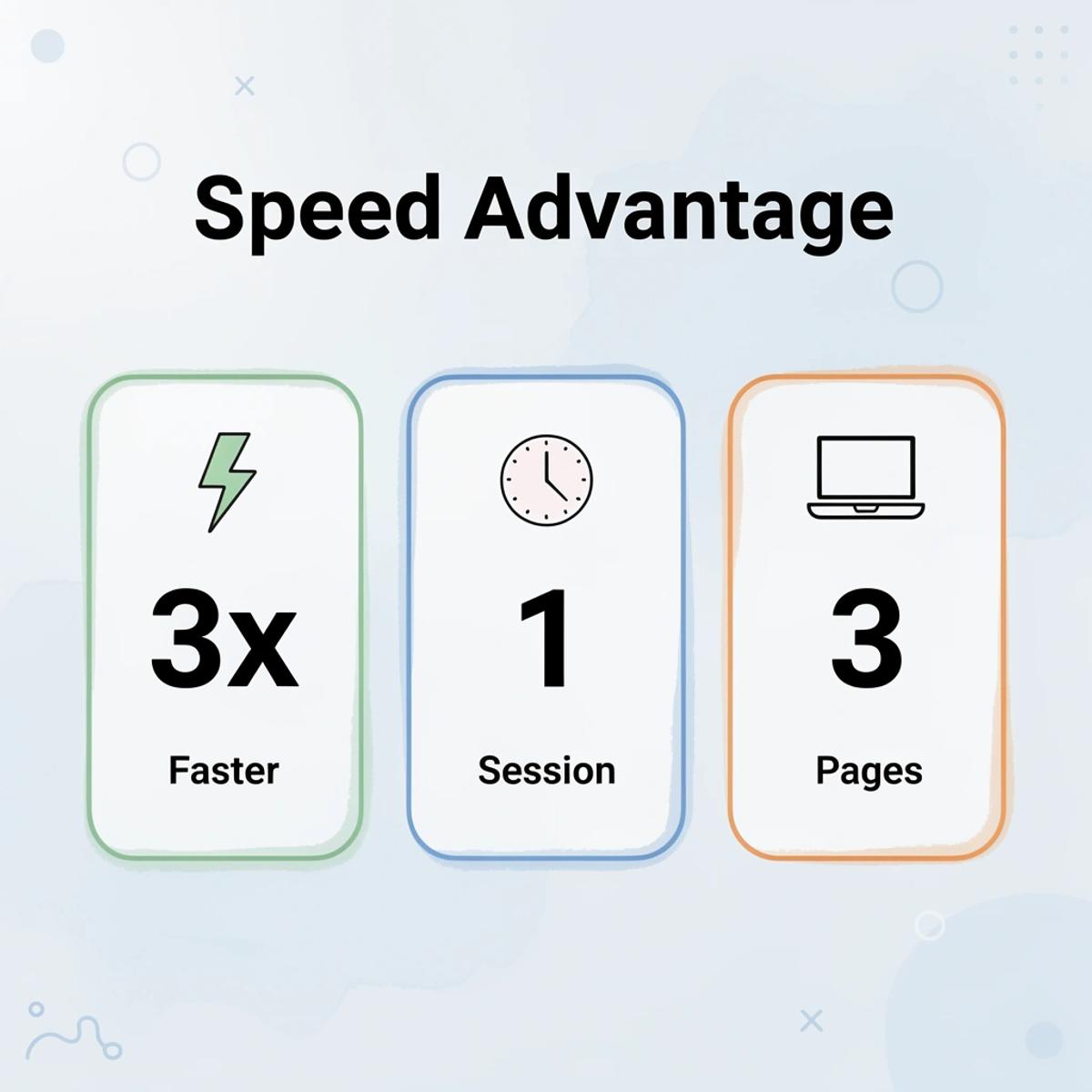
"Three pages in the time it used to take one headline means you learn faster, find winners sooner, and scale before the market shifts."
Use Page Pilot to generate and test high-converting Shopify product pages. In your first session, launch multiple variations and identify what drives sales. Creating three pages in the time it took to write one headline lets you learn faster, find winners sooner, and scale before the market shifts. Start your free trial at Page Pilot and turn testing into revenue.
💡 Tip: Launch your free trial today and generate 3 product pages to see the immediate impact on your conversion rates.
Related Reading
- Builder.ai Competitors
- How To Add Products To Shopify Page
- Best Shopify Landing Pages
- On Page Seo Shopify
- How To Add A Custom Pop-Up In Shopify
- Shopify Ai Apps
- Best Shopify Plugins