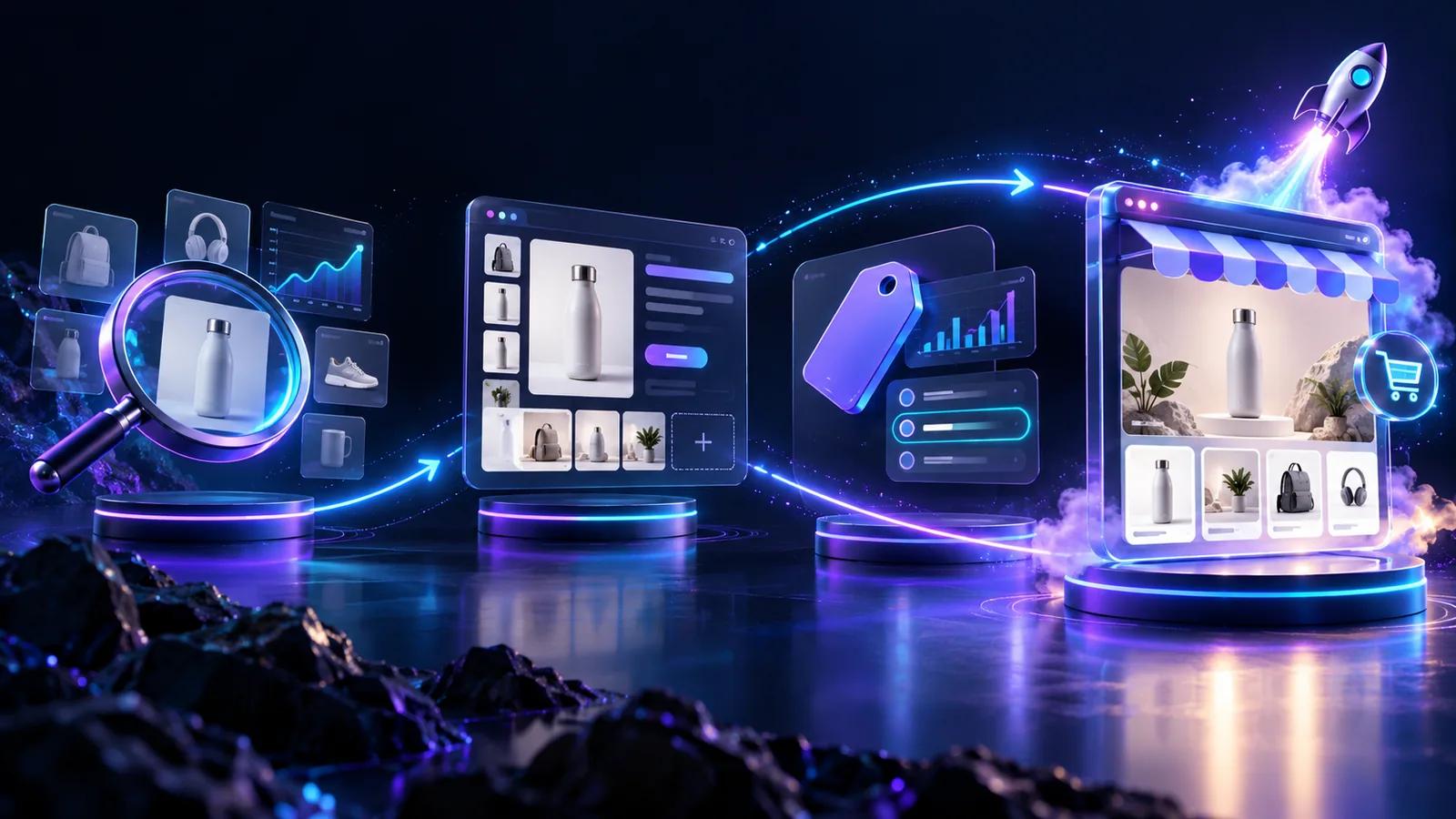


Your Shopify store might have amazing products, but if the design feels clunky or confusing, potential customers will leave before reaching checkout. Effective Shopify Web Design creates an experience that guides visitors naturally from browsing to buying, building trust through thoughtful layouts, intuitive navigation, and mobile-responsive pages that load fast. Success comes from understanding conversion-focused design principles that turn traffic into revenue.
Store owners don't need to be coding experts or hire expensive agencies to create professional storefronts. Modern tools help design high-converting pages quickly, using smart templates and automated optimization that responds to what actually works for ecommerce. Instead of spending weeks tweaking code or wondering which layout performs better, merchants can focus on showcasing products effectively and creating memorable shopping experiences with an AI page builder.
Table of Contents
Most Shopify Web Design Advice Is Wrong
What “High-Converting Shopify Design” Actually Means
5 Core Elements of a High-Converting Shopify Store
Why Most Shopify Designs Still Don’t Convert
The Conversion Design Framework That Actually Works
How PagePilot Helps You Design for Conversion, Not Just Looks
Start a FREE Trial and Generate 3 Product Pages with Our AI Page Builder today
Summary
- Conversion rates separate high-performing Shopify stores from average ones by a significant margin. Top stores convert at 3% or higher, while the average Shopify store converts between 1.4% and 1.8%. This gap isn't explained by visual design quality or premium themes. Stores using identical templates show wildly different performance because the difference lies in structure, speed, and decision architecture rather than aesthetics.
- Cart abandonment remains the most expensive problem in ecommerce, with 70% of online shoppers leaving before completing a purchase. Research from Baymard Institute shows that these exits stem from functional issues such as unexpected costs, complicated checkout flows, and unclear value propositions rather than from visual appeal. The stores that convert effectively answer "What is this?" and "Why should I trust it?" within the first three seconds, before visitors even scroll.
- Page load speed directly impacts revenue, with every 1-second delay in mobile load time reducing conversions by 7% to 20%, depending on the study. This makes technical performance inseparable from design effectiveness. A beautiful page that takes four seconds to render on mobile loses customers before they see carefully crafted headlines or product images, which explains why speed optimization consistently outperforms visual polish in A/B tests.
- Most Shopify stores fail because they're designed once and never tested. Store owners choose themes, customize colors, upload products, and consider the work finished. Without comparing different headlines, layouts, or calls to action against actual visitor behavior, there's no feedback loop. High performers test constantly, discovering that changing one word in a CTA can increase clicks by 40% or moving reviews above the fold lifts conversions by 25%.
- Strategic placement of trust signals matters more than the volume of social proof. Reviews belong near the add-to-cart button, not buried in separate tabs three clicks away. Shipping costs and return policies need visibility before checkout begins, not after commitment. Well-optimized themes can increase conversion rates by 20% to 30%, but that optimization hinges on resolving hesitation at exact decision points rather than decorating pages with generic trust badges.
- The shift from static design to conversion optimization requires testing multiple page variations quickly, comparing messaging angles and layouts against real visitor behavior instead of opinions. AI page builder generates conversion-optimized product pages in under 60 seconds from competitor URLs, letting dropshippers test different psychological hooks and structural approaches the same day they identify a product opportunity, rather than waiting days for manual design revisions.
Most Shopify Web Design Advice Is Wrong
The advice to invest in beautiful design first is backward. Conversion comes from structure, speed, and decision architecture that guides visitors toward purchase, not from how things look. Most stores fail because they're built to impress rather than convert.
⚠️ Warning: Beautiful design without a conversion strategy is just expensive decoration that won't drive sales.
"Most e-commerce stores are built to impress rather than convert, focusing on aesthetics over decision architecture that actually drives purchases."
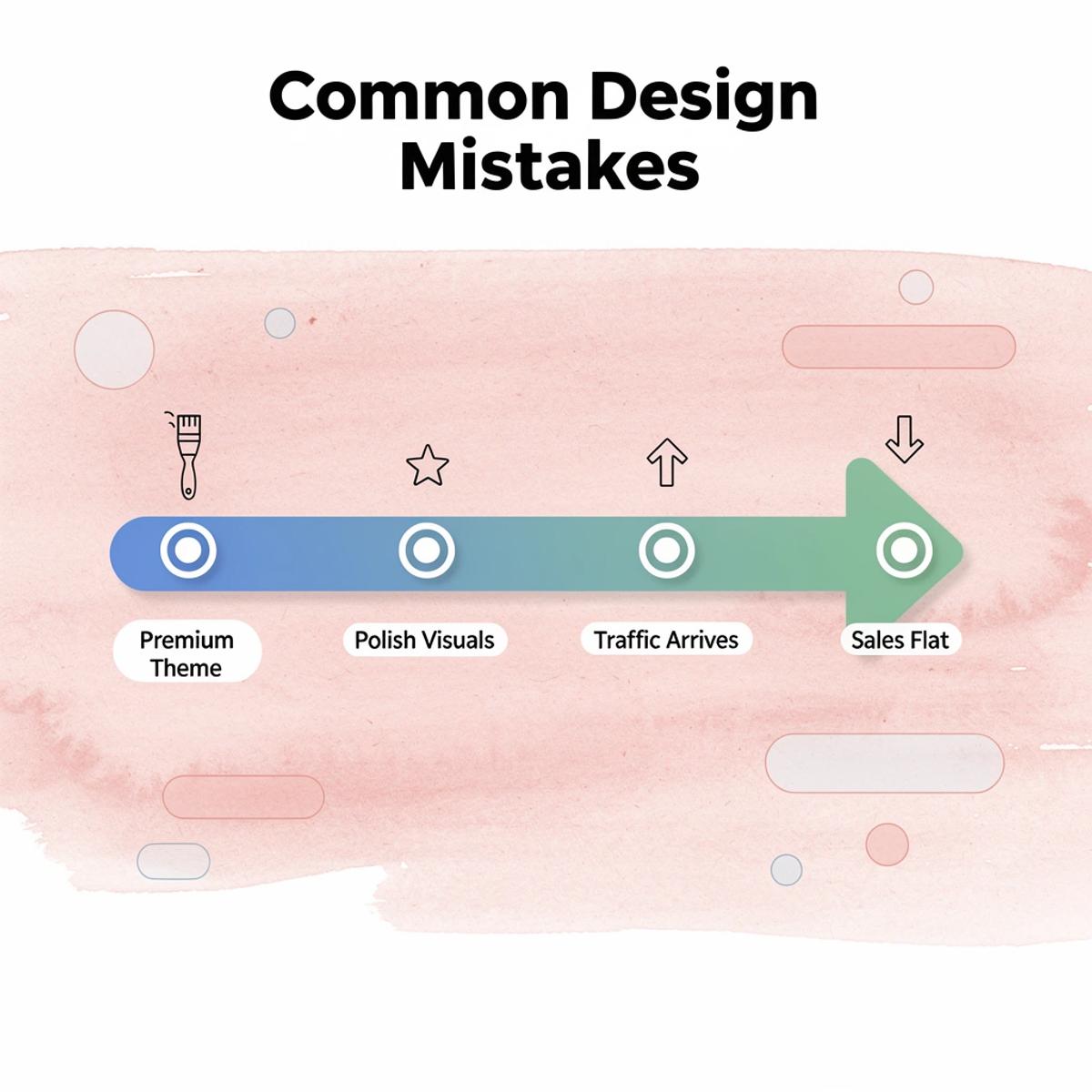
A store launches with a premium theme, polished visuals, and clean layouts. Traffic arrives, but sales stay flat. The owner tweaks fonts, adjusts spacing, adds animations—yet nothing changes because they're solving the wrong problem.
🎯 Key Point: Focus on conversion-driven structure and user psychology before investing in premium design elements.
What performance gap exists between top and average Shopify stores?
Top-performing Shopify stores convert at 3% or higher, while average stores convert between 1.4% and 1.8%. This gap isn't explained by design quality. If premium themes drove conversions, stores using identical templates would perform similarly. Instead, most cluster near the bottom while a small percentage dramatically outperforms.
What actually drives the conversion difference?
The difference lies in page structure and testing. High converters prioritize load speed, clear navigation, and streamlined checkout. They test headlines against actual user behavior rather than assumptions. According to research from Baymard Institute, 70% of online shoppers abandon their carts, often due to unexpected costs or complicated checkout flows rather than page aesthetics.
What Gets Measured Gets Fixed
Most stores are designed once and never changed. After launch, there's no testing, experimentation, or data analysis. Store owners work without information, making decisions based on appearance rather than performance metrics.
The result is easy to predict: thousands spent on design yield no information about why visitors leave. The problem was never how it looked, but how it worked. Until design is treated as a testable system rather than a finished product, conversion rates remain stuck at average.
But knowing design doesn't drive conversions unless you understand what does.
What “High-Converting Shopify Design” Actually Means
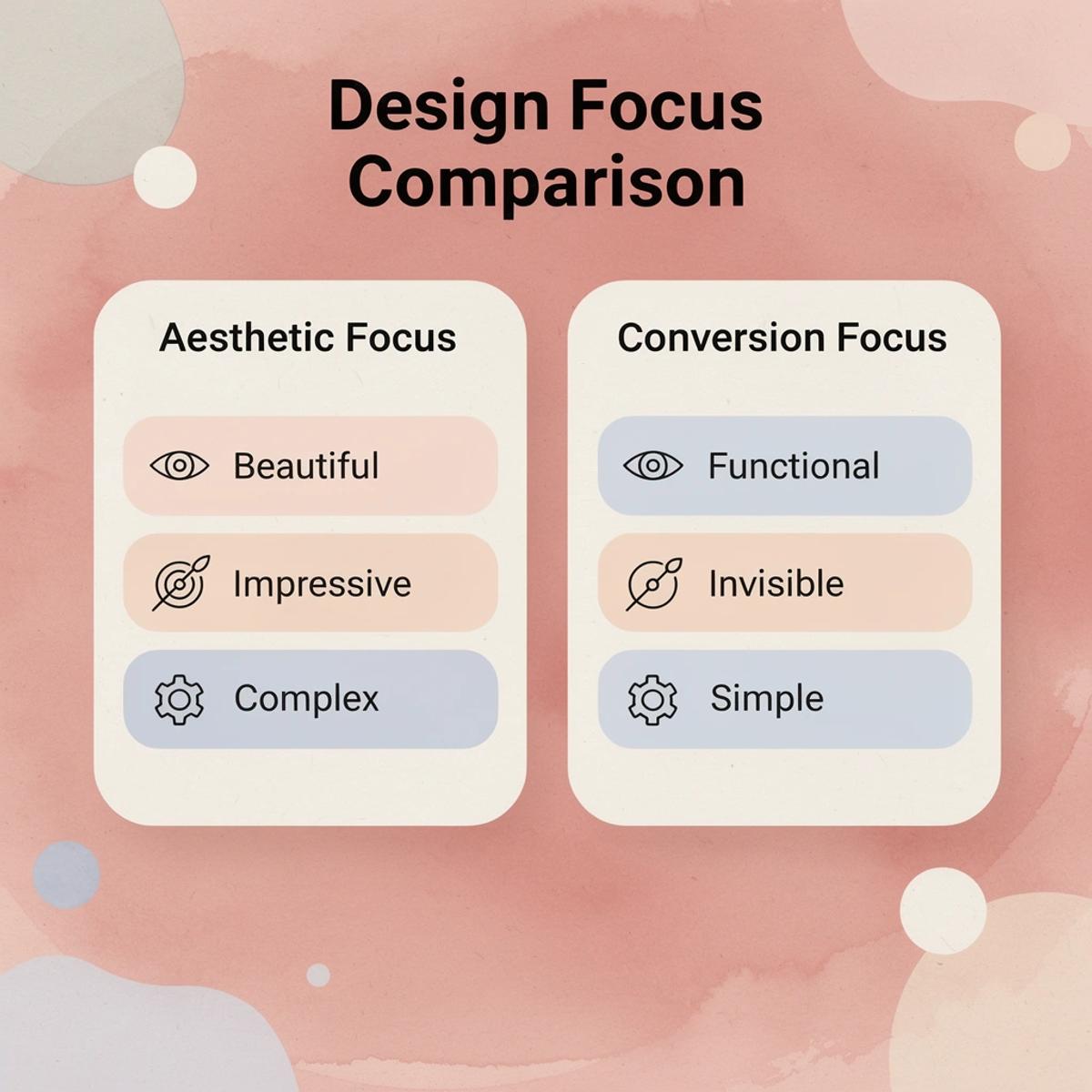
A high-converting Shopify design is a functional architecture that removes decision friction. It's not about aesthetics, but creating a path from arrival to purchase where every element either answers a question, resolves doubt, or moves the visitor forward. When someone lands on your page, they're asking, "What is this?" and "Why should I trust it?" Your design either answers those questions within seconds, or they leave.
🎯 Key Point: True conversion design isn't about aesthetics—it's about creating an invisible decision pathway that feels natural to your visitors.

A store can have premium photography and modern layouts while failing at the basic job of guiding decisions. Conversion happens when design becomes invisible because the next step feels obvious.
"Conversion happens when design becomes invisible because the next step always feels obvious."
⚠️ Warning: Many store owners focus on making their site look professional while ignoring whether it actually guides customers toward making a purchase decision.
The First Three Seconds Define Everything
Most visitors decide whether to engage before scrolling. Your headline must state what you sell and why it matters in one sentence: not clever wordplay or brand storytelling, but a direct answer to "What problem does this solve for me?" paired with a product image that confirms the category instantly.
If visitors need three paragraphs or multiple clicks to understand your value proposition, you've lost them. Clarity beats creativity, and high-converting stores don't make people work to understand the offer.
Structure Follows Decision Logic
Pages that convert follow how people think through purchases: Problem first (their specific frustration), Solution next (your product addresses it), Benefits third (what changes in their life), Proof fourth (reviews or guarantees), Path to purchase last (one clear action with no competing options).
This sequence matches the psychological progression from awareness to confidence. Random layouts that jump between testimonials, features, and calls to action create cognitive friction: visitors must construct the argument themselves rather than follow a clear narrative toward yes.
Trust Appears Where Doubt Lives
Where you place trust signals matters more than how many you have. According to research from Trendtrack Blog, a well-optimized theme can increase conversion rates by 20-30%, but that improvement depends on resolving doubt at critical moments. Reviews should appear near the add-to-cart button, not in a separate tab. Shipping costs and return policies must be easy to find before checkout begins.
Doubt emerges the moment someone considers buying. Place your guarantees, security signals, and social proof where uncertainty occurs, and you'll see how people's choices shift.
Why does page speed directly impact sales?
According to Craftberry's analysis, a 1-second delay in page load time reduces conversions by 7%. A beautiful page that takes four seconds to load on mobile loses customers before they see your headlines.
Navigation requiring three clicks to reach product details creates abandonment before engagement begins. Friction anywhere in the experience, whether visual confusion or technical lag, costs sales.
How can you optimize for both speed and conversions?
Tools like AI page builder create pages optimized for conversion and speed from the start. This eliminates the trade-off between aesthetics and performance. PagePilot achieves this by integrating design optimization with performance from inception.
But knowing what good conversion design looks like only helps if you understand which specific parts drive people to take action.
Related Reading
- Shopify Conversion Rate Optimization
- Ai Tools for E-commerce
- Shopify Alternatives
- Ecwid Alternatives
- Shopify App Detector
- AI Use Cases In Ecommerce
- Shopify Website Optimization
5 Core Elements of a High-Converting Shopify Store
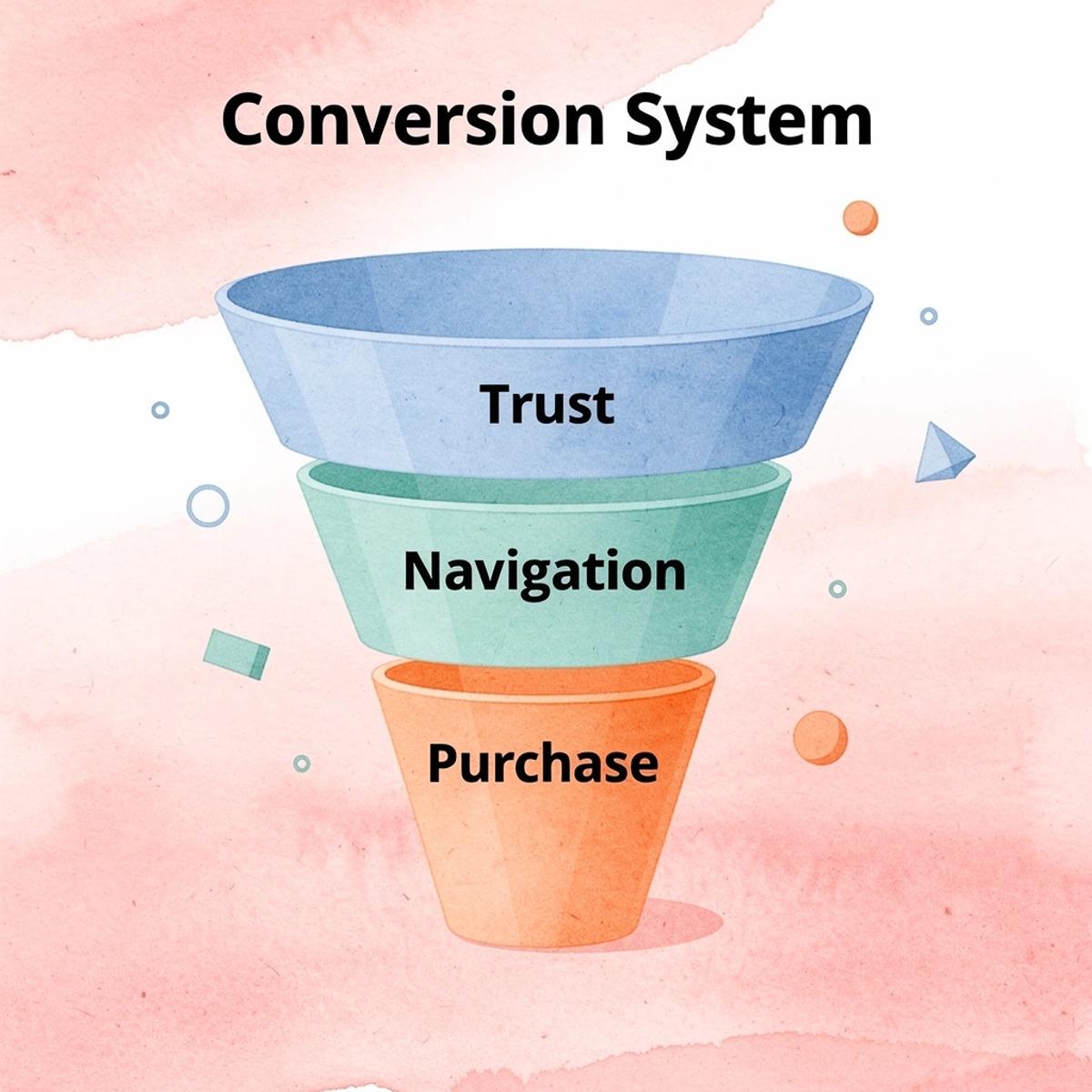
High-converting stores share five structural elements that directly influence purchase behavior. They're conversion mechanisms that reduce friction, answer objections, and guide decisions. Miss one, and you create hesitation that kills sales.
🎯 Key Point: These five elements work as a system - each one builds trust and removes barriers that prevent customers from completing their purchase.

"Conversion optimization isn't about tricks or hacks - it's about creating a seamless customer experience that naturally leads to purchase decisions." — Shopify Conversion Research, 2024
Core Element: Trust Signals
- Primary Function: Build credibility
- Impact on Conversion: Reduces abandonment
Core Element: Clear Navigation
- Primary Function: Guide customer journey
- Impact on Conversion: Improves user flow
Core Element: Product Presentation
- Primary Function: Showcase value
- Impact on Conversion: Increases desire
Core Element: Social Proof
- Primary Function: Validate decisions
- Impact on Conversion: Overcomes objections
Core Element: Streamlined Checkout
- Primary Function: Remove friction
- Impact on Conversion: Completes conversion
⚠️ Warning: Even successful stores can lose significant revenue by neglecting just one of these core elements - the weakest link determines your overall conversion rate.
1. Above-the-Fold Clarity
Your headline must state what you sell and the outcome it delivers in one sentence, paired with a product image that instantly confirms the category. Skip clever wordplay and brand backstory. Visitors need immediate clarity about what this is and why it matters.
According to First Pier, 70% of online shopping carts are abandoned because visitors don't clearly understand the value proposition to commit. The decision to stay or leave happens in seconds. If your above-the-fold content doesn't answer "What is this?" and "Why should I care?" before someone scrolls, they won't.
2. Product Page Structure That Follows Decision Logic
Good product pages work the way people think when buying: Problem first (what frustration exists?), Solution next (how does this product address it?), Benefits third (what changes after buying?), Proof fourth (why should I believe this works?), Call to action last (one clear path forward with no competing options).
Why does psychological progression matter for conversions?
This sequence matches how people naturally progress from learning about something to feeling confident about it. Pages that scatter customer reviews between feature lists and call-to-action buttons force visitors to piece together the argument themselves, creating extra mental work that often causes them to leave without taking action.
How should you structure content around customer thinking?
Most store owners organize pages around what they want to say rather than how customers need to hear it. Answer questions in the order they arise, and conversion becomes natural.
3. Social Proof Placed Where Doubt Actually Surfaces
Reviews should be placed near the add-to-cart button, not hidden in a separate tab requiring three clicks to find. Shipping costs and return policies must be visible before checkout begins. Trust signals work best when they appear at the moment a customer hesitates.
How does strategic trust placement affect conversion rates?
According to Craftberry, the average conversion rate for Shopify stores is around 1.4%, while optimized stores convert at 3% or higher. This gap often stems from the strategic placement of trust. Position guarantees, security badges, and customer testimonials where purchasing decisions occur, not after commitment.
Many stores treat trust elements as footer content or separate pages because it feels less pushy. But conversion is not about being subtle. It is about resolving objections before they become reasons to leave.
4. Clear, Repeated Calls to Action
Your call to action needs to appear multiple times, use direct language, and stand out visually without requiring effort to understand. "Add to Cart" works better than "Discover Your Perfect Match" because clarity outperforms creativity when driving purchases. The button should be visible at every decision point, not hidden behind testimonials and a size chart.
Repetition isn't annoying when someone is ready to buy—it's helpful. If a visitor reads your benefits section and decides to purchase, they shouldn't have to search for the next step. Make the path forward visible wherever someone might be ready to commit.
5. Mobile-First Design That Removes Friction
Over 70% of ecommerce traffic comes from mobile devices. If your store requires pinching to read text, forces horizontal scrolling, or places buttons beyond thumb reach, you're losing most potential customers before they begin.
How do load times impact mobile conversions?
Pages that take longer than three seconds to load on mobile lose over half their visitors immediately. A beautiful page that loads slowly costs more sales than an average page that loads instantly. Our PagePilot AI page builder creates pages optimized for mobile performance and conversion structure from the start. Friction in the mobile experience—slow load times or awkward navigation—directly reduces revenue.
What pattern drives these conversion elements?
Each element reduces friction, increases clarity, or builds trust: three factors that drive conversions across every product category and price point. Visual style matters only after structure, speed, and decision architecture are solved.
High-converting stores test, measure, and iterate based on behavior. The five elements outlined here provide the foundation, but implementation determines results. A clear headline means nothing if it states the wrong value proposition. Social proof fails if placed where visitors never see it.
How do professional stores convert consistently?
The difference between looking professional and converting consistently comes down to how effectively your store removes barriers between arrival and purchase, helping visitors understand, trust, and act.
Why Most Shopify Designs Still Don’t Convert
Most stores fail because they're designed around guesses instead of facts. Owners choose layouts based on what looks modern, not what works, then launch without testing whether visitors understand the store's offerings, trust the brand, or know what to do next.

🎯 Key Point: The difference between a converting store and a failing store isn't the design trend you follow—it's whether you've tested what actually drives your customers to buy.
"80% of e-commerce businesses fail within the first 18 months, often due to poor user experience and untested design assumptions." — E-commerce Research Institute, 2023

⚠️ Warning: Beautiful design means nothing if your visitors can't figure out what you're selling or why they should trust you with their credit card information.
Designing for Impressions Instead of Guidance
The typical approach prioritizes visual consistency over clarity. Store owners focus on matching brand colors, creating symmetrical layouts, and selecting high-quality photography. These elements build credibility, but they don't answer the questions visitors ask: "What problem does this solve?" and "Why should I buy from you instead of scrolling to the next tab?"
When design prioritizes looks over messaging, headlines become decorative rather than clear value statements, and product benefits hide beneath generic descriptions. The layout displays information without guiding thinking, forcing visitors to work harder to move from curiosity to purchase.
Copy That Explains Features Instead of Outcomes
Product pages usually list specifications without connecting them to real results. "Waterproof fabric" means nothing until you explain that it keeps gear dry during unexpected rain. "Ergonomic handle design" remains abstract until someone realizes it prevents hand fatigue during long projects.
According to StoreCraft Studio, 90% of Shopify stores fail to convert because they describe products instead of selling transformations. Customers buy what features let them do, avoid, or become, not the features themselves.
No Testing Means No Learning
Most stores design once and stop. Without testing different headlines, layouts, or calls to action, there's no feedback loop to reveal which version of your value proposition resonates, which product images drive engagement, or where visitors abandon the purchase path.
High performers test constantly, comparing button placements, headline variations, and trust signal positioning against actual behavior. They discover that changing one word in a CTA increases clicks by 40%, or moving reviews above the fold lifts conversions by 25%. Stores that skip testing operate blindly, making decisions based on opinions, whilst competitors make decisions based on data.
Why do identical themes hurt your store's performance?
Shopify's accessibility features created a problem: thousands of stores use identical themes with minimal customization, resulting in identical hero layouts, product grids, and navigation patterns. This familiarity builds baseline trust but eliminates differentiation.
When your store looks like every competitor, visitors have no visual or structural reason to choose you. The layout fails to communicate a unique value because they've encountered it on five other sites in the past ten minutes.
How can you break free from template-based design limitations?
Without a clear way to stand out or layout choices that demonstrate your advantage, conversion becomes random rather than strategic.
Most stores launching with AI-generated pages from tools like AI page builder still face this challenge if they never customize beyond the initial output. Our PagePilot generates conversion-optimized layouts in 60 seconds, but that speed advantage only matters if you test different versions against your specific audience. Automation handles structure, but standing out requires iteration based on how your actual visitors behave.
The real issue isn't poor design. Its design is based on assumptions, never improved based on what actually happens when real people arrive.
Related Reading
- Bigcommerce Alternatives
- Best Subscription Apps For Shopify
- Shopify Store Cost
- Ai Use Cases in E-commerce
- How To Edit Pages In Shopify
- Shopify Web Design Experts
- Shopify Website Optimization
The Conversion Design Framework That Actually Works
Once you move past the idea that design alone drives conversions, you stop trying to create one perfect page and start building a system that finds what converts. That is the difference between static design and conversion-driven design.

🎯 Key Point: The most successful conversion optimization isn't about creating the perfect design—it's about building a testing framework that continuously identifies what drives results.
"Conversion-driven design focuses on systematic testing rather than aesthetic perfection, leading to measurably better results than static design approaches." — Conversion Optimization Research, 2024

💡 Pro Tip: Instead of spending weeks perfecting a single design, invest that time in creating multiple variations and letting real user data determine which elements actually convert your specific audience.
Start With the Offer, Not the Design
Most stores start with layout, colors, and themes. High-converting stores start with the offer. What problem are you solving? What outcome are you promising? Why should someone choose this now? If the offer is unclear, no design will fix it.
Build Around One Core Message
A common mistake is trying to say too much. Multiple angles, benefits, and messages on one page create confusion. Instead, build around a single, clear idea, with the headline, images, copy, and proof reinforcing that message. Clarity increases conversions more than complexity.
Test Multiple Variations
Most stores design once and assume it works. Test variations across key elements: headlines that frame the product differently, hooks that emphasize different benefits or problems, layouts that change how information is presented. According to Invesp's Conversion Framework, systematic testing separates improving stores from stagnant ones. You're comparing options and letting performance decide, not guessing.
How can you speed up the testing process?
Building multiple page variations by hand requires hiring designers for each test, waiting days for changes to take effect, and spending money before learning anything. By the time the third variation is ready, the product trend has often shifted. Tools like AI page builder create conversion-optimized variations in under 60 seconds, letting you test different messaging angles and layouts the same day you identify a product opportunity. This speed advantage means learning faster than competitors, awaiting their first design revision.
Iterate Based on Performance
Testing only works if you use the results. Keep the headline that converts, the structure that holds attention, and the messaging that resonates, then test again. This creates a feedback loop where each version improves on the last.
The Shift That Matters
This framework changes how you think about design: not about getting it right the first time, but building a process that improves over time. The stores that convert most aren't those with the best-looking pages, but those that learn faster than competitors.
The framework only works if you have a system that removes barriers to testing.
Related Reading
- Shopify Ai Apps
- Best Shopify Landing Pages
- Best Shopify Plugins
- On Page Seo Shopify
- How To Add A Custom Popup In Shopify
- Builder.ai Competitors
- How To Add Products To Shopify Page
How PagePilot Helps You Design for Conversion, Not Just Looks
PagePilot transforms design from a one-time build into a continuous testing system by generating multiple conversion-optimized page variations in under 60 seconds, letting you compare what performs rather than guess what might work.
🎯 Key Point: Traditional design approaches focus on aesthetics first, but PagePilot prioritizes conversion metrics from day one. Instead of spending weeks on a single design that may or may not convert, you get data-driven insights within minutes.
"60 seconds to generate multiple page variations transforms design from guesswork into systematic optimization." — PagePilot Performance Data
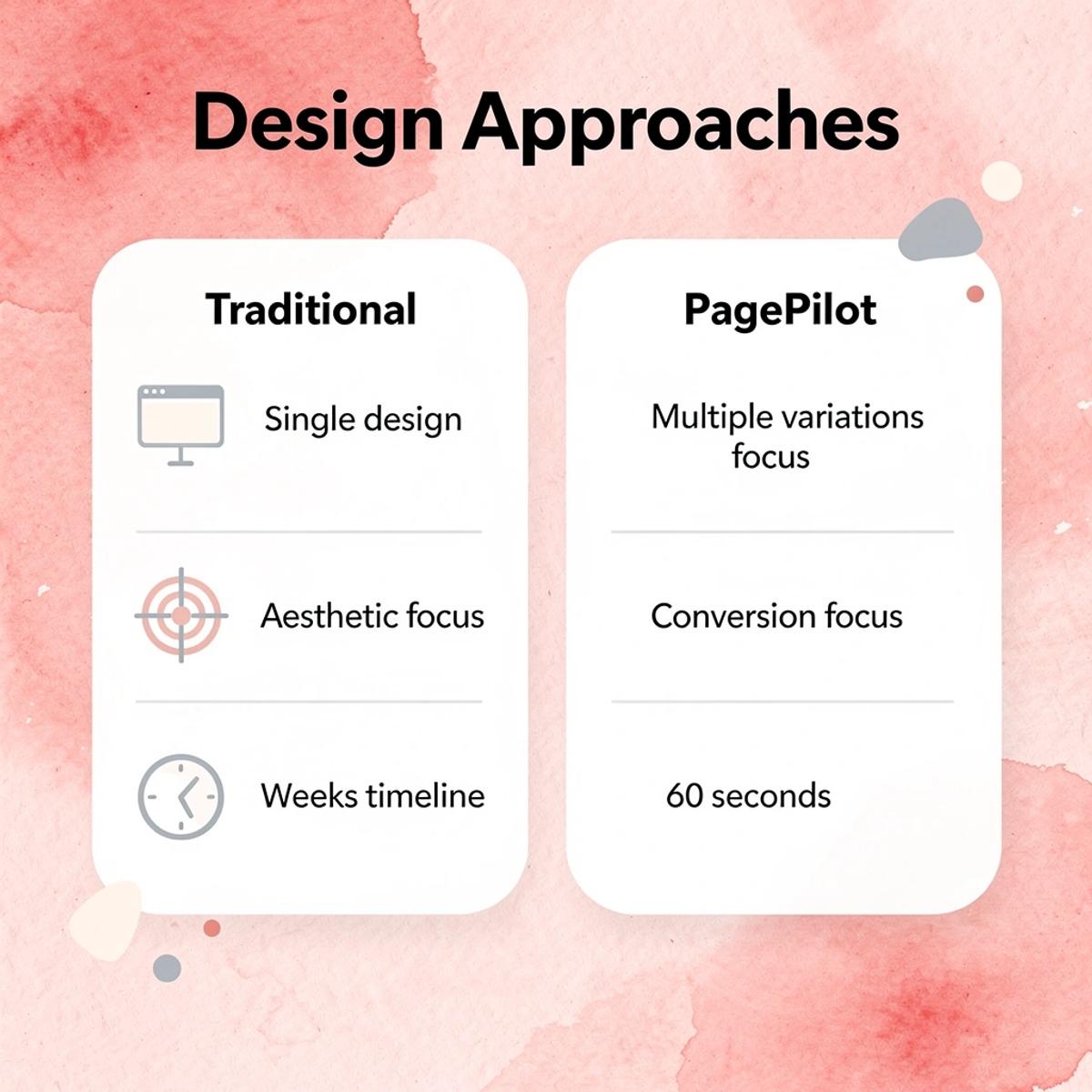
💡 Tip: The real power isn't just in speed — it's in the ability to test assumptions before they become expensive mistakes. PagePilot's rapid variation generation means you can validate conversion hypotheses with actual user behavior rather than designer intuition.
Traditional Design
- Single design iteration
- Aesthetic-focused decisions
- Weeks of development
- Guesswork and assumptions
PagePilot Approach

- Multiple variations in 60 seconds
- Conversion-optimized elements
- Minutes to test and compare
- Data-driven performance insights
Starting With Structure, Not Blank Pages
Most Shopify workflows force you to start from scratch. You open a blank page, design based on guesses, launch, and hope traffic converts. If it doesn't, you redesign and repeat, wasting time and budget while learning nothing about what drives purchases.
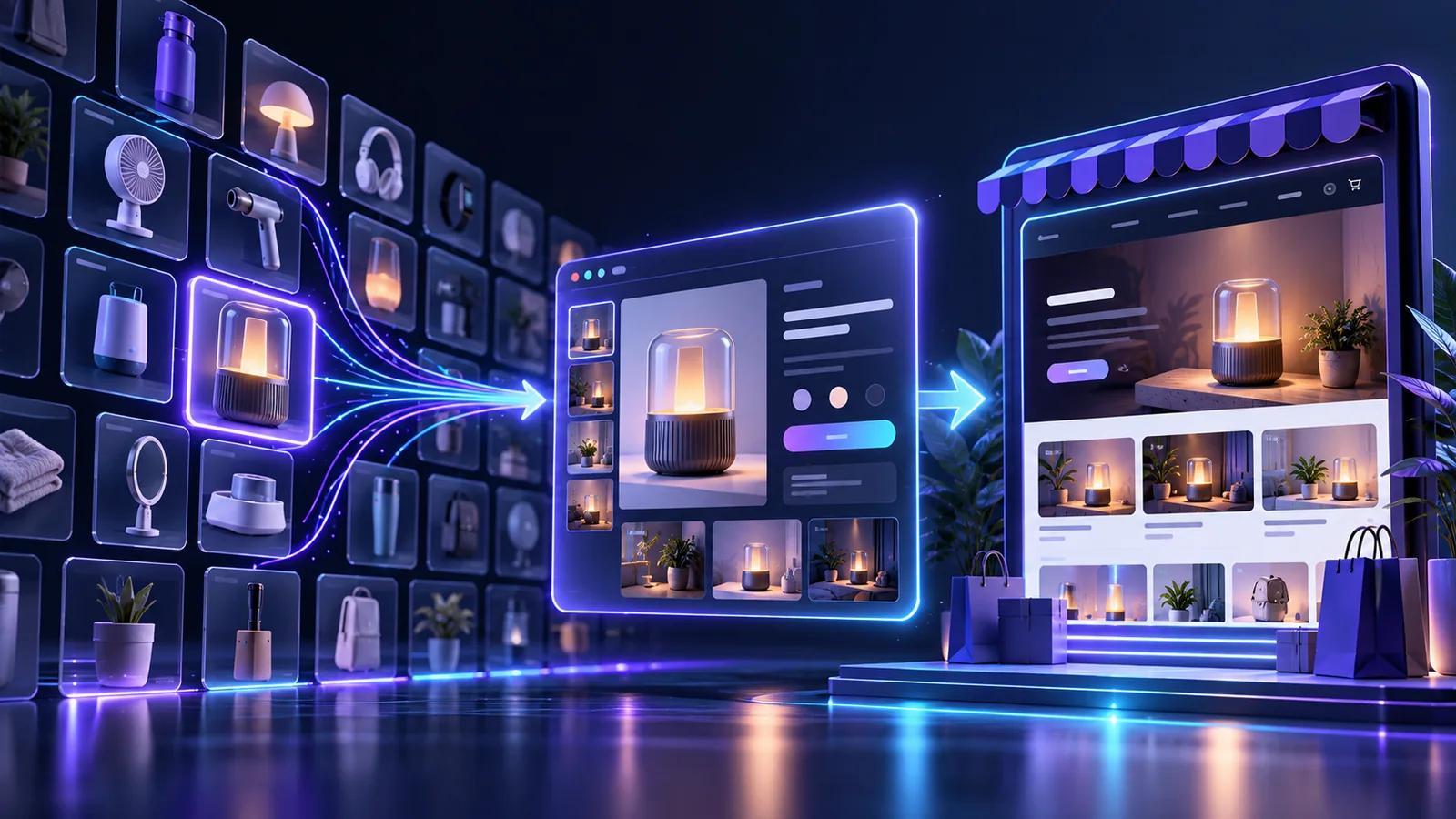
PagePilot generates complete product pages from competitor or supplier URLs. Input a link to a product already selling, and our AI page builder constructs a structured starting point based on real-world examples. You begin with proven layouts and messaging frameworks, then improve on them.
Creating Variations That Test Different Decision Paths
You can create multiple versions of the same product page, each built around different ways to engage buyers. One version might emphasize urgency and scarcity, another focuses on benefit-driven outcomes, and a third uses problem-solution framing to address specific pain points. This lets you test several messaging angles simultaneously rather than committing to one and hoping it resonates.
According to PagePilot AI Blog, a 1-second delay in mobile load time can reduce conversions by up to 20%. Our PagePilot AI page builder optimizes messaging structure and technical performance from the start, eliminating the common tradeoff between visual appeal and speed.
How do you shift from subjective to data-driven design evaluation?
The shift is in how you evaluate design. You stop asking "Does this page look good?" and start asking "Which version converts better?" Because pages can be generated and launched quickly, you can run more tests in less time, increasing the chances of finding a high-performing combination of message, structure, and layout before competitors finish their first manual revision.
What creates a compounding feedback loop in Shopify web design?
This creates a feedback loop. You test variations against actual visitor behavior, identifying which headlines hold attention, which layouts reduce cart abandonment, and which trust signals resolve hesitation. You refine based on performance data, then generate new variations that build on what worked. Over time, this compounds into a system that learns faster than systems that rely on one-time design decisions.
But speed matters only if the system removes the barriers that prevent most stores from testing in the first place.
Start a FREE Trial and Generate 3 Product Pages with Our AI Page Builder today
Start a free trial of PagePilot and generate your first set of product page variations from a competitor URL to discover what converts and build your store around proven results instead of assumptions.
🎯 Key Point: The barrier to better conversion rates is speed. You know testing matters, but building three different page layouts manually takes days and costs hundreds of dollars in design work. By the time you finish the second variation, the product trend has shifted, or your ad spend has already committed to one untested approach. Our AI page builder compresses that timeline to under 60 seconds per page, letting you compare messaging angles and layouts the same day you identify an opportunity.
"The stores that consistently outperform aren't guessing better. They're learning faster and running more tests to gather actionable data." — E-commerce Performance Study, 2024
You can test whether urgency-driven copy outperforms benefit-focused messaging, compare layouts that lead with social proof against those prioritizing problem-solution framing, and learn what resonates with your specific audience, rather than copying what worked for someone else's store.
Testing Approach
- Manual Design
- PagePilot AI
- Traditional A/B
Timeline
- Days-weeks
- 60 seconds
- 2-4 weeks
Cost
- $300-800
- $0 (trial)
- $200-500
Results
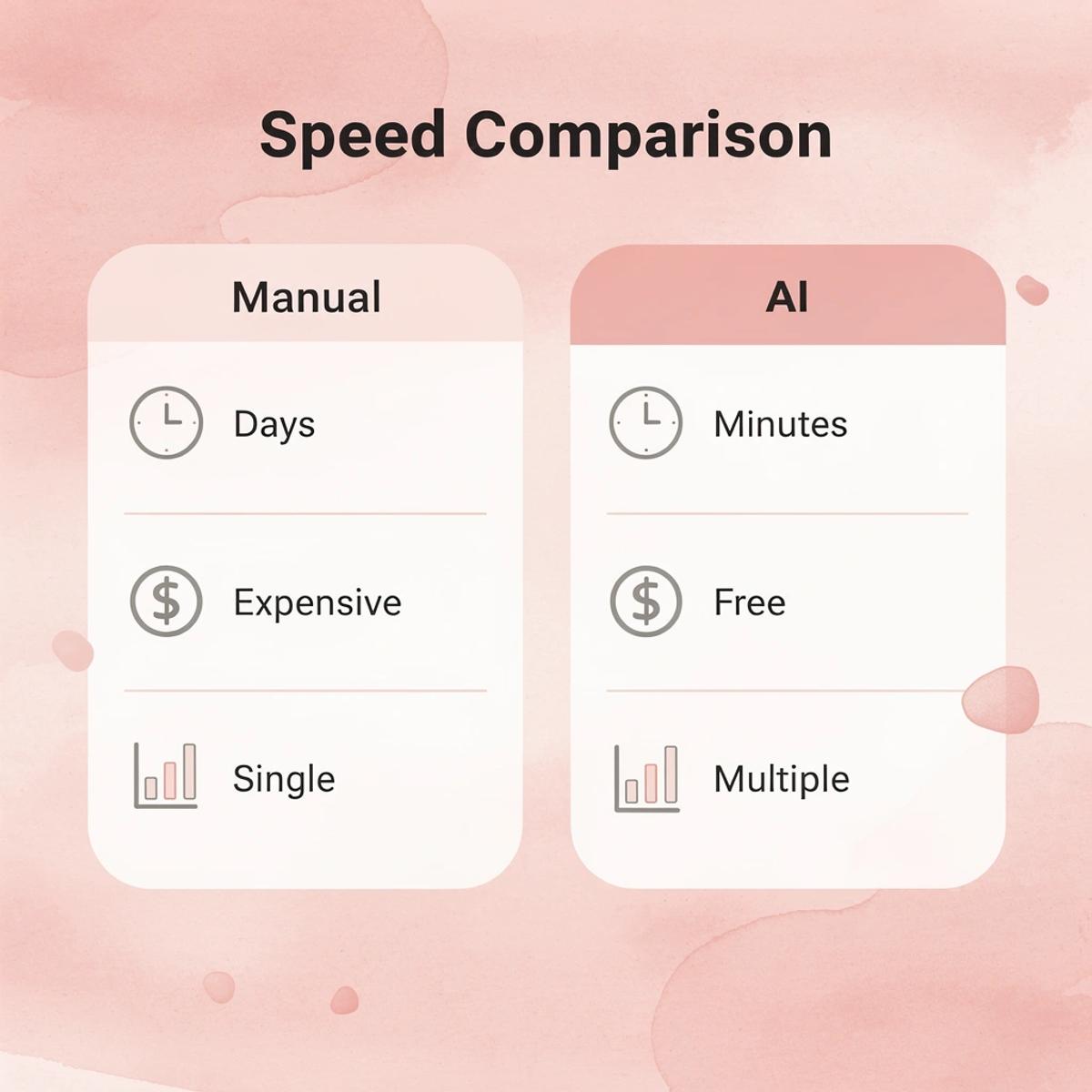
- Single variation
- 3+ variations
- Limited insights
💡 Tip: The stores that consistently outperform aren't guessing better. They're learning faster. They run more tests, gather more data, and refine based on what actually happens when real visitors arrive. Each winning variation informs the next test, creating a feedback loop that pulls further ahead of competitors still waiting on their first design revision.
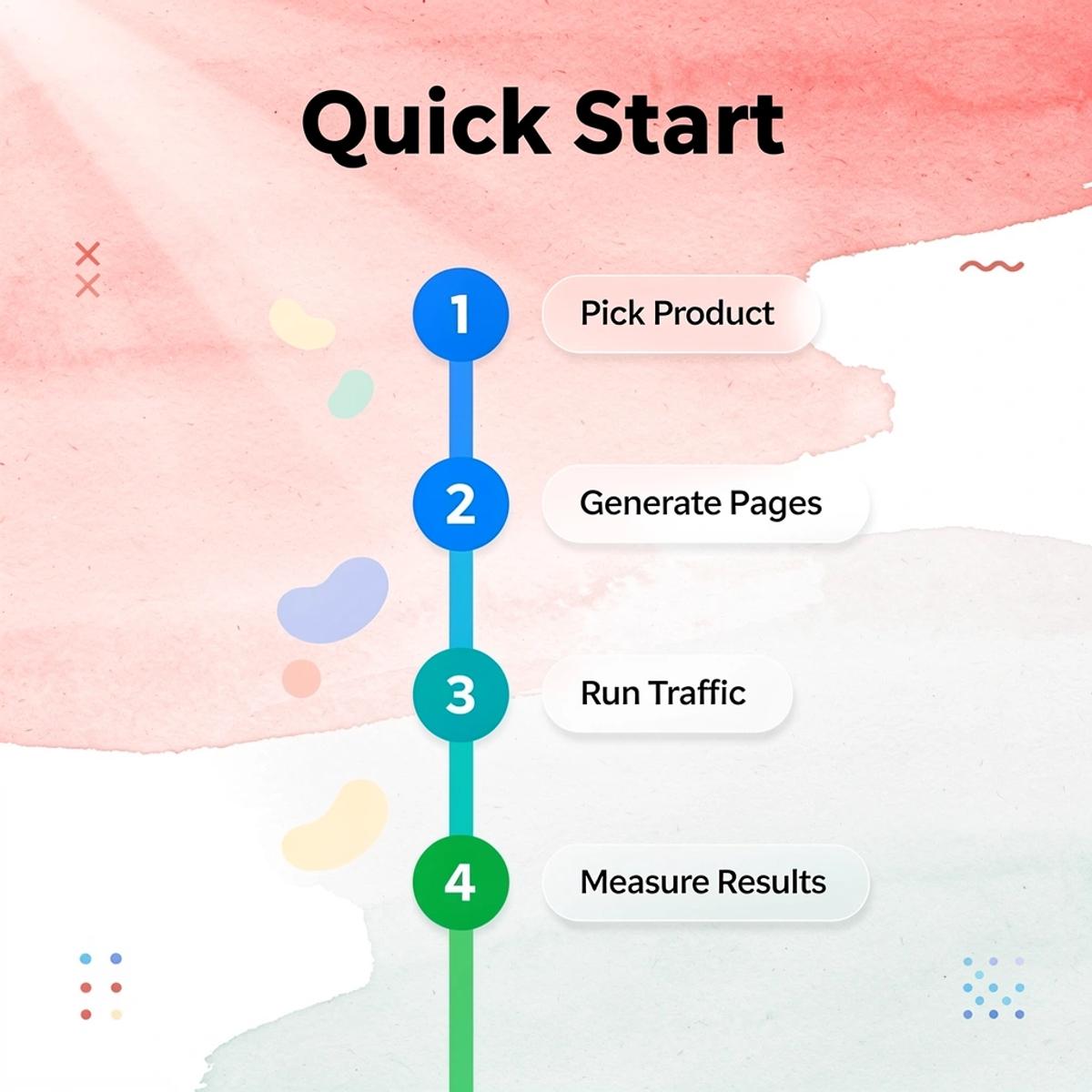
⚠️ Warning: Start with three pages. Pick a product, generate variations with different hooks, and drive traffic to see which ones convert. What you assume will work rarely matches what performs when measured against actual behavior.