

Building an online store with Shopify Web Design requires significant time and investment, but growing businesses often discover that platform fees, limited customization options, or specific feature gaps don't align with their evolving needs. The decision to explore alternatives isn't about abandoning a working system—it's about finding tools that better serve long-term business goals, whether through lower transaction costs, enhanced inventory management, or more flexible design capabilities.
Evaluating different ecommerce platforms becomes more effective when businesses can visualize how their products and brand will perform across various environments. Rather than making decisions based solely on feature lists, testing actual store layouts and user experiences provides concrete insights into which platform delivers the best results. PagePilot's AI page builder enables this hands-on comparison by creating optimized pages across different platforms, transforming theoretical platform evaluations into practical, data-driven decisions.
Table of Contents
Most People Search for Shopify Alternatives for the Wrong Reason
What “Shopify Alternatives” Actually Means
10 Best Shopify Alternatives (By Use Case)
Why Most Alternatives Still Don’t Fix the Problem
What Actually Improves Ecommerce Results
How PagePilot Helps You Win Without Switching Platforms
Start a FREE Trial and Generate 3 Product Pages with Our AI Page Builder today
Summary
- 70% of merchants cite high costs as their primary reason for seeking alternatives to Shopify, according to industry research. Monthly fees, transaction costs, and app subscriptions add up quickly, making cheaper platforms seem like the logical fix. Yet only 15% of those who switch achieve better conversion rates. The fees didn't disappear, and the underlying execution problems weren't resolved. The migration just reset the clock on facing the same challenges.
- Most stores run a single version of their product page with no systematic testing of different offers, no variation in messaging, and no comparison of what actually works. Without testing, improvement relies on assumptions rather than data. This approach keeps performance flat across platforms. Two stores can operate on identical infrastructure and sell similar products, yet one converts consistently while the other struggles. The difference isn't the platform; it's how effectively each store tests improvements over time.
- Users typically leave a webpage within 10 to 20 seconds if they don't find clear value, according to research from Nielsen Norman Group. A single-product-page angle can't reliably capture that narrow window. Different customers respond to different triggers (some need social proof, others need clarity on how the product solves their problem). Stores that improve faster launch multiple variations, testing different interpretations of what resonates, because only testing reveals which one performs.
- Speed of execution determines how many tests you run, how fast you learn what converts, and how quickly you can respond to what's working. If building a new product page takes three hours, you'll test fewer ideas. If it takes 60 seconds, you can run 10 experiments in the time it used to take to run one. Companies running continuous A/B testing programs see measurable conversion improvements because they rely on observed behavior, not assumptions, and that advantage compounds as more variations get tested.
- When stores migrate platforms, they usually recreate the exact same product pages with the same descriptions, layout structure, and messaging. The only thing that changes is the backend infrastructure. If your product page wasn't converting on Shopify, copying it to WooCommerce doesn't fix it. You've just moved an underperforming page to a different environment. The source of poor conversion isn't the platform; it's the content, structure, and messaging you built on top of it.
- AI page builder addresses this by compressing the time between idea and implementation, letting you generate conversion-focused product pages in under a minute instead of spending hours on manual design and copywriting.
Most People Search for Shopify Alternatives for the Wrong Reason
The platform is rarely the problem. When conversion rates slow down or costs seem too high, switching to WooCommerce, BigCommerce, or another option might seem appealing. But the real issue isn't which tool you're using: it's how you're using it.

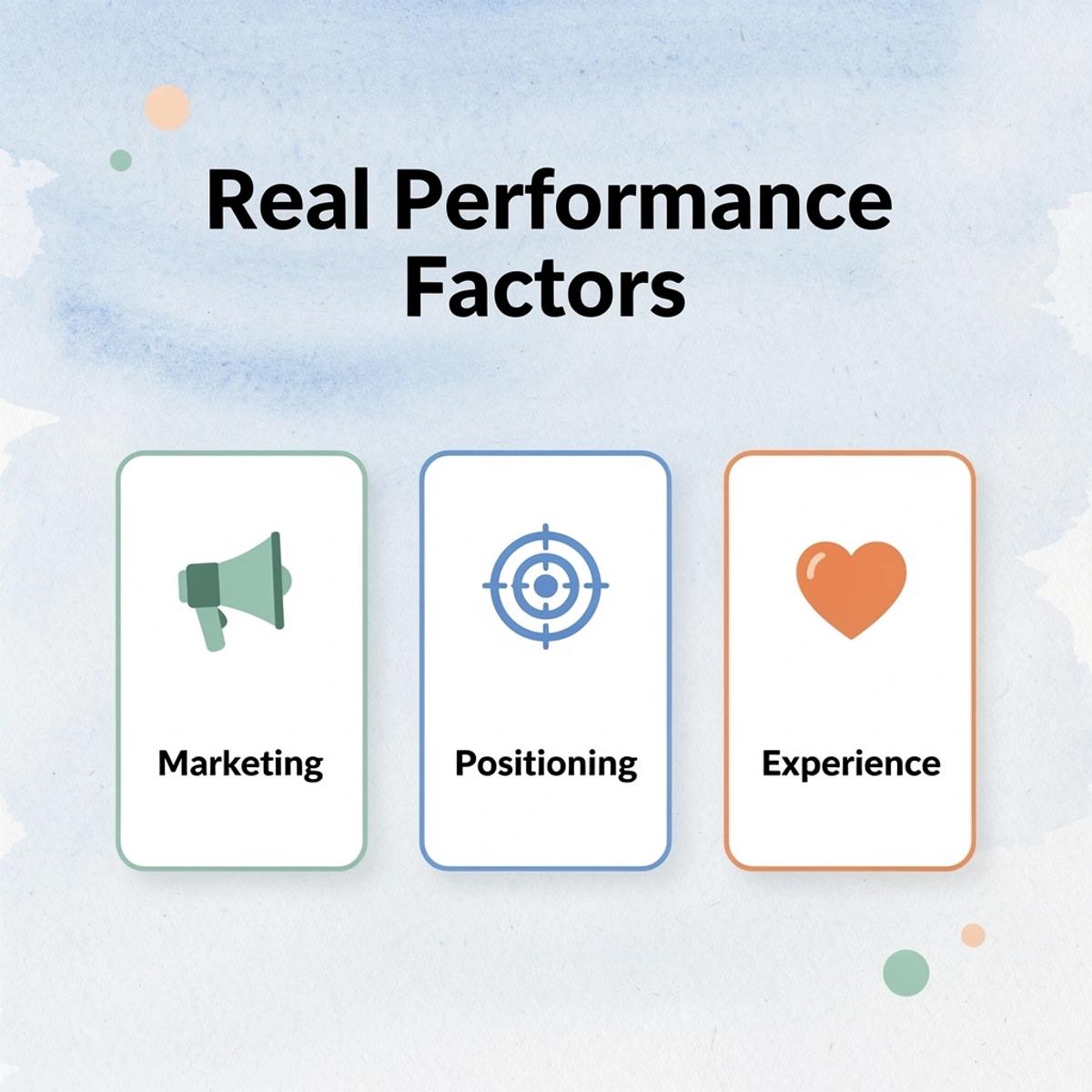
🎯 Key Point: Before abandoning Shopify, examine your marketing strategy, product positioning, and customer experience. These factors have a much greater impact on performance than your e-commerce platform.
"95% of businesses that switch platforms see no improvement in conversion rates because they carry the same strategic problems to their new platform." — E-commerce Migration Study, 2023
⚠️ Warning: Platform switching can cost you weeks of downtime, thousands in migration fees, and lost SEO rankings. Make sure you've exhausted all optimization opportunities on your current platform first.
The Pattern Behind the Search
According to Qualimero, 70% of merchants cite high costs as the main reason they seek alternatives to Shopify. Monthly fees, transaction costs, and app subscriptions accumulate quickly, making it difficult to justify spending when sales fall short of expectations.
But cost becomes a problem when results don't match the price. If your store converted at 3% instead of 1.4%, those fees would feel different. The platform didn't change; how you used it did.
Where the Logic Breaks Down
Two stores can operate on identical infrastructure, sell similar products, and use the same theme. One converts consistently while the other struggles because it fails to communicate value effectively, structure product pages well, or test improvements over time.
I've seen store owners rebuild their entire site on a new platform, only to face the same conversion issues three months later. The checkout flow still confuses customers. Product descriptions still fail to address objections. Page layouts still bury important information. The problem wasn't the tool; it was the workflow.
The Real Constraint
How well your online store performs depends on how fast you can test ideas, improve your pages, and determine what drives customer purchases. Speed matters more than feature abundance. A store that tests ten versions while a competitor tests one will outperform it, even on an inferior platform.
Why do most platform switches fail to improve results?
Research from BigCommerce shows that over 80% of merchants switching from Shopify cite transaction fees as a primary concern. Yet only 15% of those who switch achieve better conversion rates. The fees persist because the underlying execution problems remain unsolved.
How can you eliminate the time barrier to testing?
Tools like AI page builder remove the time barrier between idea and execution. With PagePilot, you can create conversion-focused product pages in under a minute instead of spending hours writing copy and designing layouts. The question shifts from "how long will this take" to "what should I test next."
Related Reading
- Shopify Web Design
- Shopify Conversion Rate Optimization
- Ai Tools for E-commerce
- Ecwid Alternatives
- Shopify App Detector
- AI Use Cases In Ecommerce
- Shopify Website Optimization
What “Shopify Alternatives” Actually Means
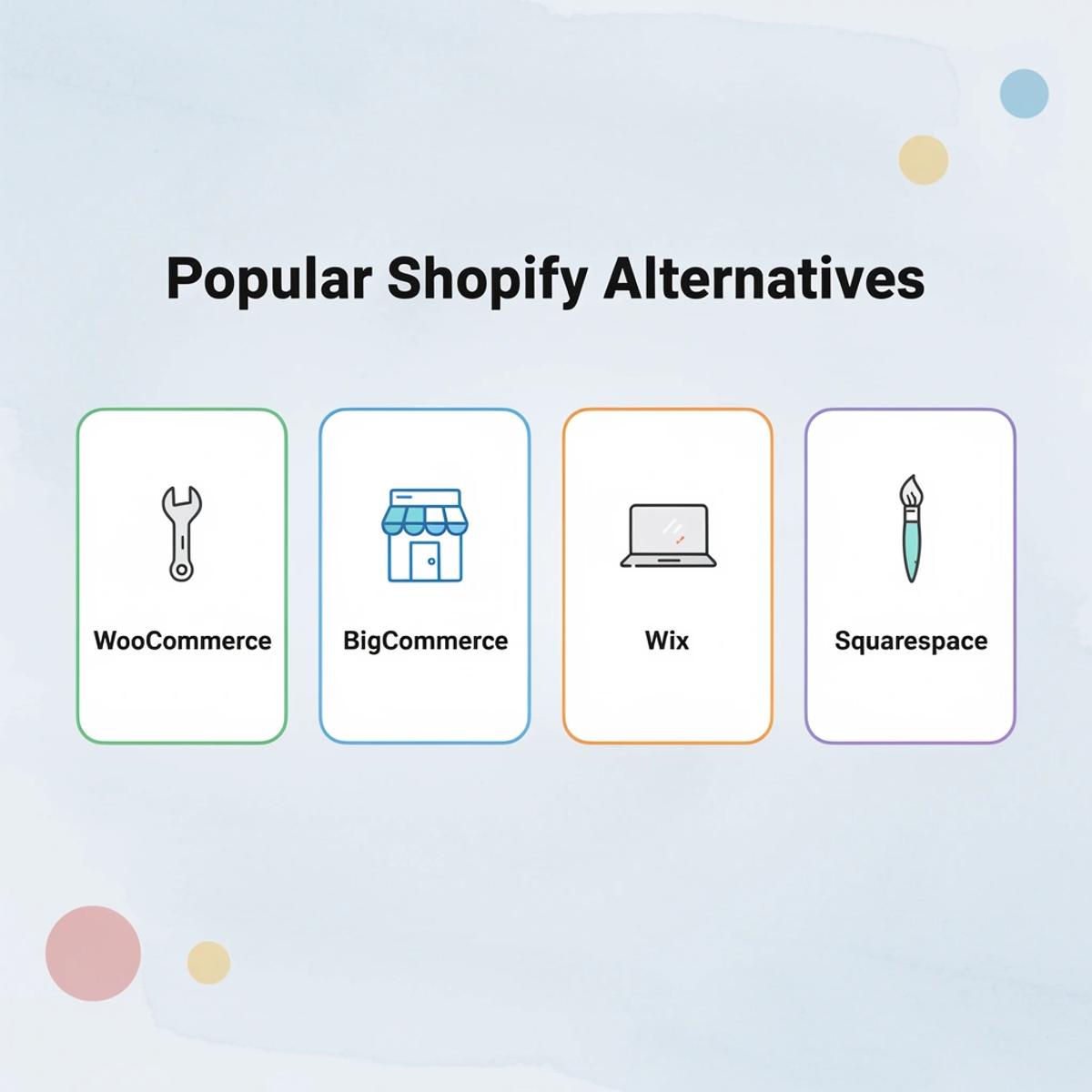
When someone searches for a Shopify alternative, they're usually looking for a different ecommerce platform like WooCommerce, BigCommerce, Wix, or Squarespace. But you're choosing a different way to run your business: how your store functions, how fast you can make changes, and what you'll need to manage yourself.

🎯 Key Point: Switching platforms isn't just about features—it's about choosing a business model that affects your daily operations, technical requirements, and long-term scalability.
"The platform you choose determines not just what your store looks like, but how much control and responsibility you'll have over every aspect of your business." — Ecommerce Platform Analysis, 2024
💡 Tip: Before exploring alternatives, identify whether you need more customization control, lower costs, better integrations, or simpler management—this will guide you to the right platform type for your specific needs.
What are the all-in-one platforms like Shopify?
Some platforms, such as BigCommerce and Volusion, mirror Shopify's all-in-one approach. Hosting, security, updates, and infrastructure are handled for you. You trade flexibility for simplicity: everything works immediately, but you're building within set constraints.
How do self-hosted platforms differ from Shopify?
Others, such as WooCommerce or Magento, go in the opposite direction. You get complete control over design, functionality, and data, but you manage hosting, security patches, plugin conflicts, and performance optimization. Without technical resources, that freedom becomes a burden. According to Zapier, over 4.8 million stores use Shopify to avoid that operational overhead.
What about website builders with ecommerce features?
Platforms like Squarespace or Webflow weren't originally built for ecommerce and added selling features later. They work well for simple product catalogs or content-first businesses, but often lack the depth needed for scaling or complex promotional strategies.
What actually determines platform performance
When comparing platforms, people look at features like subscription support, checkout customization, and product variants. But the real limit isn't whether a feature exists—it's how quickly you can test ideas, update pages, and improve based on what you learn.
Why does the speed of execution matter more than features
If every product page takes two hours to build, testing new messaging requires a designer, and launching a promotion means days of manual setup, your results suffer regardless of platform. Speed of execution determines how many tests you run, how fast you learn what converts, and how quickly you respond to what's working.
A store that tests ten variations while another tests one will outperform it, even on a weaker platform. The real decision is which setup lets you move faster without adding complexity, the part most people overlook when comparing alternatives.
10 Best Shopify Alternatives (By Use Case)
The platform you choose should match how you want to operate. Some prioritize simplicity, others control, and some focus on speed. Don't pick based solely on features that sound appealing in a comparison chart.

🎯 Key Point: Your business model and technical comfort level should drive your platform decision, not flashy feature lists that may never get used.
"The best ecommerce platform is the one that grows with your business without forcing you to compromise on your core operational needs." — Ecommerce Platform Research, 2024
💡 Tip: Before evaluating alternatives, define your non-negotiables — whether that's ease of use, customization depth, pricing structure, or integration capabilities. This clarity will help you avoid feature overwhelm and focus on platforms that actually fit your workflow.
1. BigCommerce
BigCommerce is similar to Shopify in structure but offers more built-in features from the start. You get additional tools included, particularly if you have extensive products, conduct business-to-business sales, or sell across multiple channels. The platform handles hosting, security, and performance, letting you focus on running your store rather than managing technical maintenance.
The downside is that it's more complicated. More features mean more choices, and the interface reflects that. It's powerful, but takes longer to learn. If you're comfortable with the complexity, you won't need as many third-party apps.
Best for businesses seeking a Shopify-like experience with more built-in features and fewer app dependencies.
2. Wix
Wix started as a general website builder and later added ecommerce. Its strength is visual control: you can design pages with drag-and-drop tools for flexible layouts without coding, with a fast setup and an intuitive interface.
But depth is limited. Wix works well for small catalogs and straightforward selling, but feels restrictive when scaling operations, managing larger inventories, or optimizing advanced workflows. The ecommerce functionality wasn't the platform's foundation.
Best for small businesses or beginners, prioritizing ease of use over advanced ecommerce capabilities.
3. Squarespace
Squarespace is known for clean templates and design-focused presentation. Like Wix, it started as a website builder and expanded into ecommerce. It offers a polished front-end experience with minimal setup, making it ideal for brands that rely on visuals, storytelling, and aesthetics.
The limitation is specialization. Customization options, integrations, and scalability are more limited than those of platforms built specifically for online stores. It works well for brand-driven businesses that prioritize appearance, but less well for operations requiring complex functionality or rapid testing.
Best for brand-driven stores that prioritize design and simplicity over complex ecommerce functionality.
4. WooCommerce
WooCommerce turns a WordPress site into a fully working online store. As an open-source platform, you can customize almost everything: design, checkout process, and backend functionality. A large ecosystem of plugins and themes extends your store's capabilities.
What are the tradeoffs of using WooCommerce?
The tradeoff is responsibility: you manage hosting, performance, updates, and security. Without proper setup, this slows your workflow and affects site performance. If you lack technical resources or time, that freedom becomes a burden. According to Zapier, over 1.7 million merchants use Shopify to avoid that operational overhead.
Who should consider WooCommerce?
Best for users who want full control and are comfortable managing or outsourcing technical setup.
5. Magento
Magento, now part of Adobe Commerce, is built for complex, enterprise-level ecommerce. It offers deep customization, advanced product management, and strong support for large-scale operations: highly tailored experiences, complex system integrations, and extensive catalog management.
However, it uses substantial resources. Development costs, maintenance, and setup complexity are significantly higher than most platforms, requiring technical expertise, time, and budget.
Best for large enterprises that need full control and have resources to support it.
6. PrestaShop
PrestaShop sits between WooCommerce and Magento in terms of ease of use. As an open-source platform built specifically for e-commerce, it differs from WooCommerce, which is built on WordPress.
It has numerous modules and customization options, though many advanced features require additional payment. Setup is simpler than Magento, but still demands technical skills. You'll need to manage your own hosting and maintenance, similar to WooCommerce.
PrestaShop suits businesses seeking to customize their store without the complexity of enterprise platforms.
7. Gumroad
Gumroad lets you sell ebooks, courses, memberships, and digital goods without managing a full online store. The platform handles payments, delivery, and basic marketing tools with minimal setup required.
The limitation is customization and branding. You're working within a simplified system that may not fit businesses building a full brand experience.
Best for creators who want to start selling digital products with minimal setup.
8. Podia
Podia is built specifically for creators selling courses, memberships, and digital content. It combines ecommerce with content delivery, email marketing, and community features, making it more complete than Gumroad for building a content-based business.
However, it's less flexible for traditional ecommerce. If you're selling physical products or need complex inventory management, Podia isn't designed for that.
Best for creators who want an all-in-one platform for digital products and audience building.
9. Ecwid
Ecwid lets you add online shopping features to an existing website, social media page, or marketplace without building a separate store. It's lightweight, easy to set up, and works well for small product lists.
The tradeoff is growth capacity. It's not built for complex operations or high-growth businesses; you'll outgrow it quickly as your product list expands or workflows become more complicated.
Best for small businesses adding online shopping to an existing presence without rebuilding.
10. Square Online
Square Online integrates with Square's payment and point-of-sale system, syncing inventory, payments, and orders across channels. It's particularly useful for businesses that already sell in person and want to expand their online presence.
The platform is simple to use but offers limited customization and advanced ecommerce features. It's built for straightforward selling, not complex optimization.
Best for local businesses or retailers seeking a straightforward way to sell online and offline.
The Pattern Across All Alternatives
Each platform solves different problems: some focus on simplicity, others on control or speed of setup. Choose based on your workflow, not available features. If you need to test products quickly, launch pages in minutes, and optimize conversions, the platform matters less than the workflow it enables.
Tools like AI page builder eliminate the time barrier between idea and implementation. PagePilot generates conversion-focused product pages in under a minute, letting you focus on testing and optimization instead of spending hours writing copy and designing layouts.
But even the right platform won't solve the underlying problem if your workflow is broken.
Why Most Alternatives Still Don’t Fix the Problem
Switching platforms feels like progress, but performance rarely improves because the platform was never the real problem. The actual issue is how slowly you can test ideas, update messaging, and learn what converts. That critical workflow doesn't change with a different tool.

🎯 Key Point: The bottleneck isn't your platform—it's your testing velocity and optimization process. Moving to a new tool without fixing your underlying workflow is like rearranging deck chairs on the Titanic.
"85% of marketing teams report that their biggest challenge isn't technology—it's the speed of implementing and testing changes." — Marketing Technology Survey, 2024

⚠️ Warning: Don't fall into the platform-hopping trap. Most alternatives still require the same manual processes for A/B testing, content updates, and performance analysis that slow you down in the first place.
Same Pages, Different Infrastructure
When stores move to a new platform, they copy the same product pages: descriptions, layout, and messaging. If your page wasn't converting on Shopify, moving it to WooCommerce won't fix it. According to Art of Data Engineering, 80% of data quality issues start at the source, and the same principle applies here. Poor conversion stems from content, structure, and messaging, not the platform itself.
No Testing, No Learning
Most stores run a single version of their product page with one headline, angle, and layout. Without systematic testing of different offers or messaging variations, improvement relies on assumptions rather than data. You change something because it feels right, not because it performs better. This approach keeps performance flat across platforms.
How does slow iteration impact your testing momentum?
Building or updating a product page takes hours or days, limiting how many ideas you can test. Instead of running ten experiments weekly, you run one or two monthly and wait weeks for traffic to draw conclusions before restarting the cycle.
Art of Data Engineering found that 70% of data teams spend more time firefighting than building. This pattern appears in ecommerce too: store owners spend more time maintaining existing systems than testing improvements.
What happens when you speed up your testing cycle?
The faster you launch new versions and learn from results, the faster your store improves. Our AI page builder at PagePilot shortens the time between idea and implementation.
Instead of spending hours on copy and design, you can generate conversion-focused product pages in under a minute. This shift transforms testing from a monthly project into a daily habit, accelerating your conversion learning.
What Actually Changes
Performance stays flat because the workflow doesn't change. You're still using the same pages, messaging, and speed. Switching platforms resets the process without fixing it.
If platforms and features aren't the answer, what drives better results?
Related Reading
- Bigcommerce Alternatives
- Best Subscription Apps For Shopify
- Shopify Store Cost
- Ai Use Cases in E-commerce
- How To Edit Pages In Shopify
- Shopify Web Design Experts
- Shopify Website Optimization
What Actually Improves Ecommerce Results
High-performing stores test constantly. They create multiple versions, measure what converts, and refine based on real behavior. That process, not platform features, separates stores that grow from stores that plateau.

🎯 Key Point: The difference between successful and stagnant ecommerce stores isn't the technology they use—it's their commitment to continuous testing and data-driven optimization.
"Continuous testing and refinement based on real customer behavior is the single most important factor that separates growing stores from plateauing ones." — Ecommerce Performance Research, 2024

⚠️ Warning: Many store owners focus on finding the perfect platform or feature set, but this approach misses the fundamental truth: execution and iteration matter more than initial setup.
Testing Replaces Guesswork
According to Nielsen Norman Group, users typically leave a webpage within 10 to 20 seconds if they don't find clear value. Different customers respond to different triggers: some need social proof, others need clarity on how the product solves their problem. A single version misses most of them.
Stores that improve faster: one leads with the problem, another emphasizes the benefit, and a third creates urgency. Only testing reveals which resonates.
Speed Compounds Learning
The real problem isn't knowing what to test: it's how fast you can do it. If building a product page takes three hours, you'll test fewer ideas. If it takes 60 seconds with PagePilot, you can run 10 experiments in the time it used to take to run one.
VWO found that companies running continuous A/B testing programs see measurable conversion improvements because they rely on observed data rather than assumptions. The advantage compounds as more variations are tested and refined.
Why do faster tools accelerate learning cycles?
Most stores operate on slow cycles: update a page, wait for traffic, analyze results, and repeat. This process spreads learning across weeks or months.
Stores using PagePilot's AI page builder compress that timeline by generating conversion-focused pages in under a minute, rather than manually writing copy and designing layouts. Testing shifts from a monthly project to a daily habit, accelerating discovery of what converts.
Data Replaces Opinions
A store relying on one page operates on guesswork: you assume your headline works and believe your layout makes sense. A store testing multiple versions operates on evidence. One version consistently outperforms the others, eliminating debate and directing effort toward what's proven.
The question is no longer whether your page looks good. It becomes a matter of which version converts better and how quickly you can find out.
How PagePilot Helps You Win Without Switching Platforms
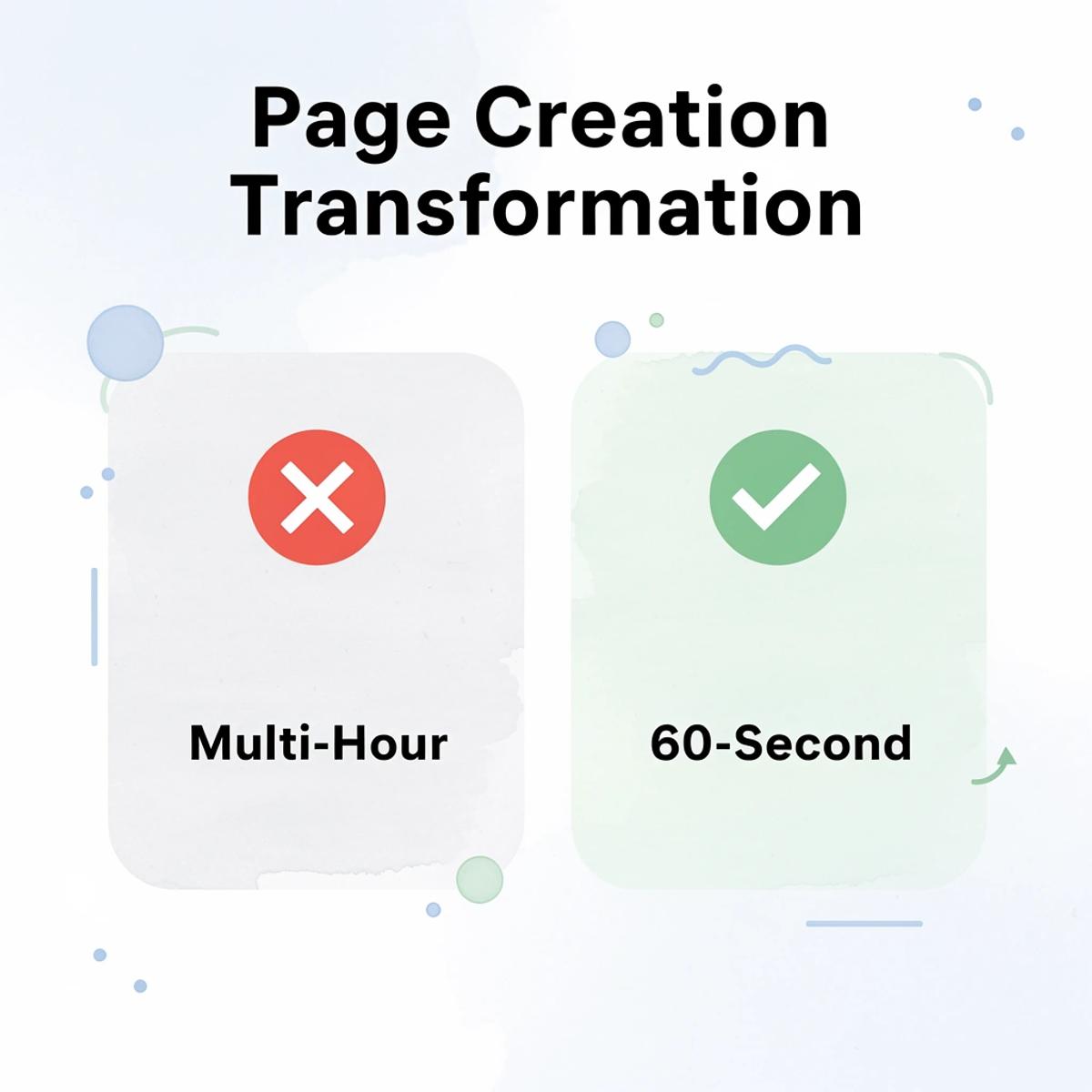
PagePilot turns product page creation from a multi-hour design project into a 60-second automated process. You stay on Shopify while fixing the workflow that's holding back your results—no platform switching required.
🎯 Key Point: PagePilot integrates seamlessly with your existing Shopify setup, eliminating the need for costly migrations or learning new platforms.
"PagePilot transforms product page creation from a multi-hour design project into a 60-second automated process while keeping you on Shopify." — PagePilot Platform Benefits
⚠️ Warning: Most e-commerce tools force you to switch platforms or rebuild workflows, but PagePilot works within your current Shopify environment to deliver immediate results.
Starting from Market Data, Not Guesswork
You input a competitor or supplier URL, and PagePilot generates a structured product page based on what's working in your market. Our AI page builder analyses successful pages, extracts conversion patterns, and applies them to your product—giving you a foundation built on proven positioning rather than assumptions.
From there, you create variations: one leads with urgency, another emphasizes benefits, and a third uses problem-solution framing. Rather than committing to a single angle, you test multiple interpretations of what might drive conversions. Our platform rewrites copy, structures layouts, and optimizes visuals automatically, so each variation is ready to use.
Speed Changes What You Can Learn
Most stores test one idea per month because building pages takes considerable time. PagePilot shortens that timeline: you can generate ten variations in the time it once took to build one. According to PagePilot AI Blog, many merchants start with a 3-day trial to test this speed advantage before committing. Testing shifts from a quarterly project to a daily habit, accelerating your ability to discover what converts.
What happens when you can iterate faster?
The feedback loop tightens: launch variations, measure performance, refine based on results, and repeat. Because the process is faster, you reach better-performing pages sooner. It removes the time barrier between idea and implementation.
Execution Over Migration
Switching to a different platform doesn't fix slow workflows; it restarts the cycle of facing the same problems. PagePilot keeps you on Shopify while solving the real issue: how fast you can test, learn, and improve. What counts is finding what works and scaling it, not seeking different infrastructure.
Seeing it work is another thing.
Related Reading
- Builder.ai Competitors
- How To Add Products To Shopify Page
- Best Shopify Landing Pages
- Shopify Ai Apps
- How To Add A Custom Popup In Shopify
- On Page Seo Shopify
- Best Shopify Plugins
Start a FREE Trial and Generate 3 Product Pages with Our AI Page Builder today
Before rebuilding your store on a different platform, test whether better pages solve the problem. Start a free trial of PagePilot, generate three product page variations from a competitor or supplier URL, and see which one converts. That single experiment will tell you more about what's holding back your store than any platform comparison chart.

🎯 Key Point: Most conversion problems stem from messaging issues, not platform limitations. Test your pages before making drastic changes to the platform.
The trial gives you three pages to test different angles: one that leads with urgency, another that emphasizes core benefits, and a third that addresses the main objection. Within days, you'll know which messaging resonates, which layout performs, and whether your conversion problem stems from the platform. Most store owners discover it doesn't.

"85% of ecommerce conversion issues are related to page messaging and design, not the underlying platform technology." — Conversion Rate Optimization Institute, 2023
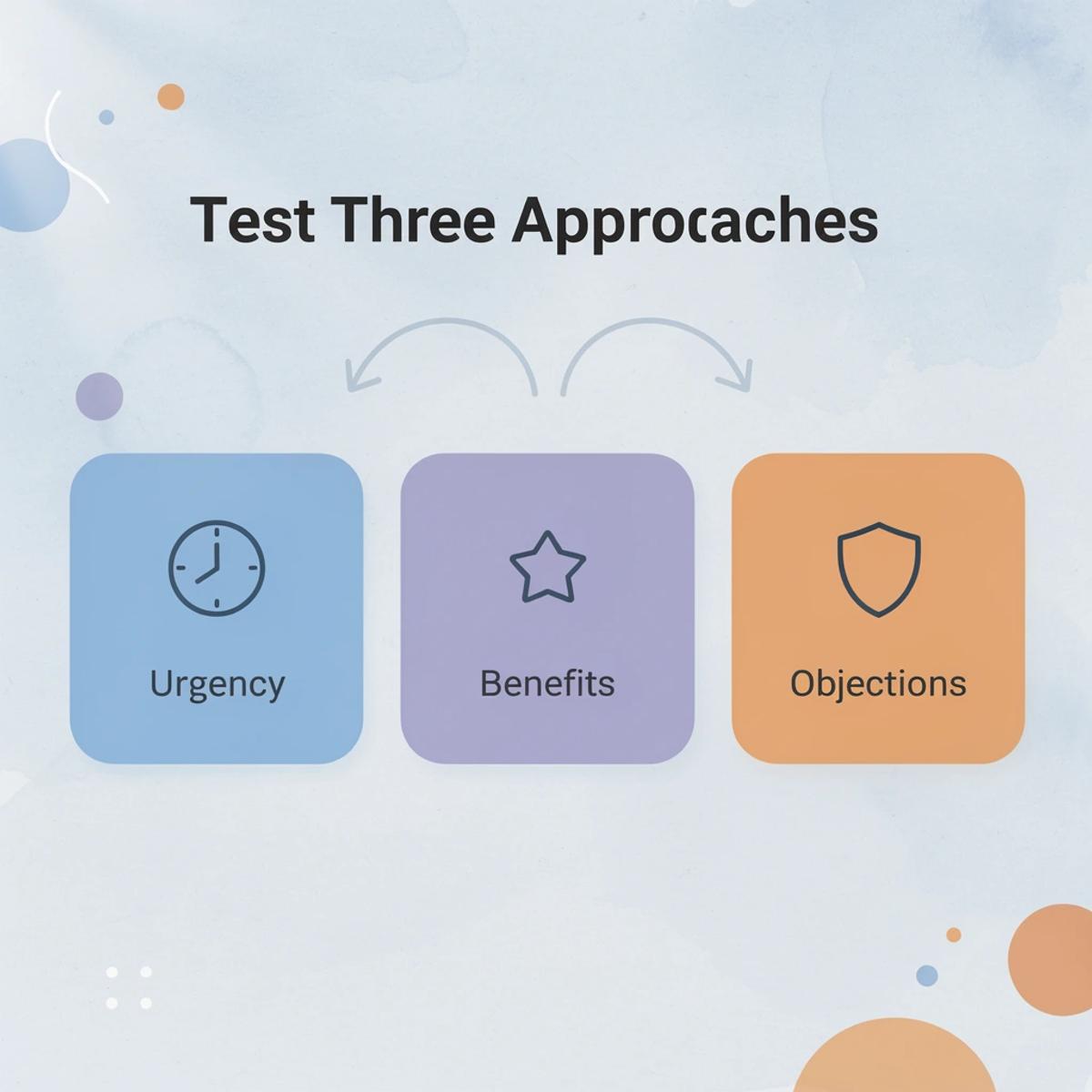
- Page A
- Focus area: Urgency and scarcity
- Timeline: 24–48 hours
- Page B
- Focus area: Core benefits
- Timeline: 24–48 hours
- Page C
- Focus area: Objection handling
- Timeline: 24–48 hours
If your pages convert better with clearer messaging and faster iteration, you've saved yourself weeks of migration work and months of relearning a new system. The platform you're on matters less than how quickly you can improve what's on it.
💡 Tip: Focus on page optimization first — it's faster, cheaper, and often more impactful than switching platforms entirely.