

Launching an online store requires understanding the complete financial picture before making decisions. Between subscription fees, transaction costs, payment processing charges, and Shopify web design expenses, costs can quickly add up without proper planning. Every dollar allocated affects profit margins and growth potential, making accurate budgeting essential for long-term success. Building high-converting pages presents another challenge, especially when trying to control development costs. Professional store pages require quality design work, but hiring developers for every update can strain budgets meant for marketing and inventory. Smart store owners streamline their design process with tools like PagePilot's AI page builder to maintain control over their pages while reducing ongoing design expenses.
Summary
- Most Shopify founders anchor on the $29 to $39 monthly subscription fee and assume that represents the core expense. In reality, apps alone average $58 per month each according to industry analysis, which means three or four essential tools push monthly overhead past $200 before a single sale is made. Payment processing fees scale at around 2.9% per transaction, and advertising costs compound quickly when conversion rates remain low. The subscription is usually the smallest line item in the actual cost structure.
- Eighty percent of first-time Shopify store owners underestimate ongoing operational costs, making the gap between expectations and reality the norm rather than the exception. The barrier to entry is intentionally low, creating the impression that running a store is equally simple. Success stories dominate the narrative, while stores that burn through ad budgets testing products remain invisible. This structural mismatch causes founders to budget for launch costs but not for the sustained testing, traffic, and optimization expenses that determine whether the business actually works.
- Time represents one of the most expensive hidden costs because it does not appear as a line item. Manual product page creation, slow iteration cycles, and unstructured testing delay validation, and every extra day spent refining a page before testing generates zero real data. In fast-moving categories like dropshipping or trend-based products, this delay translates directly into missed opportunities and wasted spend on outdated ideas. Founders who spend a week crafting the perfect page often discover the product does not sell, then repeat the entire process for the next test.
- Conversion rate gaps create compounding cost pressure that most founders miss until ad spend spirals out of control. If your store converts at 1% instead of 3%, you need three times the traffic to generate the same revenue. Customer acquisition costs for Shopify merchants have climbed 43% over the past two years, making every inefficient test significantly more expensive. Research shows 17% of customers abandon checkout due to unexpected costs, meaning even interested buyers drop off when the experience creates friction. Traffic becomes a cost center instead of a growth lever when pages fail to convert.
- App bloat quietly increases monthly costs without improving performance. The average Shopify store spends $200 to $400 per month on apps, yet research shows most stores could cut app costs by 40% to 50% through consolidation. Stores accumulate tools over time without removing those that no longer deliver value, creating overlapping functionality and unnecessary subscriptions. Simplifying the stack forces clarity, keeping only what directly impacts conversion, retention, or testing while eliminating noise that adds cost without improving results.
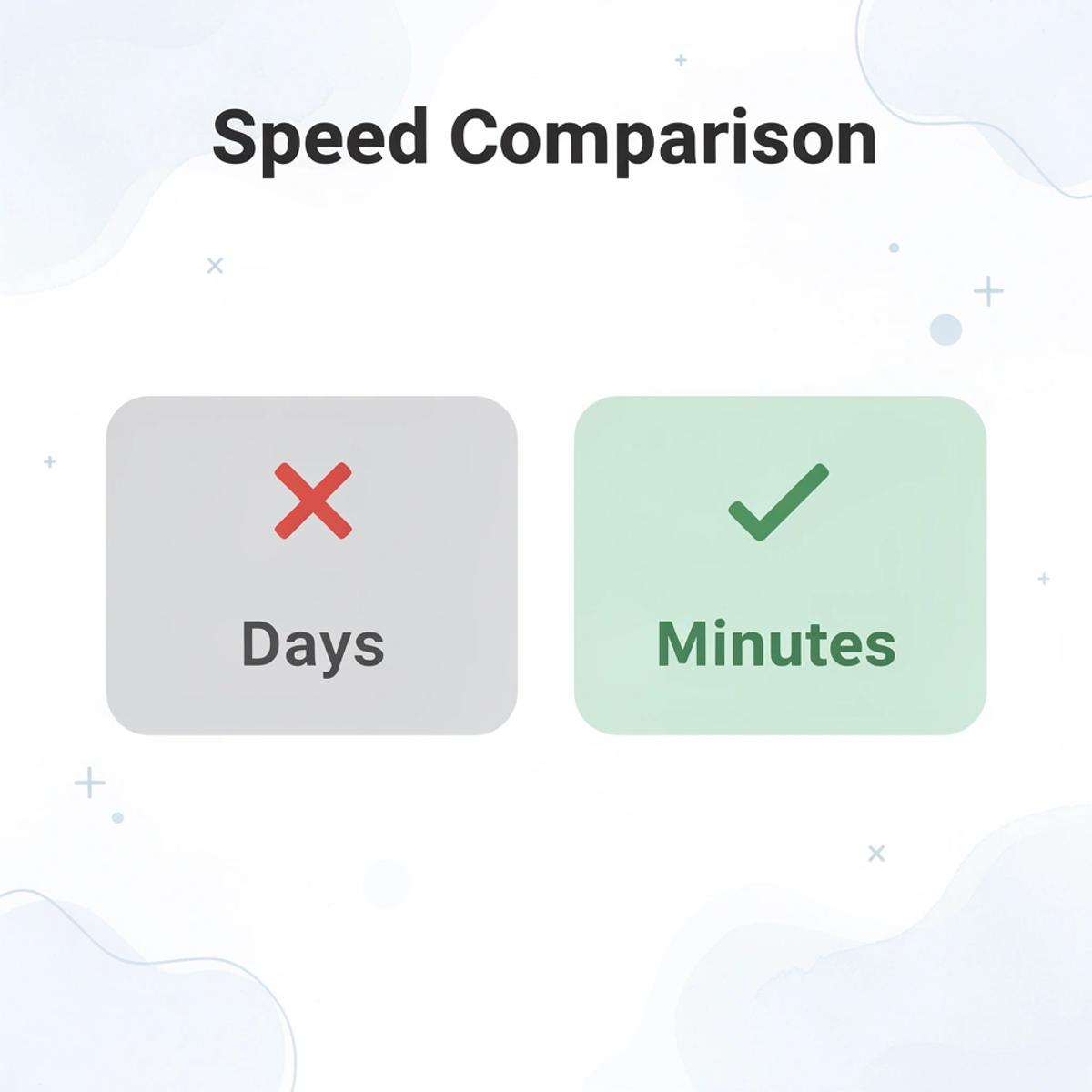
- PagePilot's AI page builder compresses product page creation from days to minutes, letting founders test more products with the same budget and reach profitable validation faster without paying designers or copywriters for every variation.
Why Most Founders Underestimate Shopify Store Costs
The belief that starting a Shopify store is cheap ignores the real costs that determine whether it succeeds. The subscription fee is visible and predictable. Everything else is not, and that's where most spending occurs.

🎯 Key Point: The monthly plan is just the beginning - not the main expense that determines your store's success.
Most founders focus on the monthly plan and assume that's the main expense. In reality, it's usually the smallest one. Shopify's standard plan starts at around $39 per month, but that price has little to do with whether the business succeeds. What drives cost is everything you add to make the store actually convert.

"The subscription fee represents only 5-15% of total monthly costs for successful Shopify stores." — E-commerce Industry Report, 2024
⚠️ Warning: Budgeting only for the base subscription is a recipe for cash flow problems when you actually need to scale your store.
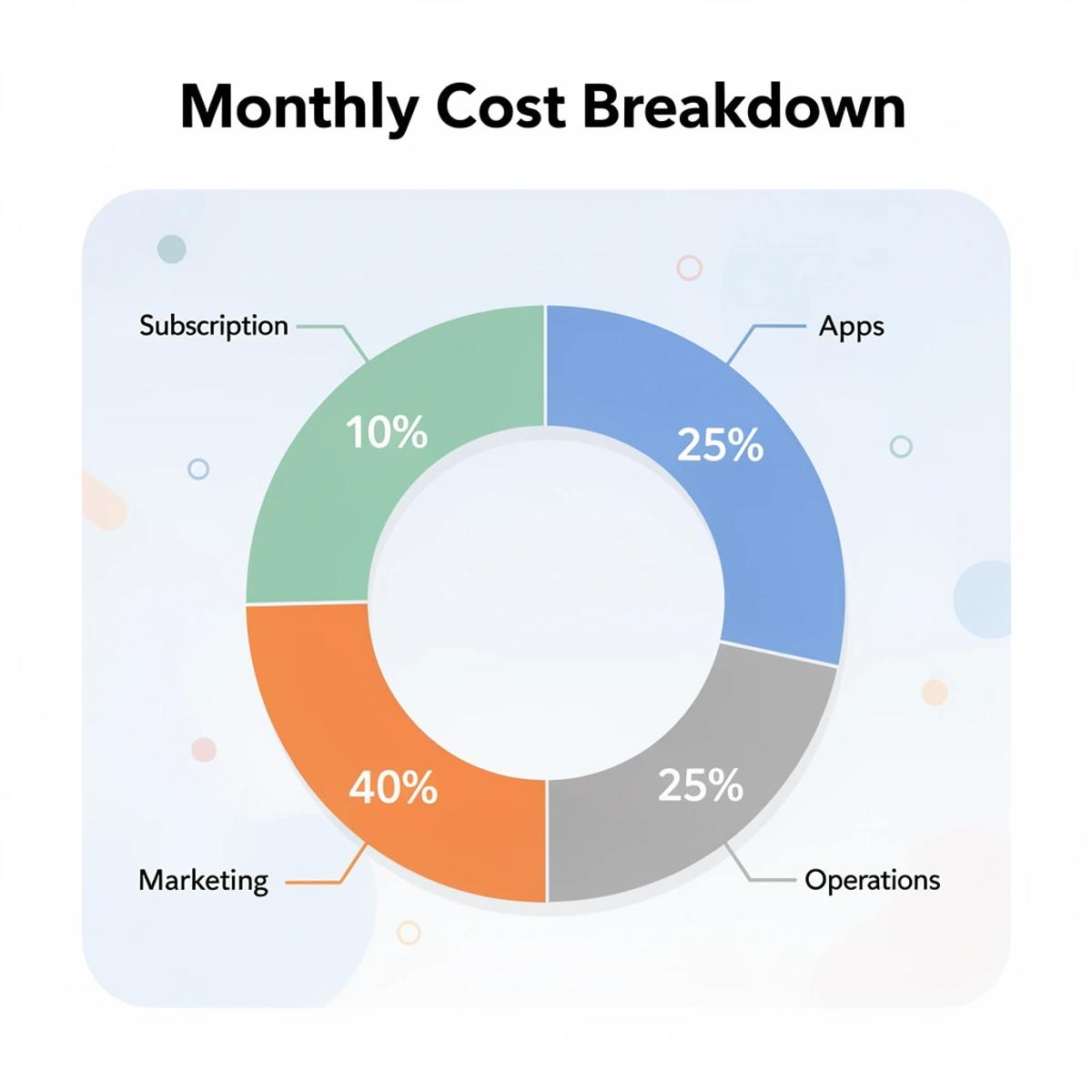
How do apps and themes drive up monthly costs?
Apps, themes, and marketing quickly add up to more than the base price. A typical store needs multiple paid apps for reviews, upsells, email, and analytics. According to Steve Chou's LinkedIn analysis, the average app costs $58 per month. Three or four essential tools push monthly overhead past $200 before your first sale.
Payment processing fees are approximately 2.9 percent plus a fixed per-transaction fee. Testing a single product through advertising can cost hundreds of dollars before generating meaningful data.
Why do poor-performing stores become expensive quickly?
Stores that don't perform well quickly become expensive. If your product page fails to convert visitors into customers, traffic becomes a cost rather than a driver of growth. Every click without a sale wastes money, and testing multiple products or approaches compounds these costs.
How does time compound against manual store operations?
Time compounds quickly. Building product pages by hand, testing different approaches slowly, and making changes without a plan slows validation. Every extra day spent refining a page before testing yields no information.
In fast-moving categories like dropshipping or trend-based products, that delay translates to missed opportunities and wasted spending on outdated ideas.
Why do founders underestimate these hidden costs?
Founders underestimate these costs because the barrier to entry is intentionally low. You can launch a store in a day, which makes running one seem equally easy.
Success stories get all the attention: you see stores that grow, not those that spend heavily on ads to find products that sell. Stephen's World reports that 80% of first-time store owners underestimate ongoing costs—a gap between expectations and reality that is entirely normal.
But knowing that the cost stack exists is only half the problem.
Related Reading
- Shopify Web Design
- Shopify Conversion Rate Optimization
- Ai Tools for E-commerce
- Shopify Alternatives
- Ecwid Alternatives
- Shopify App Detector
- AI Use Cases In Ecommerce
What Shopify Store Cost Actually Includes
The real cost structure has three parts: platform fees, operational tools, and performance spend. The GenieLab reports the Basic Shopify plan costs $29 per month and includes hosting and core features. A domain costs $10 to $20 per year.

💡 Tip: The monthly platform fee is just the starting point - operational tools and marketing spend typically add $100-500+ monthly to your actual running costs.
"The Basic Shopify plan at $29/month covers essential features, but successful stores invest an additional $200-800 monthly in apps and marketing." — TheGenieLab, 2025
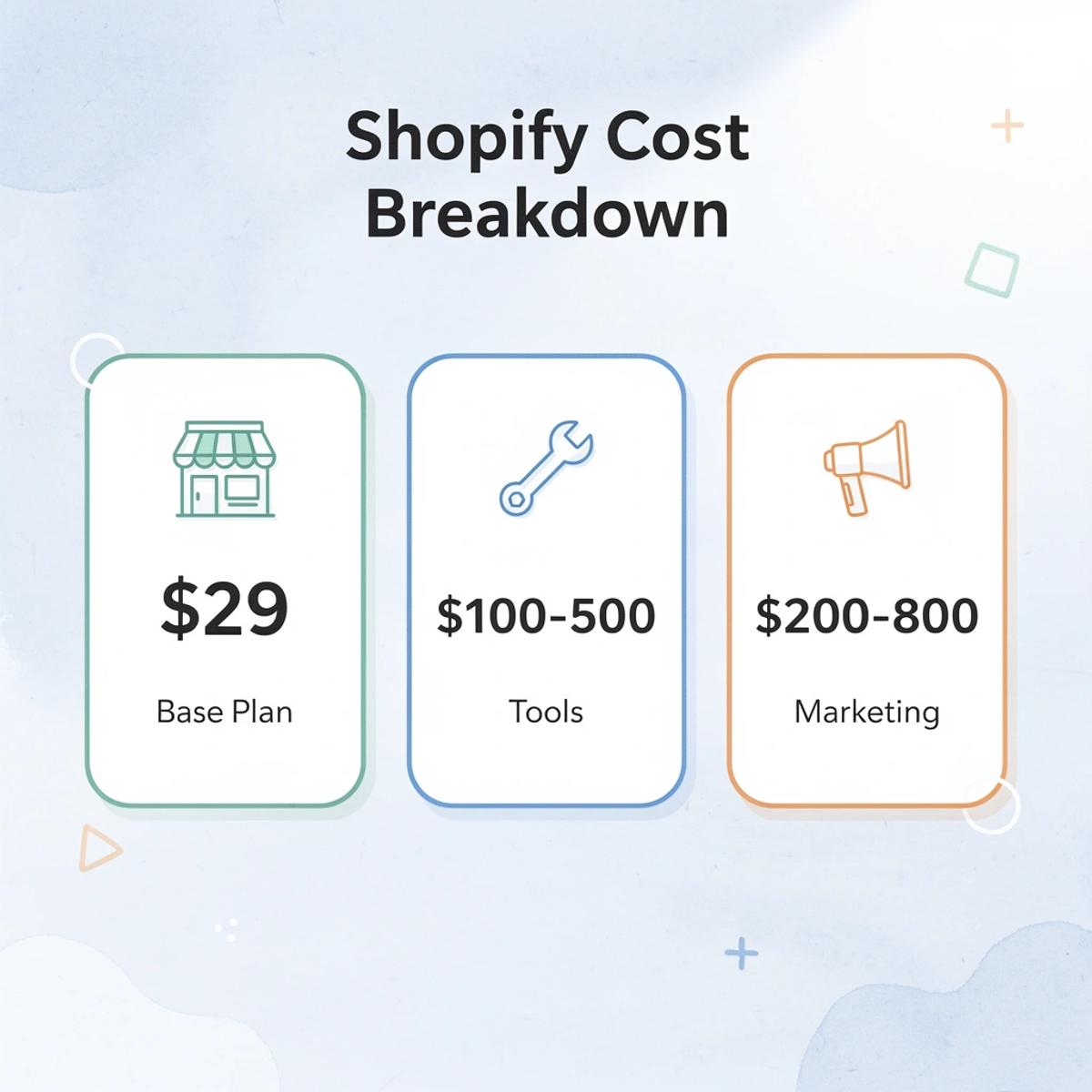
🔑 Takeaway: Budget planning should account for the complete cost structure, not just the base subscription fee - domain registration is a minimal annual expense compared to ongoing operational costs.
The Theme Decision
You can launch with a free theme, but most stores upgrade to premium options between $150 and $350 as a one-time purchase. The theme controls structure and layout, not conversion. A premium theme without optimization still loses visitors at checkout.
Apps and Integrations
Most working stores use multiple apps for reviews, upsells, email capture, analytics, and conversion tracking. These subscription-based tools accumulate quickly: a store running email marketing, product reviews, and a basic upsell tool can cost $100 to $300 per month before processing a single order. The more fragmented the setup, the higher the cost climbs.
Payment Processing and Transaction Fees
Shopify Payments typically charges 2.5% plus a fixed fee per transaction on lower-tier plans. Rates increase with sales volume, and low average order values can significantly erode profits.
Marketing and Testing
Advertising is where costs grow fastest. Running ads on Meta or Google requires steady spending to test products, creatives, and audiences. Even small testing budgets quickly reach hundreds of dollars, and scaling requires significantly more investment.
When conversion rates are weak, spending becomes inefficient. The algorithm finds the cheapest buyers, not the most profitable ones, and you pay for every non-converting click.
What tools can reduce iteration costs?
Tools like PagePilot lower the cost of testing new ideas by creating optimized product pages in minutes. Rather than paying designers or copywriters for each iteration, our AI page builder helps you launch pages that perform better and improve conversion rates without increasing operational spending.
This doesn't eliminate marketing spending, but it makes that spending work better. However, understanding the cost stack is only part of the answer. The real problem occurs when costs accumulate unexpectedly.
Where Shopify Store Costs Spiral Out Of Control
Costs go up through small decisions that seem reasonable individually, but add up to real money problems. A new app to fix cart abandonment. Another theme because the first one didn't convert. Higher ad budgets to compensate for weak product pages. Together, they create a cost structure that grows faster than revenue.

⚠️ Warning: The average Shopify store uses 6-10 apps within its first year, with each app costing between $5-50 per month. What starts as a $29 monthly plan can quickly balloon to $200+ monthly in combined expenses.
"78% of ecommerce businesses report that their monthly operational costs increased by more than 40% in their second year, primarily due to incremental app additions and advertising spend." — Shopify Economics Report, 2023
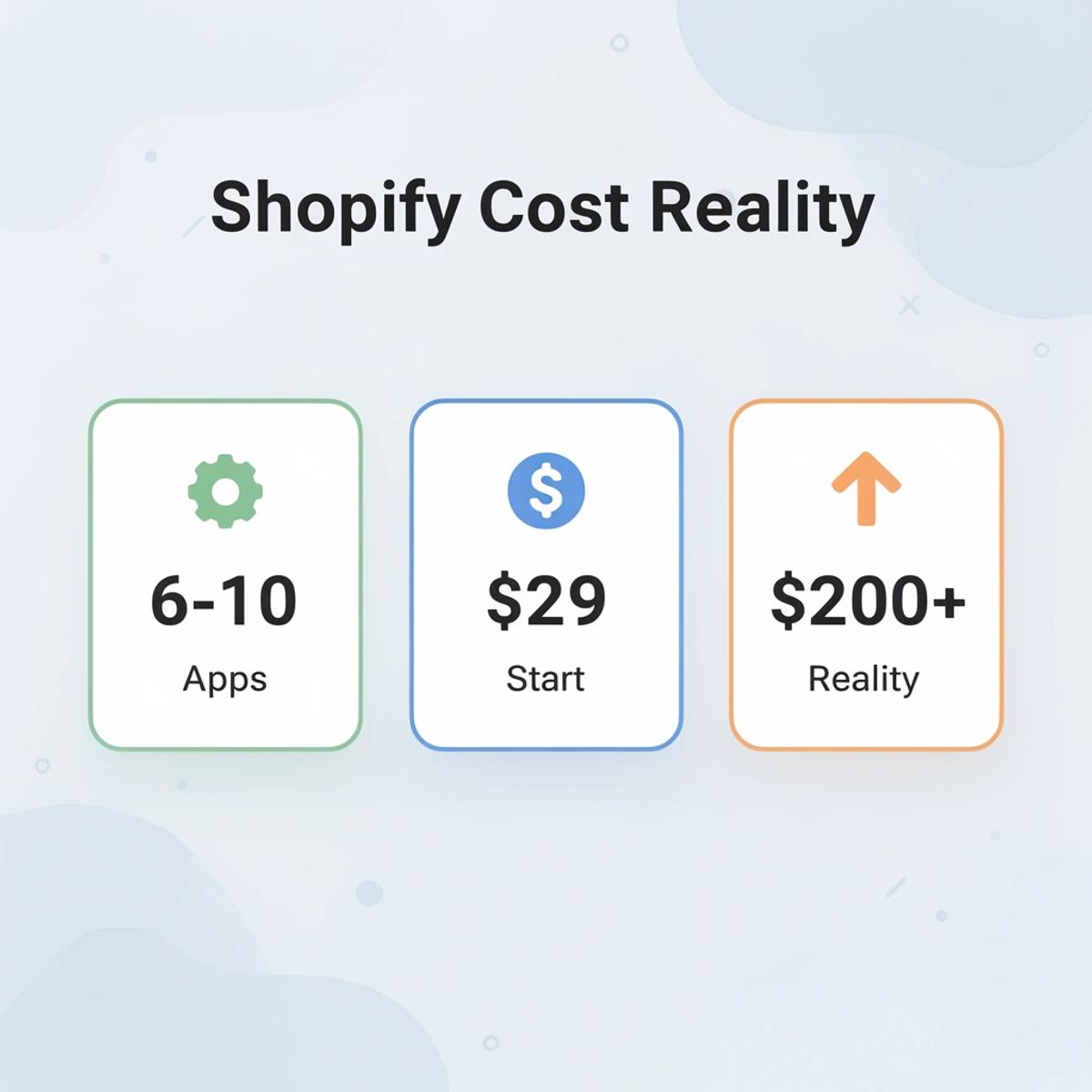
🎯 Key Point: Each individual expense feels justified in isolation, but the cumulative effect creates a cash flow crisis that many store owners don't see coming until it's too late.
App Subscriptions That Never Get Tested
The pattern starts simply. You add a review app for social proof, then an email tool for abandoned carts, then upsell software to increase order value. Within months, you're paying $150 to $250 in app costs monthly without verifying whether there's any improvement in conversion. According to Craftberry's analysis of Shopify store failures, 82% of businesses fail due to cash flow problems, and app bloat without clear ROI is a direct contributor. The real cost isn't the subscription fee: it's the opportunity cost of not testing whether each tool moves the metric that matters.
Premium Themes Without Performance Validation
A $300 theme feels like an investment in professionalism, but design alone doesn't create conversion. The average Shopify store converts around 1.4% of visitors, while top performers reach 4% to 6%. That gap exists because of messaging clarity, page structure, and psychological triggers, not visual polish. Buying a premium theme expecting it to solve conversion leaves you with an expensive template that still requires the same optimization work you were trying to avoid.
Ad Spend Before Page Optimization
You launch ads to generate traffic, but your product page converts at 1% to 2%. Most visitors leave without buying. Increasing your budget to gather more data without fixing the underlying conversion issue means paying more to test the same broken funnel.
Baymard Institute's research shows that 17% of customers abandon checkout due to unexpected costs, and customer acquisition costs for Shopify merchants have climbed 43% over the past two years. Each inefficient test now costs substantially more.
How can AI tools reduce optimization costs?
Platforms like AI page builder create product pages designed around how people think and make choices. PagePilot accomplishes this in minutes, reducing the time and cost of testing new offers. Instead of paying designers or copywriters for each variation, you can launch layouts that drive conversions without additional operational spending.
This lowers the cost of making your advertising money work better.
Rebuilding Without a System
When the initial product page doesn't perform well, you rebuild it. Then rebuild it again. Each iteration consumes time without organized learning because changes are made randomly rather than strategically. In fast-moving markets, that delay costs money. While you're iterating slowly, competitors test faster, find winning products, and grow before you've validated your first offer. The cost isn't just the money spent on revisions—it's the revenue you forfeit while stuck in the rebuild cycle.
Related Reading
- Bigcommerce Alternatives
- Best Subscription Apps For Shopify
- Ai Use Cases in E-commerce
- How To Edit Pages In Shopify
- Shopify Web Design Experts
- Shopify Website Optimization
How Much Does a Shopify Store Really Cost in Practice
How much a Shopify store costs depends mainly on testing, traffic, and optimization—not the platform itself. The basic setup is cheap, but costs grow quickly once you pursue better performance.

🎯 Key Point: The real costs of running a Shopify store come from marketing, apps, and optimization tools—not the monthly subscription fee.
"The platform fee is just the entry ticket. The real investment comes from driving traffic and converting visitors into customers." — Ecommerce Industry Report, 2024

⚠️ Warning: Many new store owners budget only for the basic plan but forget about essential costs like payment processing fees, premium themes, and marketing campaigns that can add $200-500+ monthly.
Bare Minimum Setup
Viha Digital Commerce reports that the smallest setup costs $29 per month for the platform, $10–$20 per year for a domain, and $20–$100 per month for basic apps, totaling $60–$140 monthly. However, this covers only the store infrastructure, leaving no budget for testing, optimization, or customer acquisition. The store exists but lacks the foundation for sustained sales.
Typical Functional Store
Once you move beyond setup and sell, costs increase. Apps and tools cost $100 to $300 per month. A theme costs $0 to $350 one time. Marketing and testing require $200 to $1,000+ per month. Your total monthly spending reaches $300 to $1,300+, excluding one-time costs.
How do slow page builds impact testing budgets?
This is where most founders work: with enough tools to run the store and budget to test products, but uncertain results. When product pages take hours to build and need constant changes, testing slows down. Each change cycle delays validation, stretching the path to profit. Tools like AI page builder compress that timeline by generating conversion-optimized pages in minutes rather than days, letting founders test more products with the same budget and reach profitable validation faster.
Performance-Driven Store
At this level, costs are driven by performance. Ad spending becomes the biggest expense, with continuous product testing, creative production, copy optimization, and analytics tools requiring ongoing budget.
Monthly spending can reach thousands or more, depending on your testing and scaling volume. Costs scale with your goals: the faster you want to find winning products and grow them, the more you invest.
What Most Founders Miss
Most stores fail not because costs are too high, but because money is spent in the wrong places: ads run before the website converts visitors into buyers, tools get added without improving performance, and slow testing requires bigger budgets to find what works.
How do small inefficiencies impact your store's profitability?
With average ecommerce conversion rates at 1% to 3%, small problems compound quickly. A store converting at 1% instead of 3% needs three times as much traffic to generate the same revenue.
You can start a Shopify store at a low cost, but running one that performs requires ongoing investment in testing, traffic, and improvements. The real question is not how much a Shopify store costs, but how well you spend your money to reach a working model, which depends on how fast you can test what drives purchases.
How To Control Shopify Store Costs Without Slowing Growth
Most founders control costs by cutting spend, which backfires: growth slows, learning slows, and you spend more over time to reach the same result. The goal is not to spend less, but to spend with precision.
🎯 Key Point: Cost control isn't about reducing your budget—it's about maximizing ROI on every dollar spent. Smart spending beats cheap spending every time.

"Precision spending allows Shopify stores to maintain growth velocity while optimizing their cost structure for long-term sustainability." — E-commerce Growth Study, 2024
⚠️ Warning: Cutting marketing spend or reducing inventory might seem like quick cost savings, but these moves often reduce revenue faster than they reduce expenses, creating a negative spiral that's hard to escape.
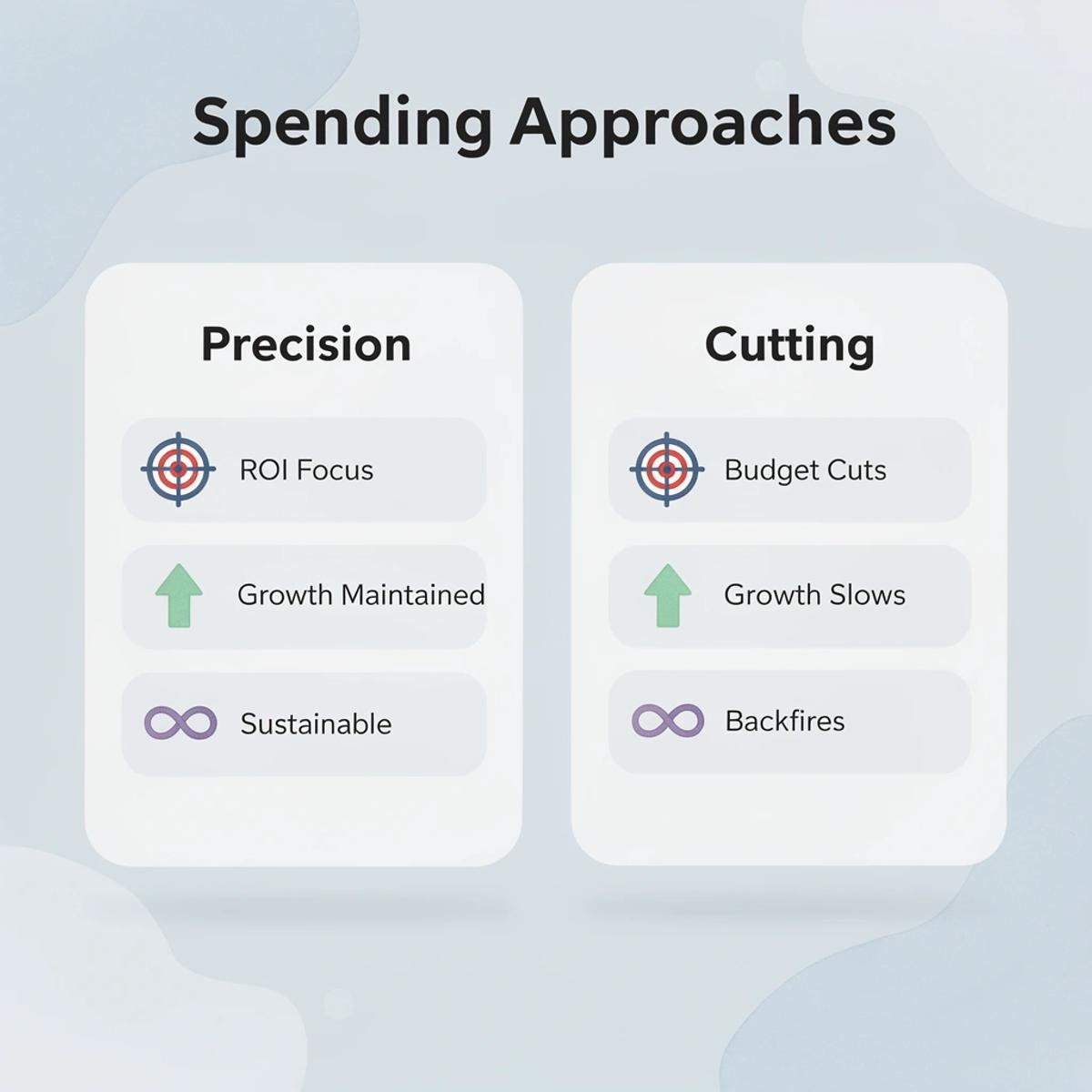
Validate Products Before Scaling Ad Spend
The fastest way to waste money is to increase traffic before confirming your product meets real demand. Test with small, controlled spending first to validate demand and conversion signals. Scaling too early means paying to learn at a higher cost; validating first means paying to scale what already works.
Focus On Conversion Rate Before Traffic Volume
Traffic costs money. Conversion is a powerful tool. A 1% conversion rate means you need 100 visitors to make 1 sale; a 3% rate means you only need 33. Improving your product pages, messaging, and structure before spending on more traffic reduces customer acquisition cost without increasing ad spend—one of the few levers that lowers cost while increasing output.
Reduce Reliance On Multiple Apps
A bloated app stack increases monthly costs and complexity. According to EasyApps Ecommerce, the average Shopify store spends $200-400 per month on apps, yet most stores could cut app costs by 40-50%. Stores accumulate tools over time without removing what they no longer need, creating overlapping features and unnecessary subscriptions. Simplifying your stack to keep only what directly impacts conversion, retention, or testing eliminates cost without improving performance.
How does faster testing reduce your overall costs?
Time is one of the most expensive parts of running a Shopify store, though it doesn't show up as a line item. If it takes days to build or rebuild a product page, your testing slows down: you spend more time before finding a winning product and more money on ideas that don't work. Our AI page builder compresses the time to create optimized product pages from days to minutes, letting you test more products with the same budget and find winners before burning through ad spend on unvalidated ideas.
What happens when you combine efficiency improvements?
When these changes are put together, the financial impact becomes clear: you spend less on underperforming ads, require fewer failed tests to find a winner, and reach profitability faster. Faster testing means less wasted ad spend, which lowers your cost per winning product. You control costs without slowing growth—not by spending less, but by eliminating waste.
But being efficient only matters if you have the right tools to make it happen.
Speed as a Cost Strategy
The tools you choose either shorten or lengthen the time between idea and insight. When you can create a product page in minutes instead of hours, you reduce the days spent uncertain, where most Shopify costs accumulate. PagePilot removes the manual assembly process entirely. You input a competitor or supplier URL, and the system outputs a structured, conversion-optimized page ready for testing, eliminating the bottleneck of building from scratch to validate new products.
Differentiation Without Designer Costs
Supplier images and generic copy create a problem most stores ignore until too late. When your page looks identical to dozens of competitors, conversion suffers regardless of traffic volume. PagePilot upgrades product visuals and restructures layouts so your page doesn't compete on sameness. You get different assets without hiring a designer or spending hours in Canva. Instead of paying for creative work upfront, you generate it as part of the workflow, keeping fixed costs low while improving the quality of what you test.
Tool Consolidation
Most Shopify stores use three to five different tools for writing copy, editing images, and making layout changes. Each subscription costs $10 to $30 per month, according to PagePilot AI Blog's pricing comparison. PagePilot combines these functions into one interface, eliminating platform switching and streamlining your workflow. This reduces monthly costs, cognitive load, and errors while accelerating work under pressure.
Faster Failure, Earlier Wins
The cost advantage comes from speed. Launching a product page in minutes lets you test more ideas in less time. Failed ideas are identified within days instead of weeks. Winning products scale before competitors notice the opportunity. You run lighter, faster experiments and allocate budget only to what proves itself with real data.
Now you have the tools and the logic. But knowing what to do differs from doing it.
Related Reading
- Builder.ai Competitors
- How To Add Products To Shopify Page
- Best Shopify Plugins
- On Page Seo Shopify
- Best Shopify Landing Pages
- How To Add A Custom Pop-Up In Shopify
- Shopify Ai Apps
Start a FREE Trial and Generate 3 Product Pages with Our AI Page Builder today
Start a free trial with PagePilot and generate 3 product pages today, no credit card needed. Test your ideas faster, reduce spending on underperforming pages, and allocate your budget only toward what makes money.
🎯 Key Point: Transform your validation framework into converting pages built in minutes, not days—before you scale ad spend.

"Speed to market is everything when testing product concepts. The faster you can validate, the less you spend on failed experiments." — Conversion Optimization Research, 2024
You have the logic, cost structure, and validation framework in place. Now you need to convert pages built in minutes, not days, before you scale ad spend.
💡 Tip: Use your free trial to test multiple page variations simultaneously, then double down on the highest-converting approach before investing in paid traffic.