


Yotpo is a capable platform, but for many Shopify merchants, costs climb quickly, and key features are locked behind higher-tier plans. That reality has pushed store owners to explore alternatives that deliver reviews, loyalty programs, SMS, and referral marketing without the premium price tag. Several strong competitors now cover the same ground, and some do it better for specific use cases within a broader Shopify marketing automation strategy.
Choosing the right tools is only part of the equation. The pages where reviews, ratings, and social proof actually appear need to convert, and weak product pages undercut even the best marketing stack. Store owners who want to strengthen those pages without hiring a developer can get a head start with PagePilot's AI page builder.
Table of Contents
- Why Shopify Merchants Look for Yotpo Alternatives
- What to Look for in a Yotpo Alternative
- 10 Best Yotpo Alternatives for Shopify Stores
- Should You Replace Yotpo With One Tool or Multiple Specialized Tools?
- The Hidden Problem Most Ecommerce Brands Miss
- How PagePilot Helps Brands Convert More Traffic Into Sales
- Start a FREE Trial and Generate 3 Product Pages with Our AI Page Builder today
Summary
- Pricing structure is one of the most common reasons Shopify merchants switch away from all-in-one review and loyalty platforms. Over 40% of Shopify merchants cite pricing as their primary reason for switching review platforms, and the core issue is that costs scale with order volume rather than feature usage. A merchant who only needs review collection ends up paying for SMS infrastructure they never use.
- Specialized tools consistently outperform generalist platforms when a single function drives most of a business's growth. Photo review collection rates above 7% (compared to a 2-3% industry average) demonstrate how much performance can vary between a focused platform and a broader one that treats photography as a secondary feature. The gap between a good all-in-one feature and a best-in-class specialized tool is often exactly where revenue gets left behind.
- Operational capacity is a real constraint that rarely appears on a pricing page. Research from Harvard and BCG found that productivity peaks at three tools and drops with each additional tool. For lean teams managing reviews, loyalty, and email simultaneously, a consolidated platform that handles all three reasonably well will often outperform a superior three-tool stack that nobody has time to optimize.
- Social proof tools only perform as well as the page they sit on. A five-star rating displayed on a slow, cluttered, or visually inconsistent product page loses most of its persuasive weight before the customer finishes reading it. Merchants exploring review or loyalty alternatives often focus entirely on the tool layer while leaving the product page foundation unchanged.
- Review syndication extends social proof well beyond the product page itself. With 93% of consumers saying online reviews impact their purchasing decisions, platforms that push verified reviews to Google Shopping, Trustpilot, and other third-party channels make that proof visible wherever the purchase decision is actually happening, not just on a single storefront.
- When replacing multiple tools at once, sequencing matters more than speed. A two-to-four-week evaluation window per tool replacement helps teams measure actual impact before moving to the next transition, and staggering those changes prevents a stack migration from becoming a disruptive overhaul that nobody has bandwidth to manage.
- PagePilot's AI page builder addresses the foundation problem directly, generating brand-quality Shopify product pages in minutes so that every review widget, loyalty badge, or UGC gallery has a page strong enough to convert around it.
Why Shopify Merchants Look for Yotpo Alternatives
Shopify merchants leave Yotpo not because it fails, but because their business grows beyond what the platform offers. The platform's breadth becomes a problem when merchants pay for six tools but only use two effectively.
"Merchants pay for six tools but only use two effectively — the platform's breadth becomes its biggest liability." — Key Industry Insight
💡 Tip: Before renewing any all-in-one platform, audit exactly which tools your team actively uses — you may be paying for features you've never touched.
⚠️ Warning: Overpaying for unused features is one of the most common reasons Shopify merchants switch platforms — don't wait until your next billing cycle to evaluate your true ROI.
- Paying for unused tools: Budget is wasted on features that don't drive revenue.
- Platform breadth: Complexity increases without providing proportional value.
- Business outgrowing the platform: Core needs go unmet despite high subscription costs.
Does Yotpo's pricing model punish focused merchants?
According to Zigpoll's Top Yotpo Alternatives for Shopify Stores 2026, more than 40% of Shopify merchants cite pricing as their primary reason for switching. Yotpo's pricing scales with order volume rather than feature usage, so merchants needing only review collection pay for unused SMS marketing tools.
Merchants start with Yotpo expecting it to do everything, only to discover that efficiency and fit are different. A fashion brand running visual UGC campaigns has completely different needs from a subscription box company focused on customer retention. One platform cannot serve both equally well without trade-offs.
What hidden costs come with staying on a mismatched platform?
As review counts and order volumes grow, costs climb alongside them. The hidden cost isn't just financial; it's in managing a platform built for a version of your business that no longer exists.
Product page quality determines how well social proof tools perform. A five-star rating on a slow, cluttered product page converts less effectively than the same rating on an intentional, brand-native page. Merchants exploring alternatives often focus on the review layer while leaving the foundation unchanged. An AI page builder like PagePilot addresses that gap, helping Shopify merchants build product pages that maximize every social proof element.
Why do serious operators prefer a stack of focused tools?
Serious ecommerce operators prefer three sharp tools over one blunt one. A dedicated review platform, a focused loyalty solution, and a purpose-built SMS tool can each be evaluated, replaced, or upgraded independently as the business evolves.
What to Look for in a Yotpo Alternative
Not every Yotpo alternative does the same job. Start by figuring out which Yotpo products are actually helping your business get results, then look at replacements based on what would really improve those specific areas — not on feature lists you'll never use.
"The best alternative isn't the one with the most features — it's the one that directly replaces what's actually driving results for your business." — Key Evaluation Principle
Here is a concise guide to auditing your current stack:
- Identify active Yotpo products: Ask "What are we actually using?" to avoid paying for unnecessary replacements.
- Measure current results: Ask "What’s working and what isn't?" to target your search on real operational gaps.
- Match to specific alternatives: Ask "Does this solve our exact problem?" to prevent feature bloat and wasted spend.
🎯 Key Point: Don't evaluate alternatives based on overall feature count — evaluate them based on the specific Yotpo products that are genuinely moving the needle for your business.
💡 Tip: Before shortlisting any Yotpo replacement, audit your current stack and tag each tool as "essential," "nice to have," or "unused" — this single step will dramatically narrow your search.

Match the tool to the job, not the feature list
The failure point is usually a mismatch between what a platform advertises and what a business actually runs on. A merchant generating most repeat revenue through SMS campaigns has little in common with a brand whose conversion rate depends on photo reviews and Google Shopping integration. When evaluating alternatives, start with your revenue-driving use case, then work outward. According to the Conjura Blog, the market has segmented itself by function—and you should too.
What do strong review platforms actually require?
If reviews are your main need, look for automated review request campaigns, verified buyer badges, photo and video review support, and clean Google Shopping integration that feeds structured data into your product listings. Schema-marked reviews improve organic visibility without additional ad spend, delivering SEO value that most merchants underestimate. A review platform that collects feedback but hides it in a slow-loading widget isn't worth the cost.
Does the page those reviews land on actually support conversion?
The page where reviews appear affects their persuasive power. A five-star review on a messy, slow, or visually inconsistent product page loses its impact. Tools like PagePilot's AI page builder solve this by creating brand-quality Shopify product pages in minutes, ensuring every review widget, UGC gallery, and loyalty badge sits on a page strong enough to convert.
Loyalty, SMS, and the features that compound over time
Loyalty programs should be judged on flexibility, not feature count. Point systems and referral programs are baseline requirements. Strong platforms differentiate through VIP tiers, multiple redemption options, and automated campaigns for key moments like birthdays or anniversaries—features that convert one-time buyers into valued customers. For SMS and email, the critical distinctions are behavioral targeting precision and segmentation depth, since cart abandonment recovery and post-purchase messaging succeed only when reaching the right person at the right time with the right message.
Shopify integration and pricing transparency
Shopify compatibility is non-negotiable but more nuanced than a simple yes or no. Native integration means product and customer data sync cleanly, theme compatibility holds across updates, and your team avoids hours of troubleshooting after platform releases. On pricing, the trap is comparing monthly subscription costs without accounting for subscriber limits, order volume thresholds, and SMS usage fees, all of which can make a cheaper plan significantly more expensive at scale. The right platform delivers value at your current size and doesn't punish you for growing.
Knowing which platforms deliver on these criteria determines the real decisions.
Related Reading
- Shopify Marketing Automation
- Shopify Email Marketing Vs Klaviyo
- Shopify Social Media Marketing
- How To Advertise a Shopify Store
- Shopify Social Media Marketing
- Seo Marketing Shopify
10 Best Yotpo Alternatives for Shopify Stores
Ten platforms stand out as real Yotpo alternatives for Shopify stores, each one built for different growth stages, channel priorities, or use cases. The right choice depends on whether you focus on collecting reviews, SMS automation, loyalty mechanics, or reputation management — not every platform excels at all four.
"The best Yotpo alternative isn't the cheapest — it's the one that matches your growth stage, your channel priorities, and the specific outcomes you're optimizing for." — Industry Insight
🎯 Key Point: There is no single best alternative — the winning platform is the one aligned with your top revenue lever, whether that's reviews, SMS, or loyalty.
Here is the best focus area for each of your business priorities:
- Collecting Reviews: Review-first platforms
- SMS Automation: SMS & marketing tools
- Loyalty Mechanics: Points & rewards apps
- Reputation Management: Multi-channel review tools
💡 Tip: Before switching from Yotpo, identify your #1 growth priority — this single decision will immediately narrow your shortlist to 2–3 strong contenders.

1. Judge.me
Judge.me offers unlimited review requests, automated email sequences, and rich snippet support for Google search at no premium fee. For new stores in their first year, this combination of features and affordability is difficult to match.
2. Loox
Most review platforms underestimate how much visual proof matters in categories where fit, texture, or appearance drives decisions. According to the Loox Blog, Loox achieves photo review collection rates above 7%, compared to the 2–3% industry average. For apparel, beauty, home goods, or any category where seeing the product on a real person influences the purchase decision, merchants build richer social proof libraries faster than competitors who rely on star ratings alone.
3. Okendo
Okendo captures attribute-level feedback—fit accuracy, material quality, ease of use—that gives merchants actionable product intelligence beyond standard five-star ratings. This data feeds directly into segmentation and retention strategy rather than remaining unused on a product page. Stores treating reviews as a research tool find Okendo's depth worth the investment.
4. Klaviyo
Klaviyo is a behavioral operating system for Shopify email and SMS marketing. It reads browsing patterns, purchase sequences, and predicted lifetime value to trigger flows that feel like well-timed conversations rather than bulk campaigns. Stores that pair Klaviyo with a dedicated review platform get automated feedback collection feeding directly into targeted retention sequences.
How does review data connect to messaging strategy in Klaviyo?
Most Shopify merchants connect their review app to a basic email flow and stop. Review data collected in one tool rarely informs messaging strategy in another, leaving the feedback loop broken. Using an AI page builder like PagePilot to build product pages around specific review themes—highlighting the attributes customers mention most—creates a tighter connection between customer feedback and what new visitors see first.
5. Attentive
Attentive is built specifically for SMS, with strong delivery rates, compliance rules, and conversion-focused templates optimized for text messages in ways general platforms don't match. It works well for stores where customers respond better to SMS, particularly in categories with quick purchase cycles or time-sensitive promotions. The trade-off is depth in one channel rather than a full marketing stack.
6. Smile.io
Smile.io structures loyalty around three core mechanics: points for purchases, referral rewards, and social actions. This simplicity drives engagement—customers disengage when reward paths are unclear, and Smile.io's straightforward model leads to more consistent repeat-purchase behavior.
7. Stamped
The same tension between breadth and depth that shapes platform selection in reviews also appears in loyalty. Stamped solves it by combining review collection, net promoter score surveys, and a rewards program in a single dashboard, offering operational value for stores seeking fewer vendor relationships and tighter data integration between feedback and incentives.
8. Reviews.io
Reviews.io sees review collection as the beginning, not the end goal. Its syndication features push verified reviews to Google Shopping, Trustpilot, and other third-party platforms, strengthening search presence and off-site credibility. According to the Rivyo Blog, 93% of consumers say online reviews impact their purchasing decisions, and Reviews.io makes those reviews visible wherever purchasing decisions happen, not just on the product page.
9. Bazaarvoice
Bazaarvoice operates at a larger scale than the other platforms on this list. It's built for brands that manage user-generated content across multiple retail partners and marketplace channels simultaneously, where consistency and content distribution across dozens of locations matter. For most independent Shopify merchants, it's more infrastructure than is necessary. For brands selling through major retailers alongside their own store, it's often the only platform that handles that complexity without manual work.
10. Gorgias
Gorgias brings together email, live chat, and social messages in one place. It uses AI to help write responses and pulls real order information to solve problems faster. It also has a review platform that automatically initiates support follow-ups when customers leave negative feedback, creating a closed loop between public feedback and private resolution—one of the most underused customer retention tools available to Shopify merchants.
What can't a review or loyalty app fix on its own?
What no review app, loyalty platform, or SMS tool can fix is a product page that fails to earn trust before the customer reaches the review section. The most effective social proof strategy still depends on the page underneath it.
Whether to use one platform or combine several is more complicated than it first appears.
Related Reading
- Best Shopify Email Marketing Apps
- How To Advertise a Shopify Store
- Shopify Marketing Strategies
- Best Shopify Marketing Agency
- Best Shopify Marketing Apps
Should You Replace Yotpo With One Tool or Multiple Specialized Tools?
Choosing between a single replacement platform and specialized tools depends on your business stage, team structure, and which functions drive measurable revenue.
"The right stack architecture isn't about using more tools — it's about matching tool depth to revenue impact." — Ecommerce Operations Insight
Here is how your business stage and structure dictate the choice between a single replacement platform or a suite of specialized tools:
- Business Stage: Single platforms are ideal for early-stage, lean teams, while specialized tools suit scaling, mature operations.
- Team Structure: Single platforms support small, generalist teams, whereas specialized tools are better for larger, function-specific teams.
- Revenue Focus: Single platforms provide broad coverage across features, while specialized tools allow for deep optimization per channel.
- Cost Complexity: Single platforms offer predictable, consolidated billing, while multiple vendors create higher overhead and cost complexity.
🎯 Key Point: If one or two functions — like reviews or loyalty — are your primary revenue drivers, a specialized tool will almost always outperform an all-in-one replacement.
💡 Tip: Audit which Yotpo features you actually use before migrating. Most brands actively rely on no more than 2–3 core functions, making a targeted replacement strategy the smarter, leaner choice.

When simplicity wins
Smaller Shopify stores and lean teams almost always benefit from consolidating on a single platform. Operational overhead is a real cost that rarely shows up on a pricing page. Managing three or four separate vendor relationships—each with its own dashboard, billing cycle, and support queue—creates friction that compounds until team members stop using tools altogether. This represents a capacity failure masquerading as a software problem.
Harvard and BCG research on AI in knowledge work found that productivity peaks at three tools and drops with each additional tool added. Every new platform consumes finite cognitive bandwidth. For merchants needing reviews, loyalty, and email, a consolidated platform handling all three reasonably well often outperforms a superior three-tool stack that lacks time for optimization.
When does specialization pay off?
The failure point is usually specificity. If your growth strategy depends heavily on one function—photo review collection feeding into Google Shopping ads, or behavioral SMS sequences triggered by browse abandonment—a generalist platform will eventually hit a ceiling. Specialized tools invest their entire product roadmap into one problem, which means the depth of features, integrations, and automation sophistication is superior. Growing brands with dedicated marketing teams often find that the gap between a good all-in-one feature and a best-in-class specialized tool is where revenue gets left behind.
How do you migrate tools without creating chaos?
Most teams building a specialized stack underestimate switching costs. The MindStudio Blog on the Three-Tool Rule recommends a two- to four-week evaluation window when replacing any tool. Stagger your transitions by replacing one function at a time, measuring the impact, then moving to the next. This sequencing discipline separates successful stack migrations from chaotic ones.
Why does the page foundation matter before layering tools?
Review widgets, loyalty banners, and SMS opt-in prompts sit atop a page that either earns trust or does not. Most teams treat the page as a given and optimize the tools layered on top of it. A well-built, brand-cohesive product page amplifies every social proof element; a weak page neutralizes them. Merchants who use our AI page builder to build high-converting product pages before layering in review or loyalty tools see better results from those tools, not because the tools changed, but because the foundation finally supports them.
What question should you answer before comparing feature lists?
The decision between one platform and many comes down to a single question: what can your team run well, and what does your revenue model require? Answer that before comparing feature lists, and the right structure becomes obvious.
The Hidden Problem Most Ecommerce Brands Miss
When ecommerce brands look for Yotpo alternatives, the conversation usually focuses on reviews, loyalty programs, SMS marketing, referrals, and customer retention. These tools build trust, encourage repeat purchases, and provide social proof. However, most conversions happen on product pages. No matter how customers arrive at your store—through Google, paid ads, email, SMS, loyalty rewards, referrals, or social media—they land on a product page where they decide whether to buy.
"No matter how customers arrive at your store, they land on a product page where they decide whether to buy."
⚠️ Warning: Focusing on traffic and retention tools while neglecting your product pages means you're optimizing the journey but ignoring the destination where conversions are won or lost.
💡 Key Insight: The most overlooked conversion lever in ecommerce isn't your loyalty program or SMS strategy—it's the product page experience that every customer channel ultimately feeds into.

Why do shoppers still leave even after strong marketing brings them in?
A strong marketing stack can drive visitors to your store and increase buyer confidence, but it cannot guarantee conversions. According to the Baymard Institute, the average ecommerce cart abandonment rate remains approximately 70%, meaning most shoppers who show purchase intent still leave without completing their orders. Once shoppers arrive on a product page, the page itself must communicate value, answer questions, address objections, and motivate action. If it fails to do so, even the best marketing campaigns may struggle to generate sales.
Many merchants assume that adding more reviews, loyalty incentives, or SMS campaigns will automatically improve conversion rates. While these tools can help, they cannot compensate for weak product content. A shopper arriving on a product page with generic supplier descriptions, low-quality images, minimal benefit information, no differentiation, and an unclear value proposition may still hesitate, even with dozens of positive reviews. Social proof works best when it supports a strong product page, not when it replaces one.
How does relying on supplier descriptions limit your store's potential?
One of the most common ecommerce mistakes is relying on supplier-provided product descriptions. Thousands of stores use identical copy from manufacturers, making product pages nearly identical across multiple websites. This limits differentiation and weakens SEO potential. Unique content helps search engines understand a page and provides additional value for users. Many merchants invest heavily in acquisition and retention while using product content that fails to distinguish their brand.
What does the data say about product page quality and purchase decisions?
Ecommerce stores often deploy sophisticated marketing systems: automated review requests, loyalty and referral programs, SMS automation, email sequences, customer segmentation, and retargeting campaigns. Yet conversions frequently fall short of expectations. According to Salsify's Consumer Research, 61% of shoppers cite product images and videos as the most important elements on a product page when making a purchase decision, while 54% have abandoned a purchase due to incomplete, inaccurate, or inconsistent product information. Customers evaluate the quality of the product page before deciding to buy.
Marketing tools bring shoppers to your store, and reviews establish credibility. Loyalty programs retain customers. But product pages are where purchasing decisions happen. Brands that consistently outperform competitors combine strong marketing with compelling product content, persuasive messaging, and high-quality visuals. Improving product pages often delivers greater returns than adding another app to your ecommerce stack. When product pages effectively communicate value, support trust, and address customer concerns, every other marketing channel becomes more effective.
How PagePilot Helps Brands Convert More Traffic Into Sales
Choosing the right Yotpo alternative can dramatically improve customer engagement, loyalty, reviews, and retention. However, merchants often focus on attracting customers while overlooking what happens when they arrive on a product page.
"Even the best marketing stack can't compensate for a product page that fails to convert — the page itself is where revenue is won or lost."
🎯 Key Point: Customer acquisition tools are only as effective as the product page experience waiting at the end of every click.
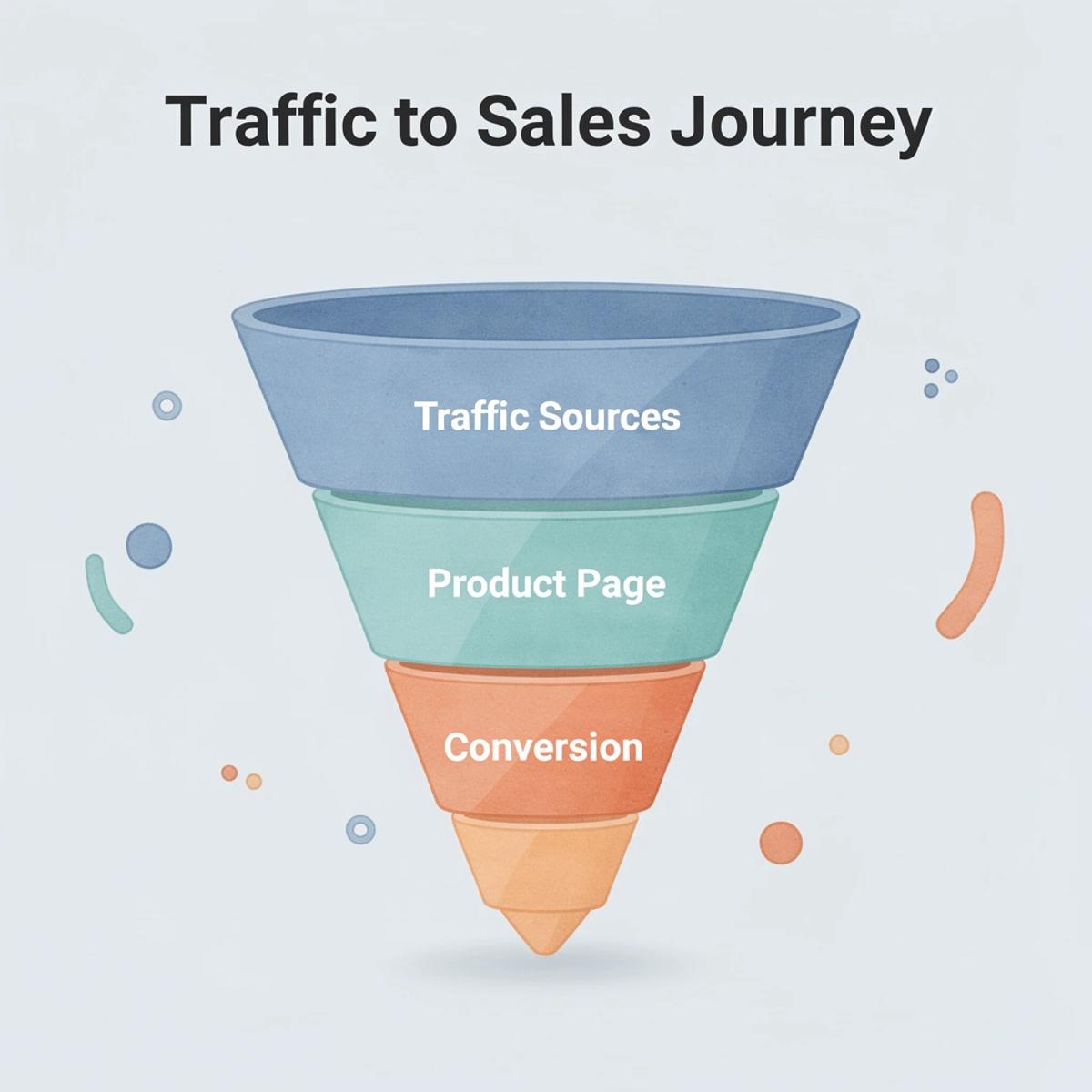
Whether traffic comes from email, SMS, loyalty programs, referrals, SEO, paid advertising, or user-generated content, shoppers eventually land on a product page before purchasing. If that page fails to communicate value, answer key questions, and persuade visitors to act, even the most effective marketing campaigns will struggle to generate sales.
Here is how sending traffic to standard product pages affects your conversion risk across different acquisition channels:
- Email campaigns → High risk if the page is unclear
- SMS promotions → High risk if the page loads slowly
- Loyalty & referrals → Medium risk if the value isn't shown
- SEO & paid ads → High risk if the copy doesn't persuade
- User-generated content → Medium risk if reviews aren't visible
💡 Tip: PagePilot helps brands directly optimize the product page layer — the critical final step where traffic becomes revenue.
⚠️ Warning: Investing in top-of-funnel tools without fixing your product page experience is like filling a leaky bucket — no amount of new traffic will fix a conversion problem at the bottom.
How does PagePilot turn existing traffic into more sales?
While most ecommerce tools focus on driving traffic, PagePilot helps merchants convert that traffic into customers. Our AI Page Builder lets Shopify merchants create high-converting product pages without extensive copywriting, design, and manual work. By improving product page quality, brands extract more value from existing traffic generated through reviews, loyalty programs, SMS campaigns, SEO, and other channels.
Launching new products traditionally requires significant effort: researching competitors, writing descriptions, designing layouts, and creating marketing content. PagePilot streamlines this by allowing users to enter a competitor or supplier URL and automatically generate a complete product page. For merchants testing multiple products or frequently introducing new offers, this speed provides a meaningful competitive advantage.
How does PagePilot help stores stand out from competitors using the same supplier content?
PagePilot addresses a common conversion challenge: generic supplier content. Many stores rely on supplier-provided descriptions used across dozens of competing websites. When every retailer presents identical information, shoppers lack a reason to choose one store over another. PagePilot helps merchants create unique pages that communicate benefits, highlight selling points, and deliver more persuasive shopping experiences.
Visual presentation significantly influences purchasing decisions. PagePilot's AI Product Image feature helps merchants enhance visuals without extensive design work, which is particularly valuable for stores selling supplier-sourced products, where competitors frequently use identical images. Enhanced visuals help products stand out and create a more professional experience.
Why does faster page creation give merchants a competitive edge?
Another advantage is speed. Successful ecommerce brands constantly test new products, offers, and messaging strategies. PagePilot reduces the bottleneck of manual page building, enabling merchants to launch products quickly and collect performance data sooner. The platform also facilitates experimentation with different offers and messaging angles. Since different customer segments respond to different messages, merchants can test multiple approaches without spending excessive time on page creation.
Rather than increasing sales through more apps or advertising spend, PagePilot improves the experience customers have on product pages. Better pages make existing traffic more valuable, helping stores generate more sales without dramatically increasing acquisition costs.
Start a FREE Trial and Generate 3 Product Pages with Our AI Page Builder today
Review apps, loyalty tools, and SMS platforms work better when the product page converts. A generic page cannot overcome the trust gap visitors feel before reading reviews, no matter how many 5-star ratings you display.
"The strongest marketing stack in the world can't save a product page that fails to convert on first impression." — Conversion Optimization Principle
💡 Tip: Before investing in review or loyalty tools, ensure your product pages build instant trust with every visitor.
⚠️ Warning: A generic, low-quality product page undermines your conversion rate and every downstream marketing tool you've invested in.
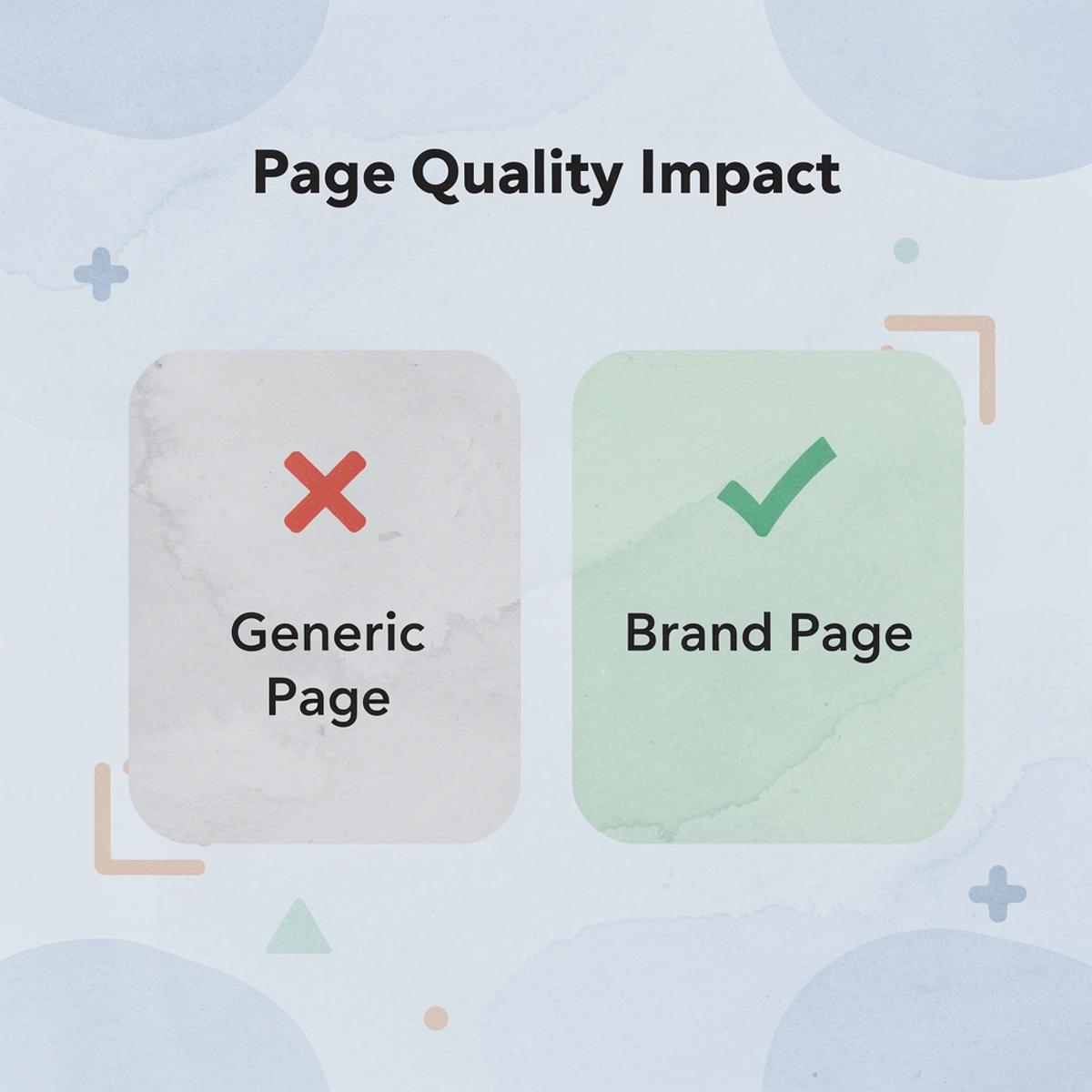
PagePilot builds brand-quality product pages in minutes — without the high cost or agonizing wait of traditional design workflows. Start your free trial today and generate your first three product pages at absolutely no charge — and no credit card required.
✅ Best Practice: Use your free trial to test PagePilot's AI Page Builder on your highest-traffic products first — that's where improved conversion will have the biggest immediate impact on revenue.
🎯 Key Point: 3 free product pages, zero cost, and no credit card needed — there's no reason not to see what PagePilot can do for your store today.
Here is how the speed and cost of launching with PagePilot compare to traditional web design:
- Time to Launch: Minutes → Days or weeks
- Cost to Start: Free (3 pages) → Expensive upfront
- Credit Card Required: No → Typically yes
- Brand-Quality Output: Yes → Depends on the designer
Related Reading
- Best Shopify Theme For Seo
- Lucky Orange Alternatives
- Best Seo App For Shopify
- Best Marketing Tools For Shopify