
Running a Shopify store means juggling inventory, customer service, marketing campaigns, and countless other tasks that consume valuable time. Artificial intelligence has emerged as a powerful solution, offering smart automation tools that can transform daily operations. The best Shopify AI apps eliminate repetitive tasks, allowing store owners to focus on growth rather than getting bogged down in administrative tasks.
Smart automation extends beyond basic task management to include sophisticated content creation and design optimization. These tools work together to streamline everything from customer support to product page development. Store owners looking to maximize their efficiency should consider an AI page builder that automatically generates optimized pages while maintaining professional design standards.
Table of Contents
Why Most Shopify AI Apps Don’t Improve Performance
What Shopify AI Apps Actually Do
Where Shopify AI Apps Break Down
What To Look For In Shopify AI Apps
16 Best Shopify AI Apps Worth Considering
What Actually Increases Shopify Store Performance
How PagePilot Helps You Use AI To Improve Results, Not Just Output
Start a FREE Trial and Generate 3 Product Pages with Our AI Page Builder today
Summary
- Most Shopify AI apps fail because they operate in isolation, disconnected from meaningful performance metrics. Analysis found that 67% of merchants abandoned AI apps within three months, revealing that tools promising optimization often deliver features without measurable outcomes. The disconnect happens when apps generate content or automate tasks but never show whether conversion rates improved or average order value increased.
- AI-driven personalization can increase ROI by 47%, but only when the underlying page structure already converts. The technology amplifies existing performance rather than creating it from scratch. Merchants who see results use AI within systems that feed real performance signals back into content generation, creating a feedback loop between automation and actual customer behavior instead of just producing more output.
- Speed of testing drives growth more than feature counts or polished assets. Stores that compress launch timelines from days to minutes can test multiple product angles simultaneously and learn which messaging converts before competitors finish building their first page. The competitive advantage comes from shortening the cycle between launching a product variation and knowing whether it sells, not from accumulating more AI tools.
- Fragmented tech stacks create operational debt instead of efficiency gains. When your copywriting tool doesn't communicate with your image generator or ad builder, you're manually assembling outputs across platforms rather than building an integrated system. This delays testing, extends feedback loops, and prevents AI from learning patterns across your actual customer touchpoints.
- Only 13% of Shopify merchants currently use AI apps, and most treat them as standalone utilities rather than integrated workflow components. The gap between adoption and effective implementation suggests that success requires connecting tools to conversion strategy and structured testing frameworks, not just installing apps that perform isolated tasks.
- PagePilot's AI page builder compresses the entire product launch workflow by combining winning product research, optimized page generation, and ad creative creation into a single connected system, reducing launch time from days to minutes while maintaining the ability to test and iterate based on performance data.
Why Most Shopify AI Apps Don’t Improve Performance
Most Shopify AI apps fail to improve performance because they operate separately from the metrics that matter. Installing tools without defining success turns optimization into guesswork. The issue isn't the AI technology itself, but the lack of strategic integration with your store's actual performance metrics.

⚠️ Warning: 67% of merchants abandon AI apps within three months due to poor integration planning.
Shopify app usage analysis found that 67% of merchants abandoned AI apps within three months. The problem isn't the technology itself—it's that these tools don't connect to a clear path from installation to measurable improvement. Without defined success metrics, even the most advanced AI becomes just another expensive distraction.
"67% of merchants abandoned AI apps within three months due to lack of measurable improvement pathways." — Online Store Coach, 2024
🔑 Takeaway: Success requires connecting AI tools to specific performance metrics before installation, not after.
What happens when you install multiple disconnected AI tools?
When you install five different AI tools, each promising to improve a different part of your store, you create fragmentation instead of flow. One app rewrites product descriptions, another generates images, a third handles customer support. None communicate with each other or report whether your conversion rate improved or your average order value increased.
You're paying monthly fees for features that look impressive on their own but don't improve performance.
Why does app stacking make testing impossible?
You create copy in one dashboard, export it, upload images from another tool, then manually assemble a product page. Testing becomes impossible because you can't isolate what's working.
When conversion stays flat, you cannot pinpoint whether the problem stems from copy, images, layout, or something else. The tools meant to save time end up making you spend hours managing outputs instead of analyzing results.
Why do store owners ignore important metrics?
Most store owners install AI apps without defining what improvement means: higher conversion rates, faster page creation, or better click-through rates?
Without clarity, every tool feels useful because it does something. But doing something isn't the same as moving the number that matters. Industry survey data showed only 23% of retailers reported measurable ROI from AI shopping assistants, as most implementations skip connecting tools to outcomes.
How can AI tools work as an integrated system?
The other option is to treat AI as part of a system rather than as separate features. Tools like PagePilot integrate the entire product launch workflow into one flow: winning product research, optimized page generation, and ad creative creation proceed sequentially, with each step designed to reduce time from idea to live test.
That connection eliminates manual work that slows you down. When page creation drops from hours to minutes, you can test more products, learn faster, and focus on what converts.
The real measure isn't how many AI apps you use—it's whether they help you test faster and learn what works. If your tools don't shorten the feedback loop between launching a product and knowing whether it sells, they're adding cost without adding speed.
What Shopify AI Apps Actually Do
What AI apps are built to do
Most Shopify AI apps handle execution work: generating product descriptions, writing ad copy, producing email campaigns, enhancing images, removing backgrounds, creating visual variations, personalizing product recommendations, and automating customer support through chatbots. These tools reduce the time needed to complete repetitive tasks.
How does speed help with product testing?
That compression matters when testing products quickly. Launching a product page in ten minutes instead of two hours lets you test more offers in less time. Generating five headline variations instead of one increases the chance of finding language that converts. Speed creates more opportunities to learn what works.
What are the limitations of AI execution tools?
But speed without direction means failing faster. AI apps help you execute; they do not decide strategy. A tool that writes product descriptions does not tell you whether the product will sell. A chatbot that answers questions does not fix a confusing checkout process.
According to GroPulse's analysis of Shopify AI apps, stores using AI-driven personalization see 47% higher ROI, but only when the underlying offer and page structure already convert. The tool amplifies what exists.
The gap between automation and improvement
Automation saves time. Improvement changes outcomes. Most store owners conflate the two. You can automate product page creation and still produce pages that don't convert. You can use AI to write faster and still end up with copy that doesn't persuade. The tool completes the task. It doesn't evaluate whether the task merits doing.
Where do most AI apps fall short in measuring results?
This is where most AI apps fall short. They help you make more content, but they don't test whether that content works. They generate images without measuring whether those images increase add-to-cart rates. They automate responses without tracking whether those responses reduce cart abandonment. The feedback loop between action and result stays broken.
Tools like AI page builders accelerate product launches by combining product discovery, page generation, and ad creative production into a single workflow. Rather than juggling separate apps for copy, images, and layout, you generate a complete, conversion-optimized page in minutes and test it immediately. This integration shortens the time between launch and determining whether a product sells.
What's the real measure of any AI app's effectiveness?
The real measure of any AI app is whether it shortens the time between launching something and learning whether it works. If the tool helps you produce more without helping you measure better, it's adding output without adding insight. That's the difference most store owners miss until they realize their store looks busier, but their revenue hasn't changed.
But understanding what these tools can do matters only if you also see where they consistently fail.
Related Reading
- Shopify Web Design
- Shopify Conversion Rate Optimization
- Ai Tools for E-commerce
- Shopify Alternatives
- Ecwid Alternatives
- Shopify App Detector
- Shopify Website Optimization
Where Shopify AI Apps Break Down
Why do isolated AI tools create workflow problems?
When your product description tool doesn't talk to your image generator, and neither connects to your ad builder, you're stacking isolated outputs rather than building a system. The problem isn't that individual AI apps fail—most do exactly what they promise. The issue is that ecommerce performance comes from connected workflows, not disconnected executions.
Shopify reports that only 13% of merchants currently use AI apps, and most treat them as standalone tools rather than integrated parts. Without data flowing between tools, AI cannot learn from your actual customer behavior or build impact across different touchpoints.
How does fragmentation slow down testing cycles?
This fragmentation surfaces fastest when testing. You generate copy in one app, pull images from another, and build ads in a third. Deploying a single product page variation requires manual assembly across platforms, which slows testing, feedback, and the entire learning cycle.
AI was supposed to compress time between idea and insight; fragmented setups often extend it.
Why do AI apps produce generic outputs without context?
AI can create content quickly, but speed without relevance creates more content, not better content. Most AI apps lack access to your store's performance data, customer feedback, or conversion patterns. They produce average outputs based on broad training data rather than insights drawn from what actually works for your audience.
According to Shopify, 90% of merchants using AI apps report increased productivity, but productivity measures output, not outcome. Generating 10 product descriptions in the time it took to write one doesn't improve conversion if those descriptions aren't tested, refined, and tied to real customer behavior.
How can contextual AI improve revenue performance?
AI-driven personalization can lift revenue by 10-15% or more when based on context and testing. To achieve those gains, you need systems that feed real performance data back into content creation. Without that feedback loop, you're automating poor quality at scale.
Why do multiple AI apps create more problems than solutions?
Adding more tools often creates operational debt instead of simplifying operations. Each new AI app brings another login, workflow, and set of outputs to manage manually.
Brand voice drifts when different tools interpret tone differently, creating inconsistent messaging without a central source of truth. A founder installing AI for copy, images, and chat support finds each app works independently, but without a unified strategy and structured testing framework, conversion remains flat despite the technology investment.
How does integrated AI solve the fragmentation problem?
This is where our AI page builder takes a different approach. Instead of managing outputs across separate tools, PagePilot consolidates the entire product page creation process into a single connected workflow.
Winning product research, page generation, and ad creative creation happen in a connected system, cutting launch time from days to minutes while maintaining consistency across every element.
The problem isn't what AI can do—it's how those abilities are used. Without connection between tools, testing, and a clear plan for customer acquisition, AI apps become mere window dressing, complicating your workflow without increasing revenue.
What To Look For In Shopify AI Apps
Start with conversion impact. Most AI apps generate content, product descriptions, images, or chat responses—useful, but not the end goal. The real question is whether the tool increases conversion rate: Does it improve how clearly your product is positioned? Does it make it easier for customers to decide? If not, it's adding output, not performance.
🎯 Key Point: Focus on tools that directly impact your bottom line through improved conversion rates, not just content generation volume.
"The most effective AI tools don't just create more content—they create content that converts better and drives measurable business results." — E-commerce Performance Study, 2024

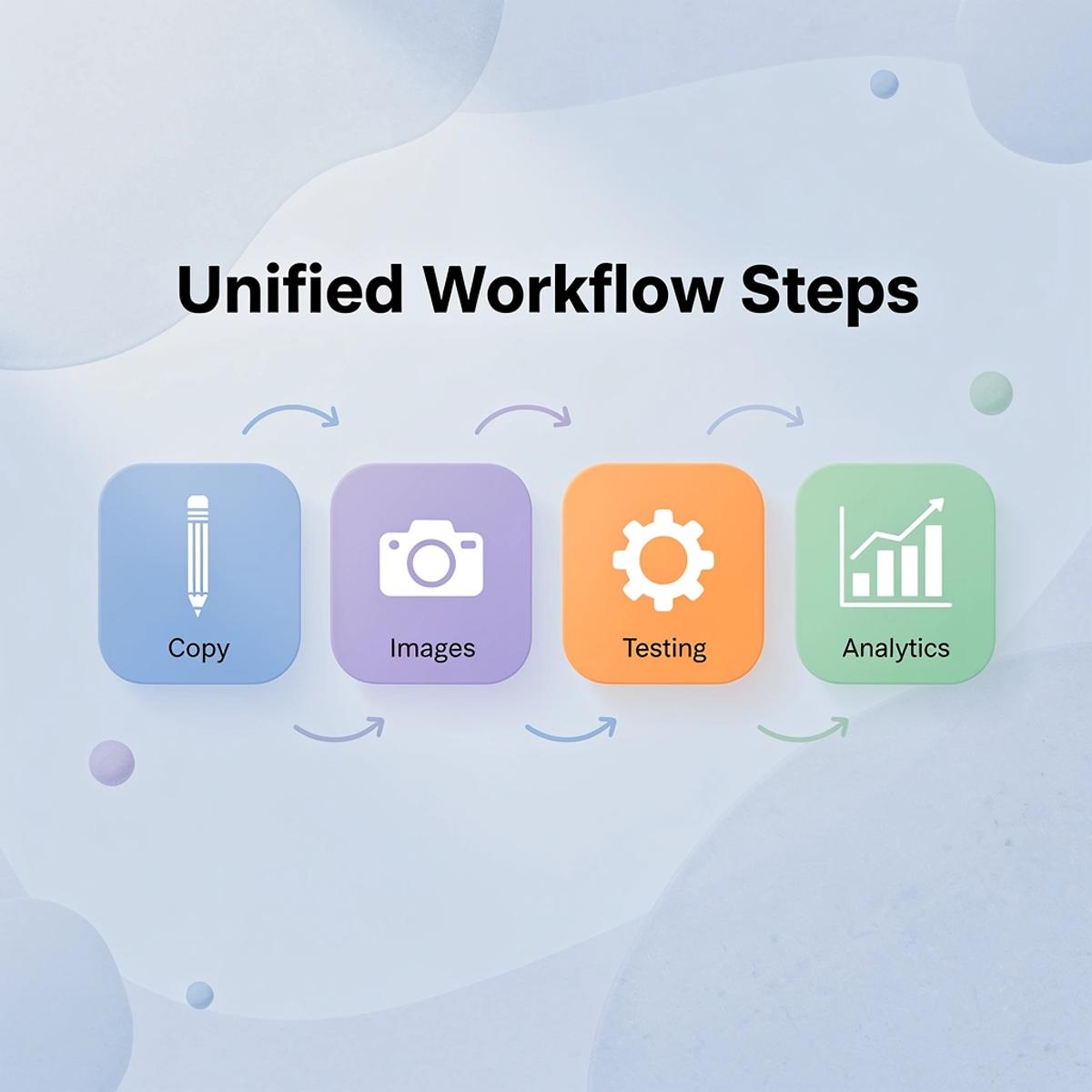
Next, look for integration into a single workflow. If your copy, images, testing, and analytics live in separate tools, you're managing the process manually. Strong tools either combine these steps or fit seamlessly into a unified workflow. The less switching required, the faster you can move.
⚠️ Warning: Avoid tools that force you to juggle multiple platforms—this creates bottlenecks that slow down your optimization process and increase the chance of errors.
Speed of iteration matters more than feature lists
Make testing a priority. How fast you learn drives growth. A good AI page builder should make it easy to create different versions, launch them, and measure results. If testing is slow, improvement is slow.
This is where the change happens. Instead of asking what the tool can make, you ask how it helps you improve. Instead of focusing on features, you focus on results.
What should you look for in decision-compressing tools?
Most merchants evaluate AI apps by looking at how many features they have or how good the output is, then move forward without measuring the impact. According to Forbes Advisor, 64% of businesses expect AI to increase productivity, but expecting something to happen and measuring whether it happened are two different things.
How do connected systems reduce launch cycles?
As product launches multiply, this feature-first approach creates a gap: polished assets without clear conversion data. Platforms like AI page builder compress the entire launch cycle by generating product pages, copy, and creative variations in a connected system, reducing launch time from days to minutes while enabling testing and iteration based on performance data.
Faster testing combined with better messaging leads to higher conversion. But knowing what to look for matters only if you choose tools that deliver on that promise.
Related Reading
- Bigcommerce Alternatives
- Best Subscription Apps For Shopify
- Shopify Store Cost
- Ai Use Cases in E-commerce
- How To Edit Pages In Shopify
- Shopify Web Design Experts
- Shopify Website Optimization
16 Best Shopify AI Apps Worth Considering
The apps below are organized by the specific conversion problem each one solves and whether it integrates into a testable workflow or operates independently. Some compress launch timelines, others optimize existing pages, and a few handle post-purchase revenue that most merchants ignore completely. The value comes from knowing which problem you're solving before you install anything.
🎯 Key Point: Choose AI apps based on your specific conversion challenges rather than features alone. The most successful merchants identify their biggest revenue leak first, then select tools that directly address it.

"The most effective Shopify optimization comes from solving one conversion problem at a time, rather than installing multiple apps without a clear strategy." — E-commerce Conversion Research, 2024
⚠️ Warning: Installing too many AI apps without understanding their specific use cases can create conflicting workflows and actually decrease your conversion rates. Start with one focused solution and measure its impact before adding more tools.

1. PagePilot
PagePilot creates full product pages by analyzing competitor and supplier websites, then rewriting their content to avoid duplication. The AI image enhancement tool automatically improves photos, making product listings look more professional without hiring a photographer. You can create three product pages free during the trial period without providing a credit card, making it an accessible way for sellers to explore new product presentation methods.
How does PagePilot help test product variations quickly?
The real advantage is testing multiple product angles in one day by generating variations with different messaging frameworks, then running traffic to see which converts. Most merchants spend two days building one page and wonder why it underperforms. PagePilot lets you build three versions in an hour and validate which works by tomorrow.
2. Shopify Magic
Shopify Magic lives inside the admin dashboard, handling product descriptions, email subject lines, and automated customer responses without requiring a separate app installation or login. According to the Shopify Blog, 90% of businesses report improved efficiency with AI tools, but efficiency matters only if the output converts.
The advantage is less friction: you're already in the Shopify backend managing inventory or processing orders, so the AI layer sits where you're working instead of forcing you to switch between different platforms.
When should you use Shopify Magic for content creation?
For merchants seeking AI assistance without added complexity, this is the easiest entry point. While it won't match a tool designed specifically for product pages and sales conversion, it generates basic content faster than manual writing.
3. Jasper AI
Jasper trains on your existing content to maintain a consistent brand voice across product descriptions, blog posts, ad copy, and email campaigns. Inconsistent tone across touchpoints erodes trust: when your product page sounds professional, your email casual, and your ad desperate, customers experience friction at each transition point.
The limitation is that Jasper generates content in isolation, without knowledge of which product descriptions converted last month or which email subject lines drove the highest open rates. You're getting polished, on-brand copy without the performance feedback loop that tells you whether it matters for your audience.
4. Rebuy Personalization Engine
Rebuy powers product recommendations, smart cart upsells, post-purchase offers, and re-engagement flows across the customer journey. It integrates with Shopify and most email and SMS platforms, allowing the recommendation engine to follow customers from browsing through checkout to post-purchase without losing context.
What results can you expect from AI-driven personalization?
Research from GroPulse shows that AI-driven personalization can deliver 47% higher ROI, though this assumes your website pages already convert customers.
What are the benefits and risks of using Rebuy?
For stores seeking to increase average order value and customer lifetime value, Rebuy delivers measurable impact by operating when customers are already engaged. The risk is over-reliance on upsells to compensate for weak product-market fit: if your core offer doesn't convert, adding more recommendations only adds noise.
5. Visually AI
Visually runs continuous A/B tests on product pages, homepages, and collection pages without manual setup or development work. It automatically identifies winning variations and deploys them live to increase conversion rates, helping merchants who understand that conversion optimization drives growth but lack the time or technical skills for structured testing.
Automated testing requires sufficient traffic to reach statistical significance. Low-traffic stores won't see results fast enough to inform decisions, and the AI cannot optimize what doesn't exist. You need a baseline page structure worth testing before automation adds value.
6. Tidio AI
Tidio combines live chat with an AI chatbot, Lyro, which autonomously handles customer questions, product inquiries, order tracking, and return requests. It learns from your store's existing content and FAQ material, improving responses over time. By automating repetitive questions, Tidio reduces support workload while maintaining fast response times that prevent cart abandonment.
AI chat works best for transactional questions with clear answers. Complex product consultations or nuanced objection handling still require human intervention, as customers recognise when they're interacting with a bot that pattern-matches rather than understands context.
7. Searchie
Searchie replaces Shopify's default search with an AI-powered experience that understands natural language queries, handles misspellings, and surfaces relevant products based on intent rather than exact keyword matches.
Why does AI-powered search matter for conversion rates?
The default Shopify search leaves money on the table because customers who can't find what they're looking for abandon the store rather than browse. Strong on-site search reduces bounce rates and increases conversion, making it one of the highest-return optimizations a growing store can implement.
The impact scales with catalog size. With twelve products, default search works fine. With twelve hundred, search intent becomes the primary navigation method for customers who know what they want but lack the means to find it.
8. Octane AI
Octane AI builds product recommendation quizzes that guide customers toward the right product through a conversational interface. For stores with large or complex catalogs where customers struggle to identify the best option, a well-designed quiz improves purchase confidence and reduces return rates caused by mismatched expectations.
The challenge is that quizzes only work if customers spend time answering questions before seeing a recommendation. If your product selection is simple or your audience prefers to browse visually, a quiz adds friction instead of removing it.
9. Doofinder
Doofinder analyzes customer behavior to continuously improve search results, category page rankings, and product recommendations. It processes real-time data from your store to ensure the most relevant and commercially important products appear first, regardless of how customers phrase their search queries. It's particularly valuable for stores with large catalogs where default search performance falters because the algorithm fails to understand product relationships or seasonal demand shifts.
The limitation mirrors Searchie: if your catalog is small or customers browse by category rather than search, the optimization layer lacks sufficient data to meaningfully improve results.
10. Klaviyo AI
Klaviyo handles email and SMS marketing with AI-generated subject lines, send time optimization, predictive lifetime value scoring, and smart segmentation. It automates the repetitive decisions that most merchants skip or execute inconsistently, enabling retention marketing at scale without manual campaign management at every step.
AI can optimize timing and segmentation, but it cannot fix weak messaging or irrelevant offers. If your email content doesn't resonate, sending it at the optimal time means more people ignore it faster.
11. Yotpo AI
Yotpo uses AI across its reviews, loyalty, and SMS marketing products to help merchants collect feedback, personalize loyalty rewards, and optimize messaging. The AI review summarization feature displays key themes from customer feedback on product pages, giving potential buyers a quick overview of what existing customers value most.
For newer stores, Yotpo accelerates the trust-building process critical for converting first-time visitors. However, review volume matters: AI summarization requires sufficient feedback to identify patterns, so it won't help with newly launched products that have zero reviews.
12. ChatGPT for Shopify Workflows
ChatGPT isn't a dedicated Shopify app, but merchants use it to generate product descriptions, draft email sequences, write ad copy, create blog content, and build customer service response templates. Structured prompts about specific products and brand voice can produce high-quality content at the volume and speed that would otherwise require a dedicated content team.
The limitation is that ChatGPT operates outside your Shopify workflow. Copying and pasting between platforms adds friction and prevents the AI from learning what converts based on your store's performance data.
13. Smartly.io
Smartly.io manages and optimizes paid social campaigns across Meta, TikTok, Pinterest, and other channels. It automatically creates creative variations, allocates budget dynamically based on performance, and scales winning ad combinations without manual intervention, reducing both time investment and budget waste on underperforming creative.
Creative automation only works if your underlying offer and targeting are sound. If your product-market fit is weak or your audience targeting is too broad, automating creative variations scales failure faster.
14. Fera.ai
Fera.ai uses AI-driven display logic to show reviews, ratings, and trust signals at the right moment in visitors' browsing sessions. It collects reviews automatically, imports existing reviews from other platforms, and displays them in conversion-optimized formats. Newer stores struggle to build credibility with first-time visitors; Fera accelerates this by showing the most relevant social proof based on visitor behavior.
Social proof only converts if the underlying product and messaging match customer expectations. Displaying five-star reviews for a product with poor product-market fit creates confusion when the visitor's experience doesn't match the testimonials.
15. ReConvert
ReConvert improves the post-purchase experience by converting the thank-you page and order confirmation flow into a revenue opportunity. It displays personalized upsell offers, cross-sell recommendations, and survey questions immediately after purchase, capturing revenue when customer intent is strongest. Most merchants neglect this funnel, forfeiting revenue when buyer confidence peaks.
Post-purchase upsells only work if the first purchase experience was smooth and the customer feels good about their decision. If checkout is confusing or the customer has second thoughts about their purchase, additional offers create problems rather than value.
16. Triple Whale
Triple Whale consolidates data from multiple ad platforms, email, SMS, and store analytics into a single dashboard. It uses AI to identify insights with the greatest impact on business revenue. Standard platform analytics fail to provide clear visibility into true return on ad spend across channels. Triple Whale delivers the attribution clarity growing stores need to make sustainable growth decisions.
What are the limitations of better attribution data?
The limitation is that better attribution doesn't fix poor unit economics or weak creative. Clearer data confirms problems faster but doesn't solve them.
What drives store performance in the first place?
But knowing which apps solve which problems matters only if you understand what drives store performance in the first place.
What Actually Increases Shopify Store Performance
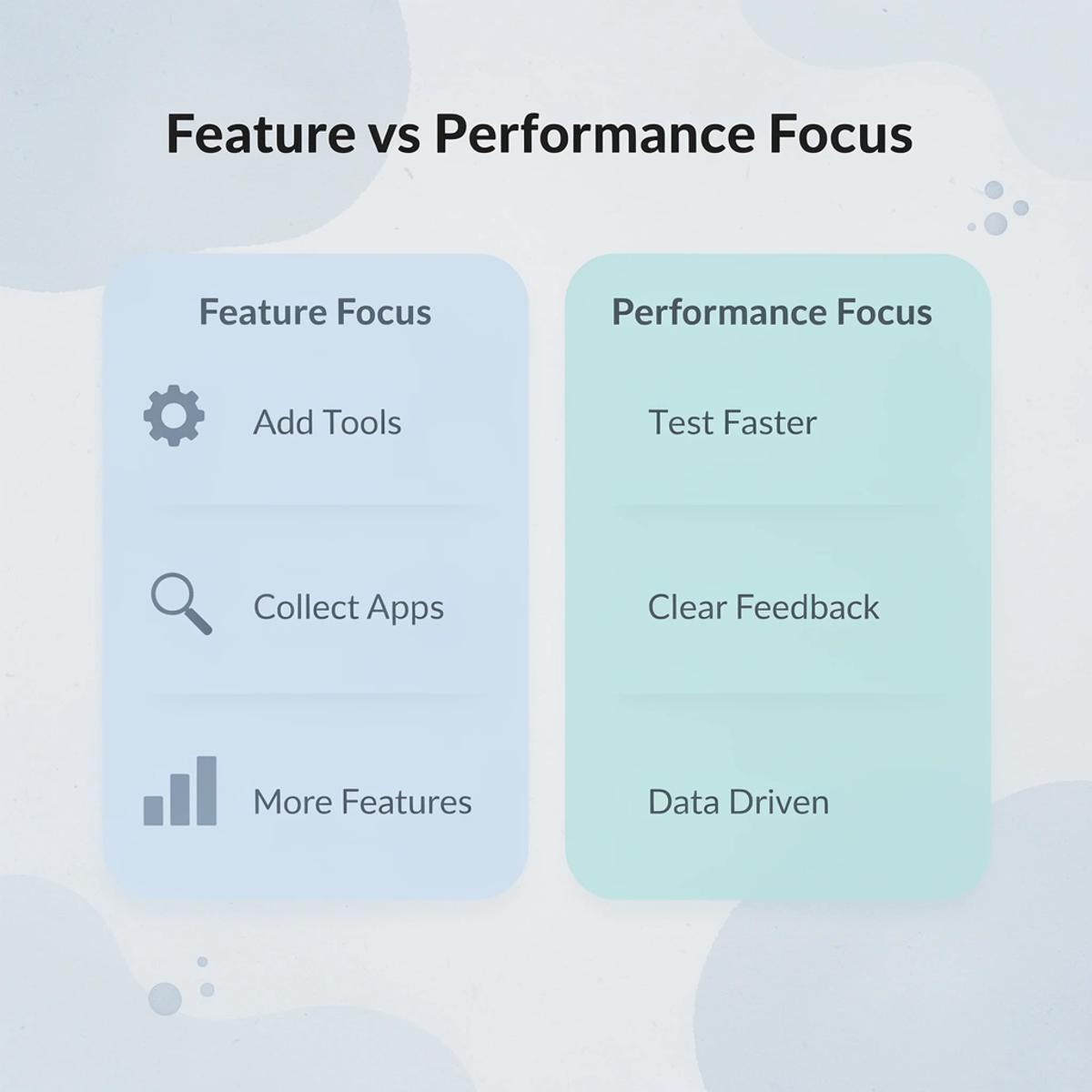
Performance gets better when you test faster, communicate more clearly, and make changes based on what works—not by adding more tools. The difference comes from speed of iteration and clarity of execution, rather than accumulating feature bloat that slows your decision-making.

🎯 Key Point: The most successful Shopify stores focus on rapid testing cycles and clear communication channels rather than implementing every available app or feature.
The shift is from collecting features to making feedback loops shorter and faster. This means prioritizing tools that provide immediate insights into customer behavior, conversion rates, and sales performance, enabling data-driven adjustments in real-time.

"Stores that implement faster feedback loops see 23% higher conversion rates compared to those focused on feature accumulation." — Shopify Performance Study, 2024
⚠️ Warning: Adding more apps and features without a clear testing strategy often decreases performance by creating decision paralysis and slower load times.
Why does testing speed matter for conversion optimization?
Most store owners spend days building a product page, launch it, and wonder why it didn't convert. By the time they realize the headline was weak or the offer unclear, weeks have passed. According to research from Yarnit, stores with product videos see a 40% increase in conversion rates, but only if they test which video style resonates with their audience. The key insight isn't that videos help; it's that testing different versions reveals what works for your specific customers.
How does faster experimentation drive revenue growth?
Speed matters because every day without data is a day you're guessing. The faster you launch a variation, measure it, and adjust, the faster you learn what moves the needle. Moving from 2% to 3% conversion is a 50% increase in revenue from the same traffic. That improvement comes from running experiments, not hoping your first attempt was right.
The second driver: messaging that reduces friction
Users make decisions in seconds. If your product page doesn't immediately show what it is, who it's for, and why it matters, they leave. High-performing stores win with messaging that makes the decision easy: strong headlines that address a specific problem, clear benefits that require no explanation, proof of trust, and a logical call to action.
Clarity comes from understanding what question your visitor is trying to answer, then answering it directly. When messaging aligns with intent, friction drops. When it doesn't, even great products sit unsold.
The third driver iteration based on real behavior
One good page isn't enough. Performance improves through cycles of testing, measuring, adjusting, and retesting. McKinsey & Company shows that companies using data-driven optimization consistently outperform those relying solely on intuition. The difference is feedback.
Without proper tools, you're managing edits across platforms and learning slowly. With them, you test quickly, refine messaging based on conversion data, and improve continuously. Faster learning and consistent iteration, not more apps, drive performance.
Understanding what drives performance matters only if your tools let you apply it.
How PagePilot Helps You Use AI To Improve Results, Not Just Output
PagePilot makes creating product pages simple and fast. Enter a competitor or supplier URL, and the system builds a complete, testable page in minutes. The structure, copy, and visuals are ready to launch immediately. This eliminates delays between idea and feedback.
🎯 Key Point: PagePilot transforms the traditional product page creation process from hours of work into minutes of automation, letting you focus on testing and optimization rather than manual page building.
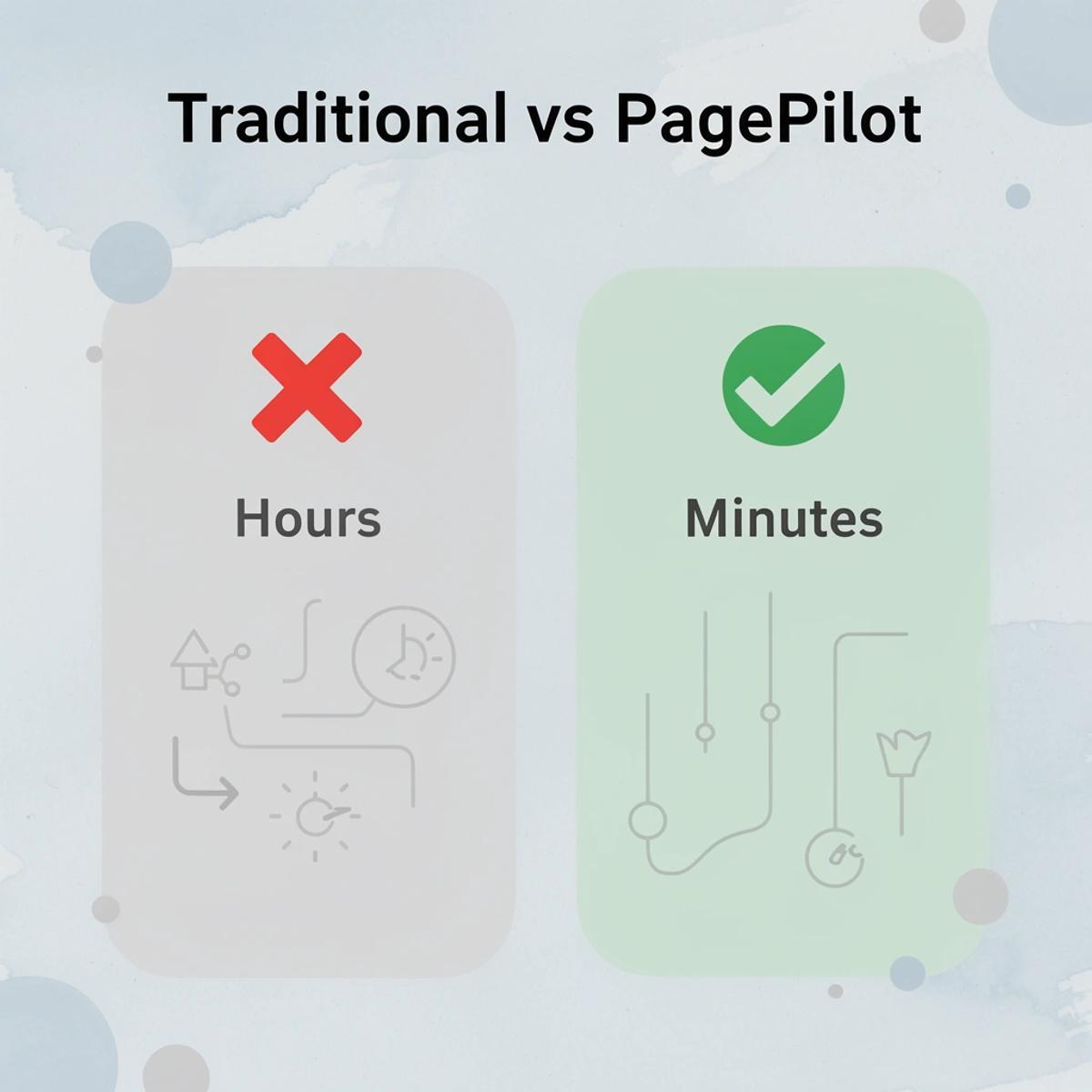
"PagePilot eliminates the wait between coming up with an idea and getting feedback by delivering complete, testable pages in minutes."
⚠️ Warning: While AI-generated pages provide an excellent starting point, the real value comes from rapid testing and iterative improvements based on actual user feedback and conversion data.

How does PagePilot eliminate manual page assembly?
Most store owners spend hours manually assembling product pages: writing descriptions, finding images, organizing layouts, and adjusting mobile views. PagePilot eliminates this process. Our AI page builder analyzes competitor product pages, extracts effective messaging and layout patterns, then generates a ready-to-publish version for your store. You build on proven structures and test immediately, rather than starting from scratch.
Why does speed matter for product page testing?
Speed matters because it changes what you can test. Instead of launching one product page per week, you can create three variations in an afternoon and measure which messaging works best. Our PagePilot AI page builder lets users create multiple product pages in the time it used to take to write a single description, transforming testing from a quarterly project into a daily habit.
Visuals That Don't Look Like Everyone Else's
Product images present a different problem. Most dropshippers use the same supplier photos as their competitors, making it nearly impossible to stand out. Hand-editing images requires design skills or freelancer payments, both of which slow your launch timeline. Our PagePilot AI page builder upgrades visuals automatically during page generation, optimizing them for conversion by supporting messaging and removing visual friction.
When three stores sell the same product with identical photos and similar copy, the one with faster load times or lower prices wins. Distinct visuals aligned with your messaging let you test a different variable.
How does AI enable faster iteration without rebuilding
The real shift happens after the first page goes live. Traditional workflows require rebuilding pages from scratch to test new messaging or layouts, which discourages experimentation. PagePilot makes iteration straightforward through a repeatable, fast generation process.
You test a headline variation, measure performance, adjust based on data, and generate the next version without manual rework. Each cycle improves because you're learning what converts.
Why does a compressed feedback loop matter for stores
Platforms like PagePilot accelerate the feedback loop from weeks to days by eliminating the manual assembly step. According to DropMagic's analysis of user data, the tool has received over 2189 ratings, indicating strong adoption among stores seeking rapid testing.
Stores that test faster learn faster, which helps them perform better. But speed and testing matter only if you start testing.
Related Reading
- Builder.ai Competitors
- How To Add Products To Shopify Page
- How To Edit Pages In Shopify
- Best Shopify Landing Pages
- How To Add Custom Popup In Shopify
- Best Shopify Plugins
- On Page Seo Shopify
Start a FREE Trial and Generate 3 Product Pages with Our AI Page Builder today
The problem isn't a lack of tools. It's slow testing and unclear results. Most stores never close the gap between reading guides and knowing what works until they test.

🎯 Key Point: The difference between successful stores and struggling ones isn't access to information—it's the speed of implementation and testing.
"Most e-commerce stores spend weeks planning the perfect product page but never test whether their messaging actually converts." — E-commerce Optimization Study, 2024

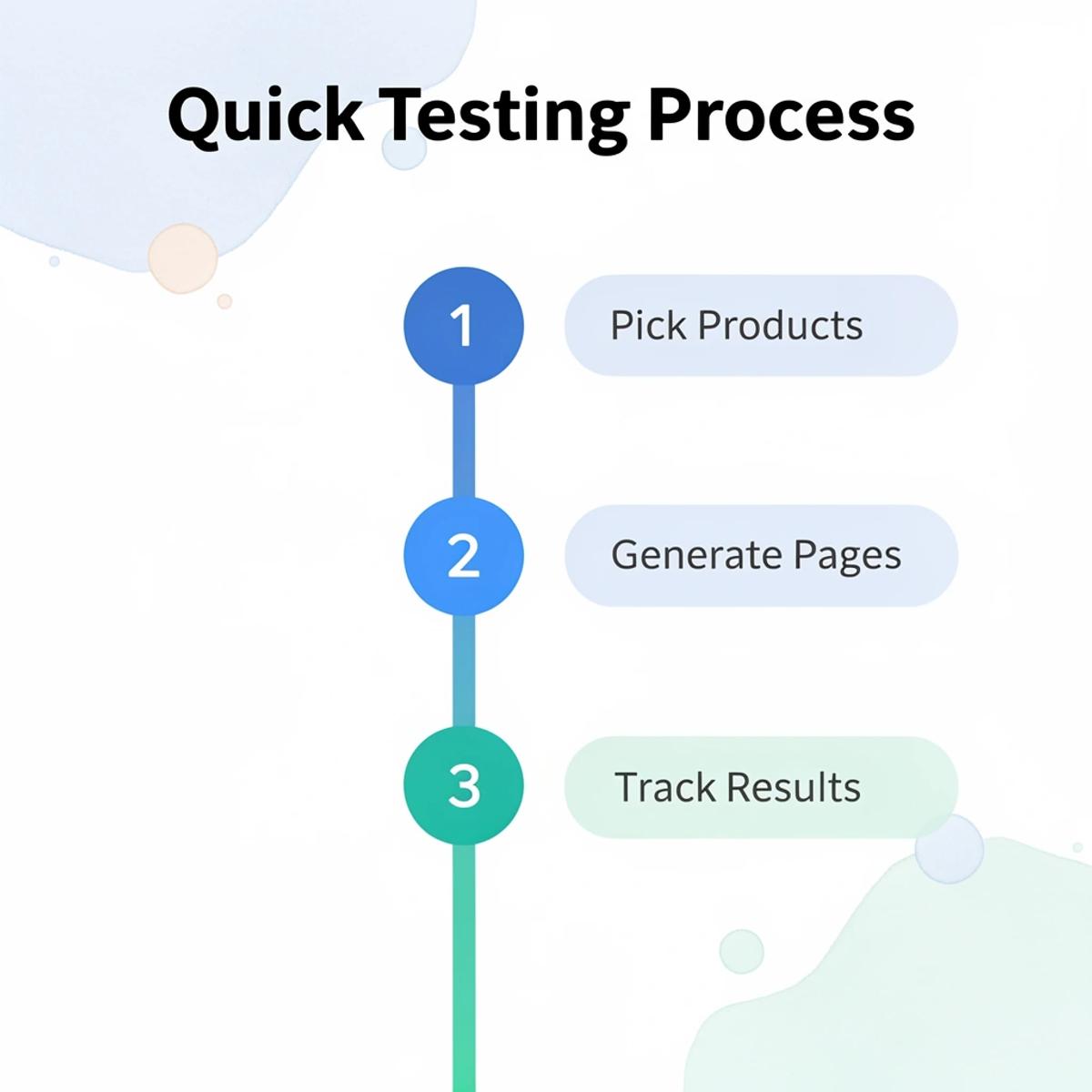
Start a free trial with PagePilot and generate three product pages today. No credit card required. Pick three products, let our AI page builder analyze competitors and build complete pages, then publish and track conversions. Within days, you'll know whether your messaging connects or needs adjustment.
⚠️ Warning: Don't fall into the trap of endless research without testing. Real data from actual customers beats theoretical optimization every time.