
Many online stores struggle with a frustrating gap between website traffic and actual sales. The difference often lies in professional Shopify web design that combines visual appeal with consumer psychology to guide visitors toward purchase. Expert designers understand how to create intuitive navigation, strategic product placement, and conversion-focused elements that transform browsers into buyers.
Rather than spending weeks collaborating with designers or guessing what might work, store owners can leverage data-driven solutions that automatically apply proven ecommerce principles. Testing different approaches to product pages, landing pages, and checkout flows becomes straightforward when using tools designed specifically for conversion optimization. Businesses can discover what resonates with their audience and boost sales without extensive design knowledge or large budgets, using an AI page builder.
Summary
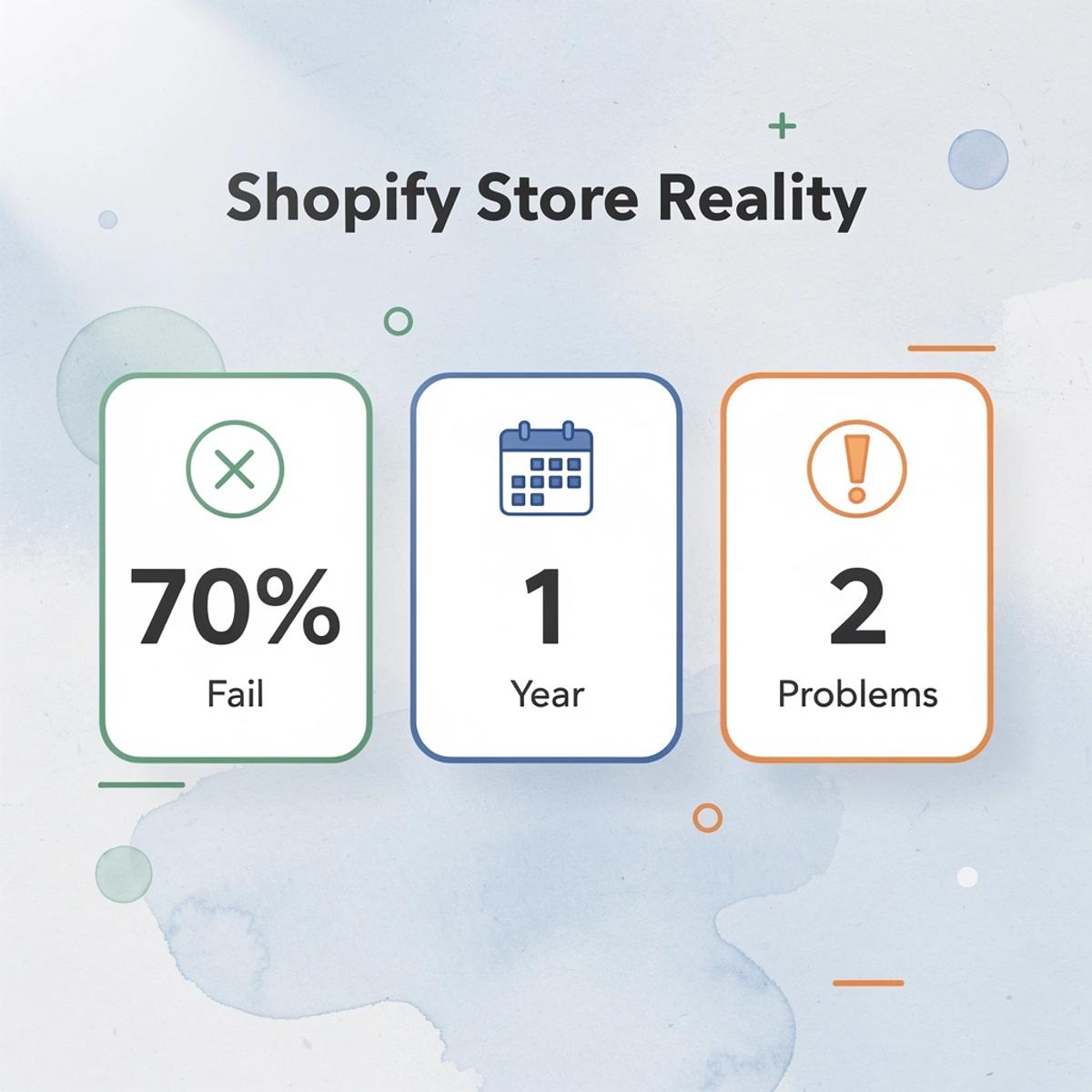
- Most Shopify stores fail within their first year despite professional design. According to Uplers Blog, 70% of Shopify stores close before reaching their first anniversary, and the failure rate has little to do with aesthetics. The gap between a visually appealing store and one that actually converts comes down to messaging clarity, offer positioning, and continuous testing, not design quality.
- The average Shopify store converts at 1.4% of visitors while top performers reach 4% to 4.7% or higher. That performance gap represents the difference between struggling and thriving, and it's rarely bridged by better fonts or prettier product photos. High-converting stores test relentlessly, refining copy and layout hierarchy based on real user behavior rather than designer preference.
- Mobile traffic creates a massive conversion leak that design alone cannot fix. According to Artios, mobile accounts for 79% of Shopify traffic but only 65% of sales, meaning most stores lose conversions on the device where most people browse. The gap exists not in how stores look but in how they function under real shopping conditions, particularly during checkout flows.
- Cart abandonment reaches 70% across online stores, often due to friction, confusion, or trust issues during the buying process. Baymard Institute research shows that the moment someone has to work to understand your offer, you've already lost them. Strong product positioning means your headline, benefits, and call to action align so tightly that the decision feels obvious rather than optional.
- Page speed directly impacts revenue in measurable ways. Google research found that a 1-second delay in page load time reduces conversions by 7%, which means a beautifully designed page that loads slowly or buries the value proposition below the fold creates expensive friction. Speed and structure work together, and neither can compensate for the absence of the other.
- AI page builder addresses this by generating conversion-optimized page layouts in under 60 seconds, allowing teams to test multiple product variations and messaging approaches immediately, rather than waiting weeks to discover their assumptions were wrong.
Why Hiring Shopify Web Design Experts Doesn’t Guarantee Results
Hiring a Shopify web design expert won't automatically increase your sales. Design influences how your store looks, but conversion depends on messaging, offer clarity, and continuous optimization. A visually stunning site can still lose visitors without converting them to buyers.
🎯 Key Point: A beautiful design is just the foundation—not the complete solution for e-commerce success.

"70% of Shopify stores fail within their first year—not because they look bad, but because looking good and converting visitors are two entirely different problems." — Uplers Blog, 2025
According to Uplers Blog, 70% of Shopify stores fail within their first year because looking good and converting visitors are two entirely different problems.
⚠️ Warning: Don't confuse visual appeal with conversion optimization—they require completely different skill sets and strategies.
The Conversion Gap Nobody Talks About
The average Shopify store converts at around 1.4% of visitors, while top performers reach 4% to 4.7% or higher. This gap isn't closed by better fonts or prettier product photos. High-converting stores test constantly: refining copy, adjusting layout hierarchy, experimenting with offer positioning, and making changes based on real user behavior.
A polished store gets attention. But if your product positioning confuses people or your page fails to guide them toward purchase, they click away. Design creates perception; conversion creates revenue. Conflating the two is expensive.
The Timing Problem
When you hire a designer, weeks pass while you refine layouts, adjust branding, and debate color palettes. During that time, you're not collecting data or learning what works. In fast-moving ecommerce, that delay costs more than the designer's bill.
Small adjustments outside the visual layer deliver outsized results. Conversion rate optimization research shows that minor improvements to button copy, page flow, or trust signals significantly lift conversions. Performance comes from iteration speed, not initial design perfection.
Why the Belief Persists
Portfolio bias perpetuates this misconception. Designers showcase their best-performing stores, making it easy to attribute success to their appearance. What portfolios omit is the months of A/B testing, messaging refinements, offer adjustments, and behind-the-scenes improvements. Design receives credit for results shaped by multiple factors, not solely for design.
What happens when founders prioritize beauty over performance?
Founders invest significant money, launch a beautiful store, and expect revenue to follow. When conversion stalls, they blame traffic quality or product selection. The real issue: they built a presentation without performance. Design matters, but only paired with a conversion strategy that treats every page as a testable hypothesis.
Understanding what design can't do is only half the picture.
Related Reading
- Shopify Web Design
- Shopify Conversion Rate Optimization
- Ai Tools for E-commerce
- Shopify Alternatives
- Ecwid Alternatives
- Shopify App Detector
- Shopify Website Optimization
What Shopify Web Design Experts Actually Do
A Shopify web design expert builds the visual structure and user flow of your store, shaping how your homepage is organized, how product pages present information, and how visitors move from browsing to checkout. Their work encompasses layouts, color schemes, typography, image placement, and navigation paths that reflect your unique brand identity.

🎯 Key Point: A skilled designer doesn't just make your store look good—they create a strategic visual experience that guides customers through your entire purchase journey.
"Effective e-commerce design focuses on user experience optimization and conversion-focused layouts that turn visitors into buyers." — UX Design Institute

💡 Pro Tip: The best Shopify designers combine aesthetic appeal with conversion psychology, ensuring every design element serves a specific business purpose.
What are the main focus areas for Shopify design experts?
Their focus spans three areas: designing visual identity and user experience (creating a cohesive brand aesthetic with intuitive navigation), customizing themes to fit your needs (adjusting button placement, optimizing mobile responsiveness, and modifying free or paid Shopify themes), and organizing site structure and navigation (arranging product categories, streamlining menus, and reducing steps from landing to purchase).
The Credibility Layer
Design shapes how people perceive credibility faster than most realize. Stanford Web Credibility Research found that 75% of online shoppers judge a company's credibility based on website design. A polished store signals legitimacy; a cluttered one raises doubt, even when products are identical. Trust precedes conversion—visitors who question your professionalism leave before testing your offer.
Where the Role Ends
Design experts improve how your store looks and feels. They do not define your messaging, test different value propositions, or make changes based on customer behavior. They build the stage but do not write the script or measure audience response. Two stores with equally strong design can perform differently because conversion depends on what you say, how compelling your offer is, and how quickly you learn what resonates.
Why does design alone fail to drive conversions?
When teams rely on design alone, they mistake how something looks for how well it works. A beautifully structured product page with weak messaging converts poorly, while a simple layout with a clear offer and urgency often wins. Hiring a designer rarely solves a revenue problem; it solves a perception problem, which only matters if the rest of your system (offer clarity, product selection, testing velocity) is already working.
How can you speed up the design testing process?
The traditional model waits weeks for design changes before launching. Tools like PagePilot compress this timeline by creating conversion-optimized layouts from a product link in under 60 seconds. Rather than waiting for a designer to understand your vision, you test multiple page structures immediately, learn what works, and iterate. The shift moves from slow craftsmanship to rapid experimentation, where speed outpaces perfection because data teaches faster than design intuition.
But even the fastest design process hits limits when the underlying structure fights against how people shop.
Where Shopify Store Design Breaks Down
The breakdown happens when founders treat design as the end goal instead of the beginning. A polished store with beautiful product pictures still fails if people don't understand what you're offering, the product benefits are hard to find, or the call to action is weak. Design creates the space; whether people buy depends on what you say and how you test it.

🚨 Warning: Many store owners spend weeks perfecting their visual design while completely neglecting the messaging strategy that actually drives conversions.
"Design creates the space, but whether people buy depends on what you say and how you test it." — The fundamental truth about e-commerce success
💡 Key Point: Your beautiful design is just the foundation – the real work begins with crafting compelling copy, testing different approaches, and optimizing based on actual customer behavior, not assumptions about what looks good.
The Visual Trap
The first failure point is focusing too much on how things look while ignoring how visitors buy. Founders invest in color choices, custom fonts, and animated transitions, but overlook how visitors move from interest to purchase. According to Baymard Institute, 70% of Shopify stores fail to optimize their mobile checkout experience—meaning the design works on desktop but not on mobile, where most people shop. A beautiful page that confuses visitors is an expensive decoration.
The Static Store Problem
The second issue is treating a store as "done" once it launches. Many founders build a page, fill it with products, and then wait for sales without testing headlines, swapping images, or reordering sections. High-performing stores iterate constantly because what works in theory rarely survives contact with real customers. One founder launched a polished store, ran ads, and watched traffic arrive with zero conversions—the problem was messaging. The product page never clearly communicated why customers should care, so visitors left. Without iteration, even a strong design quickly becomes outdated.
The Long Build Cycle
Custom design projects can take weeks or months, with no user data, feedback, or validation until launch—by which time significant time and money have already been spent on assumptions. You cannot learn what works until people interact with your pages, and you cannot iterate until you know what fails. Tools like AI page builder compress this cycle by generating conversion-optimized layouts in under 60 seconds, letting you test multiple page structures immediately instead of waiting weeks to discover your messaging was wrong.
The Predictable Outcomes
These issues lead to low conversion rates despite professional design. Product validation takes longer because testing starts too late, and costs rise as resources are spent before learning what works. According to Artios, mobile accounts for 79% of Shopify traffic but only 65% of sales: most stores lose conversions on the device where most people browse. The problem is not how the store looks, but how it works in real conditions.
But knowing where design breaks down matters only if you understand what drives conversions.
Related Reading
- Bigcommerce Alternatives
- Best Subscription Apps For Shopify
- Shopify Store Cost
- Ai Use Cases in E-commerce
- How To Edit Pages In Shopify
- Shopify Web Design Experts
- Shopify Website Optimization
What High-Converting Shopify Design Actually Requires
A high-converting Shopify design makes it easier for customers to decide and buy quickly. This requires four things working together, and most stores miss at least two of them.

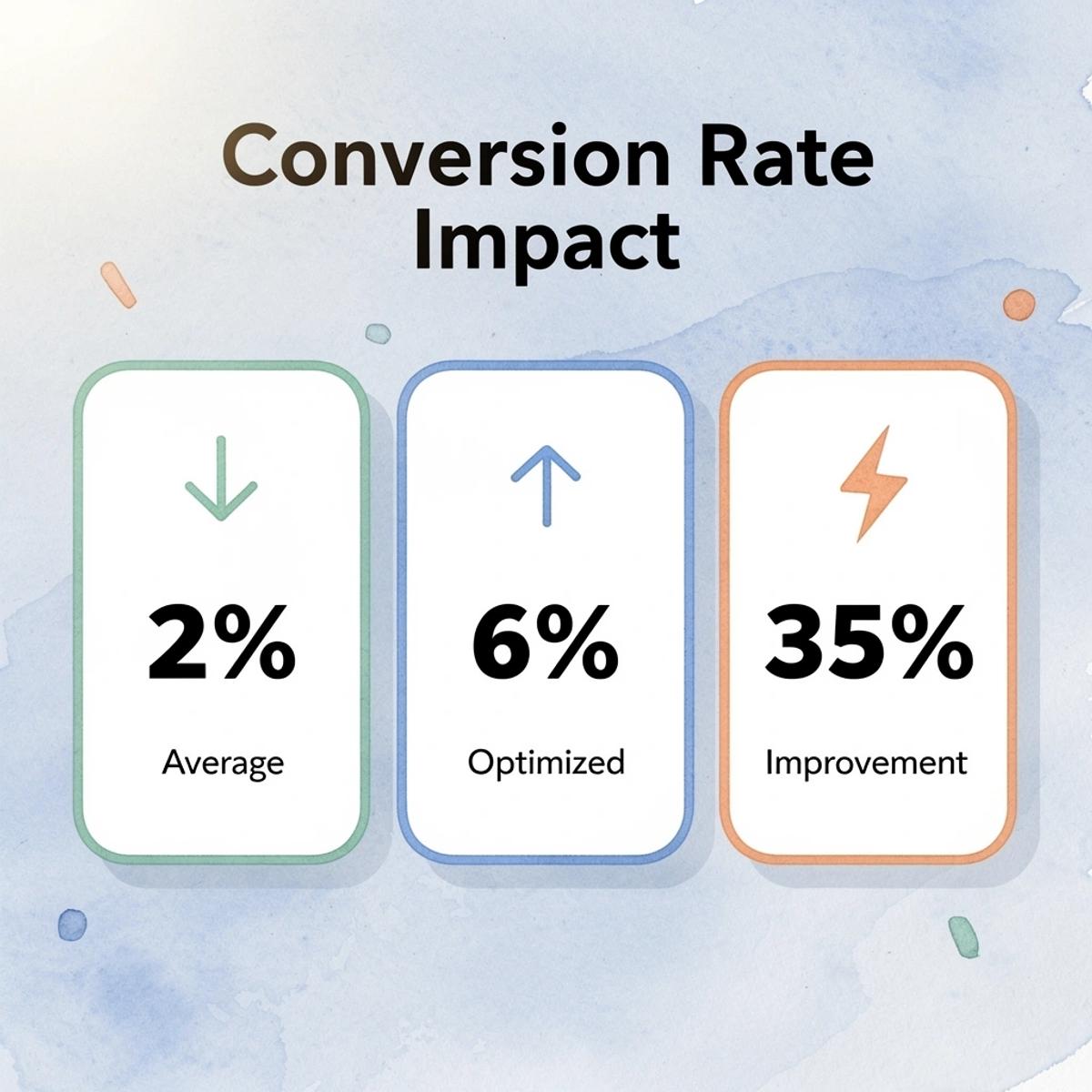
🎯 Key Point: The difference between a store that converts at 2% versus 6% isn't luck—it's having all four conversion elements working in harmony, not just one or two.
"Most Shopify stores focus on making things look pretty, but high-converting design is about removing friction from the buying process." — Conversion optimization research shows that reducing decision-making steps can increase conversions by up to 35%.
💡 Pro Tip: Before investing in any design changes, audit your current store against these four core requirements—you'll likely find that fixing just one missing element can dramatically improve your conversion rate overnight.
Clear Product Positioning and Messaging
Visitors decide within seconds whether a product suits them. Your value proposition must be immediately clear. If a visitor cannot understand what the product does, who it is for, and why it matters, no design will recover that lost attention. Unclear messaging that prompts guessing instead of buying is often the gap between traffic and sales.
How does strong positioning reduce cart abandonment?
According to Baymard Institute, 70% of online shoppers abandon their carts due to friction, confusion, or a lack of trust. The moment someone must work to understand your offer, you've lost them. Strong positioning aligns your headline, product benefits, and call to action so tightly that the decision feels obvious.
Conversion-Focused Structure
High-performing pages guide decisions through clear structure: above-the-fold messaging, strong product benefits before features, social proof placed where doubt occurs, and repeated calls to action. Structure is the architecture of persuasion.
Layout is a behavioral choice, not an aesthetic one. Where you place trust signals, how you sequence benefits, and when you introduce urgency directly impact whether someone clicks "Add to Cart" or closes the tab. According to Google, a 1-second delay in page load time reduces conversions by 7%. A beautifully designed page that loads slowly or buries the value proposition below the fold creates expensive friction.
Fast Iteration Based on Real User Data
Design is an ongoing process of testing and improving based on actual user behavior, not assumptions. Conversion rate optimization studies show companies running structured A/B tests achieve measurable improvements—sometimes double-digit percentage gains.
The difference between a 1.4% conversion rate and a 4% conversion rate is rarely due to the initial design, but rather to what you learn and change after launch.
How do traditional design cycles limit testing capabilities?
Traditional design cycles prevent this. Spending weeks building a custom page means you cannot test different messages, change positioning, or respond to customer behavior.
Platforms like AI page builder enable page creation in minutes instead of weeks, letting you launch multiple versions quickly and discover what drives conversions through real data rather than design assumptions.
Alignment Between Traffic Source and Page Content
If someone clicks an ad expecting a specific benefit or offer, the landing page must match that expectation immediately. When the ad and page misalign, more visitors leave without converting, and fewer complete your desired action. Even small discrepancies between ad copy and landing page content significantly impact performance.
Design that focuses on getting people to take action, combined with quick testing, leads to better results for your money. Design establishes the foundation; testing and alignment drive the results.
When You Actually Need Shopify Web Design Experts
You need Shopify web design experts when design becomes a way to make more money, not something you hope will work. Hire them after you've proven people want what you're selling, shown that your message works, and identified where customers stop buying. Before that point, spending money on design is premature.
🎯 Key Point: Design investment should be data-driven, not hope-driven. Wait until you have proven demand and identified specific conversion bottlenecks before bringing in experts.
"Design becomes profitable when it solves known problems, not assumed ones. The best time to invest in expert design is after you've identified exactly where customers drop off."
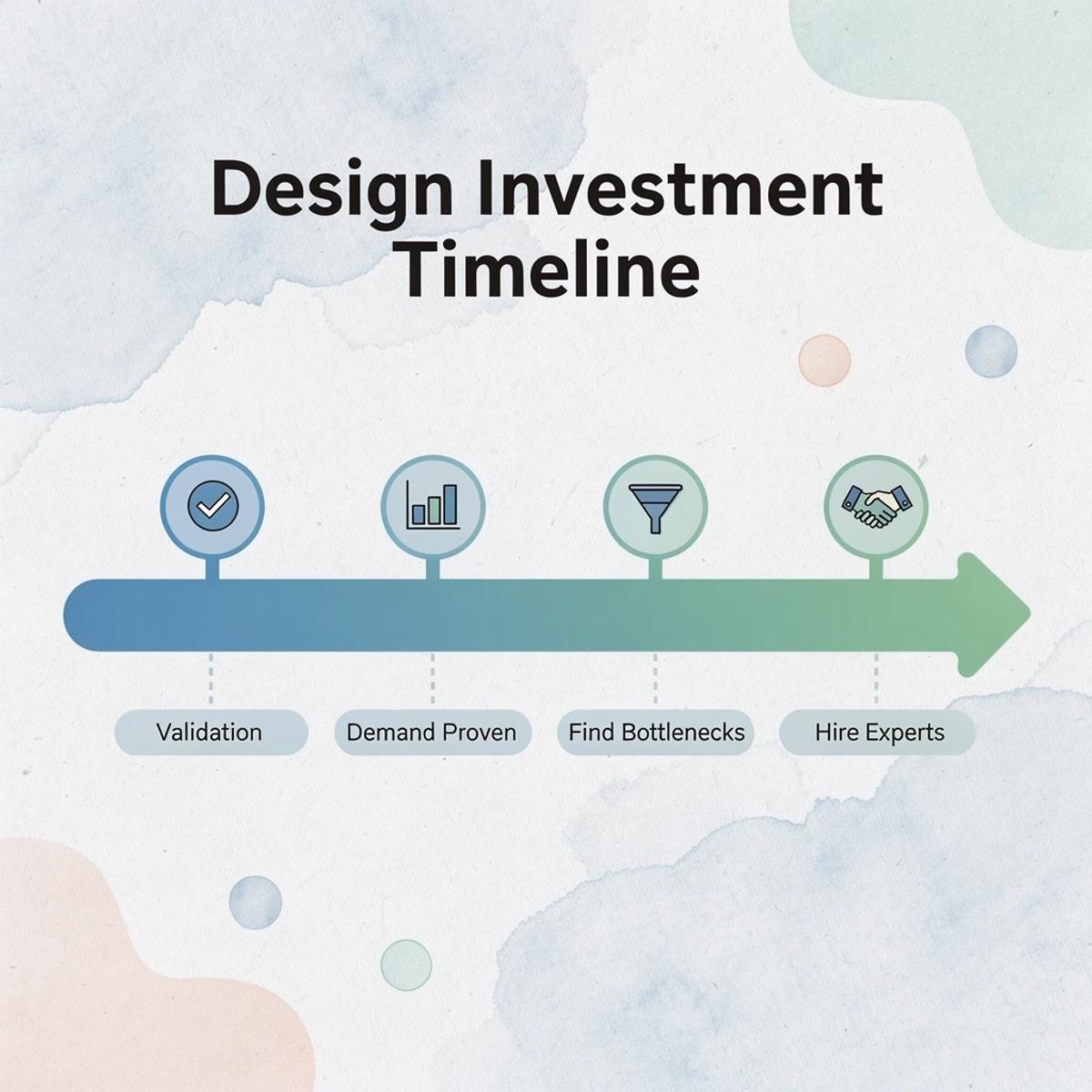
⚠️ Warning: Hiring design experts too early is one of the most common mistakes new Shopify store owners make. Focus on validation first, optimization second.
When scaling validated products
The clearest signal is steady sales with growing traffic. You understand who buys, why they buy, and your conversion flow works. Now small improvements compound.
What investment makes sense for professional design services?
According to Code Clinic, professional Shopify design services typically cost between $5,000 and $15,000 for complete builds. This investment pays off when a 0.5% conversion lift translates to measurable revenue, provided your traffic volume justifies it.
How do expert designers improve existing performance?
Expert designers improve what already works by tightening layouts, reducing cognitive load, enhancing mobile experiences, and removing friction points identified through user behavior observation. The difference between a 2.5% and 3.2% conversion rate matters significantly when driving thousands of visitors to your site each month.
When brand consistency becomes a competitive advantage
Once you're generating steady revenue, design shifts from conversion mechanics to brand equity. Customers recognize your store, return for repeat purchases, and compare you to established competitors. Visual consistency across product pages, checkout flows, and email touchpoints builds trust and perceived professionalism.
Research from the Baymard Institute shows that 38% of online shoppers abandon their cart due to poor site design, with inconsistent experiences driving much of that friction.
How do expert designers create cohesive brand systems?
Expert designers create systems that work together, not individual pages. They establish visual hierarchies, follow brand guidelines, and ensure every touchpoint reinforces your positioning—critical when customers choose between you and competitors with similar products but stronger visual credibility.
What design cannot fix
Design expertise cannot prove that a product will work. If you are still testing your message, trying different audiences, or are uncertain whether your offer meets customer needs, hiring designers creates expensive work that may not be useful later. Tools like AI page builder let you create pages that drive conversions in minutes, test multiple product options quickly, and iterate based on real customer behavior before investing in custom design work that locks you into untested ideas.
How does timing affect your design investment decisions?
Stores that are starting out need to move fast and make changes quickly. Growing stores should focus on improvement and consistency. The timing of design investment matters: it can accelerate growth or drain resources while you're still finding the right product for your customers.
But knowing when to hire experts matters only if you understand what happens when you skip the expensive design process entirely.
How PagePilot Helps You Test And Build Without Expensive Design Cycles
Traditional design cycles force a false choice: launch rough and sacrifice credibility, or invest weeks polishing before collecting data. Both waste resources. You need professional-looking pages fast enough to test assumptions while they matter.
🎯 Key Point: PagePilot eliminates the design bottleneck by delivering professional pages in minutes, not weeks, so you can test assumptions while they're still relevant to your business decisions.
"Speed to market beats perfection when you're validating ideas. The fastest way to learn is to ship and iterate, not polish and pray." — Lean Startup Methodology

⚠️ Warning: Don't fall into the perfectionist trap of spending weeks on design before getting real user feedback. Market validation requires speed, not pixel-perfect layouts.
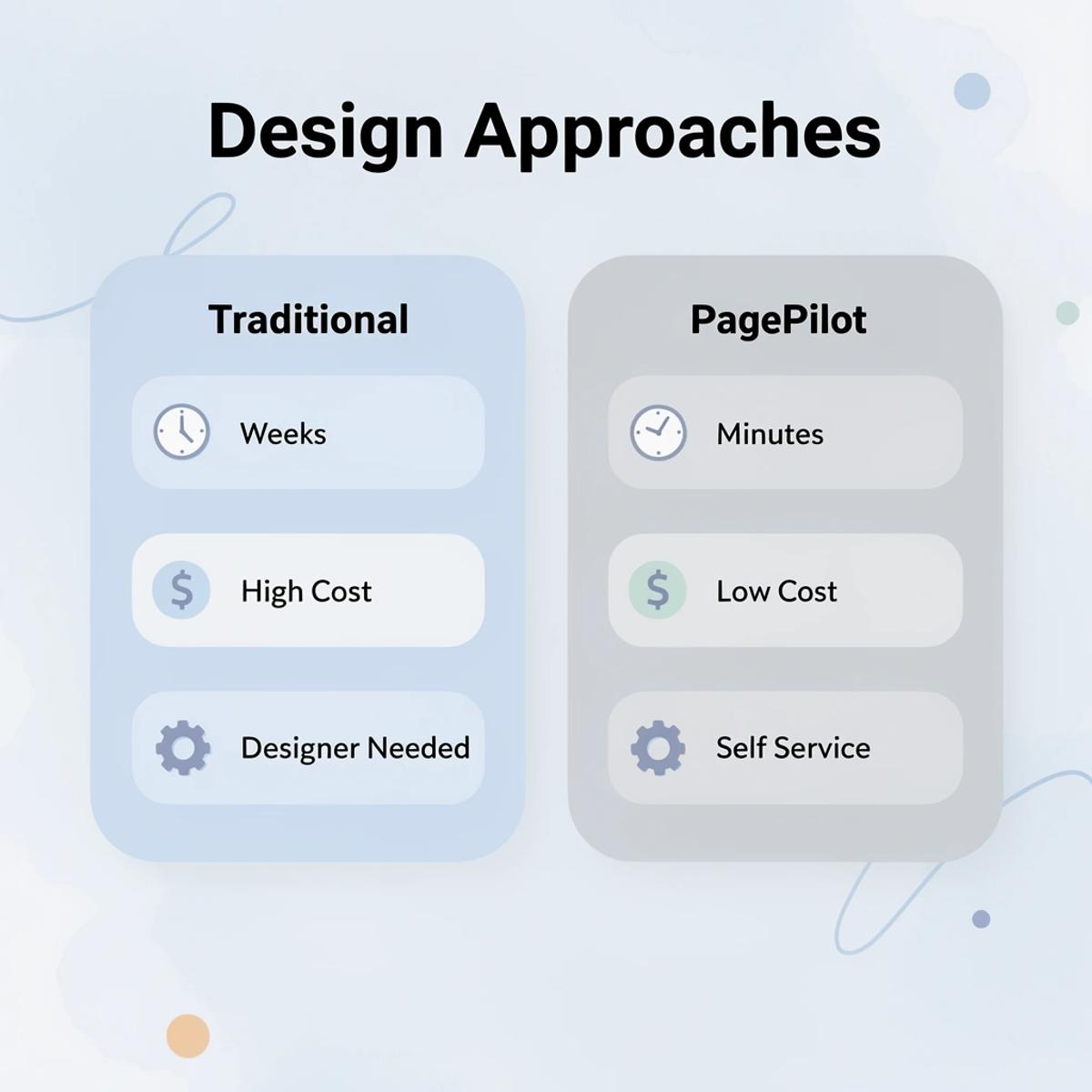
- Traditional design
- Weeks to launch
- High upfront cost
- “Perfect” but untested before release
- Strong dependency on designers
- PagePilot approach
- Minutes to deploy
- Low-cost testing and iteration
- “Good enough” to validate quickly
- Self-service page creation
Generating Pages from Competitor URLs
PagePilot creates high-converting product pages from competitor or supplier links. Paste a URL, and the system analyzes the layout, extracts product details, and builds a sales-optimized page in under a minute, eliminating design delays and enabling immediate launch.
The advantage extends beyond speed: you start with proven conversion patterns instead of guessing. Our pages include benefit-focused headlines, organized product descriptions, and visual hierarchy designed to drive purchases. You avoid amateur supplier images and generic templates that damage credibility. According to the PagePilot AI Blog, this costs $10 to $500 per month—a fraction of custom design cycles while delivering comparable visual quality.
Testing Multiple Products Without Design Debt
Most founders test one product at a time because each new page requires another design cycle, significantly slowing validation. If your first three products fail, you've spent weeks or months before finding what works. Speed matters more than perfection when searching for product-market fit.
How does rapid page generation accelerate experimentation?
When you can create a new product page in minutes, you can launch five products in the time it previously took to build one. You collect conversion data across multiple offers simultaneously, identifying winners faster by running more experiments in parallel. The cost of failure drops dramatically when it takes an hour rather than a week.
Refining Based on Real Performance Data
Static pages lock you into assumptions about messaging, layout, and visual hierarchy before knowing what resonates with your audience. When something fails, you face another design cycle to fix it, draining budgets and morale.
How does data-driven iteration improve performance?
The better path is improvement driven by data. Launch a generated page, track how visitors interact with it, and make changes based on what you learn. Your headline may lack clarity. Your call-to-action may need repositioning. Your product benefits may not address the right concerns. Make those changes, test again, and keep improving until performance increases. Design becomes responsive rather than speculative.
When should you invest in custom design work?
This shift is not about removing design expertise: it's about sequencing it correctly. Validate demand first. Learn what messaging converts. Identify which products deserve deeper investment. Only then pursue custom design work, refining something that already works instead of building something that might.
But generating and testing pages matters only if you understand what happens when you use the system.
Related Reading
- Builder.ai Competitors
- How To Add Products To Shopify Page
- Best Shopify Landing Pages
- On Page Seo Shopify
- Best Shopify Plugins
- How To Add A Custom Pop-Up In Shopify
- Shopify Ai Apps
Start a FREE Trial and Generate 3 Product Pages with Our AI Page Builder today
Start a free trial and generate three product pages today, no credit card required. You test faster, learn what converts, and avoid building pages that sit idle because you invested in polish before proving demand.

Platforms like PagePilot compress what used to take days into 60 seconds, letting you validate messaging and offers before committing to custom design work. You generate pages, push them live, and collect real customer behavior data instead of guessing what might work. The cost is minimal, the risk is zero, and the alternative is spending weeks building something that converts at 1% when you could test three variations and find the winner in an afternoon.
💡 Tip: Testing three variations in one afternoon beats spending weeks on a single page that might not convert.
"Speed matters more than perfection when learning what your customers respond to." — PagePilot AI Testing Framework
Speed matters more than perfection when learning what your customers respond to. Generate your first three pages, watch how people interact with them, and refine from there. Design expertise becomes far more valuable when improving something that already converts rather than building from speculation.
🔑 Takeaway: Real customer data from live pages provides far more value than theoretical design perfection.