

Choosing the right Shopify marketing agency can determine whether a store scales steadily or stalls despite a strong product lineup. Many store owners struggle to evaluate agencies effectively, often prioritizing surface-level metrics over proven results in traffic growth, conversion rates, and customer retention. A clear framework for assessing expertise, pricing, and real performance makes the decision far less overwhelming.
Building a strong marketing foundation also means ensuring every campaign lands on pages designed to convert. Shopify Marketing Automation strategies work best when the underlying store pages are optimized to support them. That is where tools like PagePilot complement agency efforts by turning product pages into genuine sales assets with an AI page builder built for speed and performance.
Table of Contents
- Why Finding the Right Shopify Marketing Agency Is Hard
- What the Best Shopify Marketing Agencies Have in Common
- Common Mistakes Brands Make When Hiring Agencies
- Why Creative Speed Matters as Much as Media Buying
- How to Get More Value From Your Shopify Marketing Agency
- How PagePilot Helps Shopify Brands Get More Value From Their Marketing Agencies
- Start a FREE Trial and Generate 3 Product Pages with Our AI Page Builder today
Summary
- Most Shopify store owners struggle to find the right agency partner, not because quality agencies are rare, but because over 10,000 marketing agencies operate in the US alone, and a significant portion claim to specialize in ecommerce. When that many providers use the same language and show similar case studies, the search becomes about filtering noise rather than identifying genuine expertise. The mismatch between what an agency was built to do and what a brand actually needs is the most common reason partnerships fail within the first six months.
- The financial cost of choosing the wrong agency extends well beyond the monthly retainer. Clients working with the right Shopify agency have reported a 168% increase in conversion rates, which means a poor fit doesn't just underperform; it costs you the upside you should have captured. Switching partners mid-growth also resets momentum, since a new agency needs weeks to understand your catalog, customer, and margins before making confident decisions.
- The best Shopify marketing agencies share one structural quality: they treat growth as a system rather than a series of disconnected campaigns. Leading agencies deliver an average 30% increase in conversion rates for their clients, and that result comes from continuous creative testing, relentless landing page refinement, and treating every data point as a question worth answering. Awards and certifications cannot replicate that kind of operational discipline.
- Creative production is one of the most underfunded and mismanaged parts of Shopify marketing. Brands spending $100,000 or more on ad spend often allocate only $5,000 to creative, a 20x imbalance between media investment and the assets that media spend is supposed to amplify. Ad fatigue follows a predictable schedule, and brands that plan for it by running continuous creative tests outperform those that react only after performance drops.
- Most brands evaluate agencies on case studies and presentation skills, but rarely audit how an agency structures creative testing, builds landing pages, or communicates when a campaign underperforms. The brands that scale fastest are the ones that demand a direct line between agency activity and revenue outcomes, and that set that expectation in the first conversation rather than the fifth. Treating the agency relationship as a handoff rather than a collaboration is the most avoidable and most expensive mistake in the process.
- Asset scarcity is what slows agencies down more than anything else. A media buyer can identify a winning audience segment in 48 hours, but if the creative to test against that segment takes three weeks to produce, the opportunity window closes. Shopify now powers over 4.6 million online stores worldwide, and the brands that rise above that competition are the ones testing more angles, more hooks, and more page variants, giving their agencies real data to optimize against rather than educated guesses.
- AI page builder addresses the production lag that consistently widens the gap between what an ad promises and what a landing page delivers, letting Shopify brands build and update conversion-ready product pages in minutes rather than weeks.
Why Finding the Right Shopify Marketing Agency Is Hard
Finding a Shopify marketing agency can get hard fast. According to Acceler8 Labs, more than 10,000 marketing agencies operate in the US alone, and many claim they specialize in ecommerce. When companies use the same words, promise the same results, and show similar case studies, searching becomes less about finding quality and more about filtering out noise.
"More than 10,000 marketing agencies operate in the US alone — and the majority claim to specialize in ecommerce." — Acceler8 Labs
🚨 Warning: When every agency sounds identical with the same promises, buzzwords, and case study formats, dig deeper than their homepage.
🔑 Takeaway: With 10,000+ agencies competing for your budget, the real challenge isn't finding an agency — it's building a filtering system that separates genuine Shopify expertise from generic ecommerce claims.

Why do similar promises make comparison so difficult?
The failure point is usually specificity. Most agencies claim to grow Shopify brands, but growth means paid social for one firm, email retention for another, and conversion rate optimization for a third. A brand needing stronger creative and better product page performance will get different results from an agency that primarily optimizes ad spend. This mismatch often goes unnoticed upfront, which is why many brands switch partners within six months.
Why do agency websites rarely reveal what actually matters?
Most store owners review agency websites, read customer testimonials, and schedule discovery calls. This rarely reveals what matters: how an agency handles underperforming campaigns, what their onboarding process looks like in week three, and whether they have genuine experience with your product type. What agencies promise in their pitch often differs from day-to-day reality.
How does a store's readiness affect what an agency can deliver?
That gap widens when the store itself isn't ready to convert. An agency can drive qualified traffic, but if product pages feel generic or slow, visitors exit without buying. Brands that use PagePilot's AI page builder to build conversion-ready product pages before scaling ad spend eliminate one of the most common points of failure before it costs real money.
The cost of choosing wrong goes beyond the retainer
The financial risk is real. According to Thails, clients working with the right Shopify agency have reported a 168% increase in conversion rates. The wrong agency underperforms and costs you the upside you should have captured. Switching agencies mid-growth resets momentum, requiring weeks for a new partner to understand your catalog, customer base, and margins before making confident decisions.
The "best" agency depends on your stage of growth, internal capacity, product complexity, and budget. The right partner for a scaling DTC brand with six-figure monthly ad budgets won't suit a founder testing their first product, which is what makes the decision difficult.
What the Best Shopify Marketing Agencies Have in Common
The best Shopify marketing agencies treat growth as a system, not disconnected campaigns. They understand that paid traffic, creative testing, email flows, and conversion optimization only produce results when they work together. Agencies that are good at one area but ignore others get short bursts of success followed by flat periods where nothing improves.
"Growth is never the result of a single channel — it's the compounding effect of paid traffic, email, creative, and conversion optimization firing in sync." — Industry Best Practice
🎯 Key Point: The defining trait of a top-tier Shopify agency is its ability to connect every marketing channel into a unified growth system — not just excel in isolation.
💡 Tip: When evaluating agencies, ask them specifically how their paid media strategy connects to their email flows and CRO process. If they can't explain the link, that's a red flag.
Here is a breakdown of the differences between a strong agency and a weak agency across key performance traits:

- Channel Strategy: A strong agency is integrated and full-funnel, whereas a weak agency is siloed and single-channel.
- Creative Testing: A strong agency is systematic and ongoing, whereas a weak agency is ad hoc or infrequent.
- Email Flows: A strong agency ties flows directly to paid ads and CRO, whereas a weak agency manages them completely separately.
- Conversion Optimization: A strong agency makes it core to every campaign, whereas a weak agency treats it as an afterthought.
- Growth Pattern: A strong agency drives consistent and compounding results, whereas a weak agency delivers short bursts followed by plateaus.
Processes over promises
The failure point is usually not strategy but execution discipline. According to Plerdy's analysis of top Shopify marketing agencies, leading agencies deliver an average 30% increase in conversion rates for their clients through continuous creative testing, relentless landing page refinement, and treating every data point as a question worth answering. Awards and certifications cannot replicate that operational rigor.
Why creative testing is non-negotiable
Ad fatigue is inevitable. The best Shopify marketing agencies build creative production into their core workflow as a regular process running alongside media buying, not as a reactive fix when performance drops. They know that winning ads lose their power, and they have the next round of tests ready before the data confirms it.
What happens when landing pages can't keep up with creativity?
Most brands talk to their agency once every three months, approve a group of ads and images, and then wait. As ad costs rise and audiences shift, that group of ads depletes faster than expected. Pages made months ago fall behind new creative work without anyone noticing until return on ad spend has already dropped. Our PagePilot AI page builder fixes this problem directly, letting store owners create brand-quality product pages in minutes, so landing pages keep pace with creative changes rather than falling behind.
Data without interpretation is just noise
The critical difference between a good agency and a great one is not the dashboard they use: it's the questions they ask about what the numbers mean. Top agencies monitor customer acquisition cost, lifetime value, and average order value together, because optimizing any one metric in isolation can damage the others. According to 20North Marketing, Shopify now powers over 4.6 million online stores worldwide, intensifying competitive pressure in every niche. Agencies that read data with context, not volume, find leverage points others miss.
Transparency is a structural advantage
Strong communication is a competitive edge. The best agencies build transparency into their reporting by explaining the reasoning behind decisions, not just outcomes. When a campaign underperforms, they tell you why and what they're testing next. That honesty shortens the feedback loop and builds trust, accelerating progress. Agencies hiding behind vanity metrics or monthly slide decks filled with impressions and reach prioritize self-protection over your growth.
Knowing what to watch for when sitting across the table from an agency is where real decisions get made.
Related Reading
- Shopify Marketing Automation
- How To Set Up Email Marketing On Shopify
- Shopify Email Marketing Vs Klaviyo
- Shopify Social Media Marketing
- How To Advertise a Shopify Store
- Shopify Social Media Marketing
- Seo Marketing Shopify
Common Mistakes Brands Make When Hiring Agencies
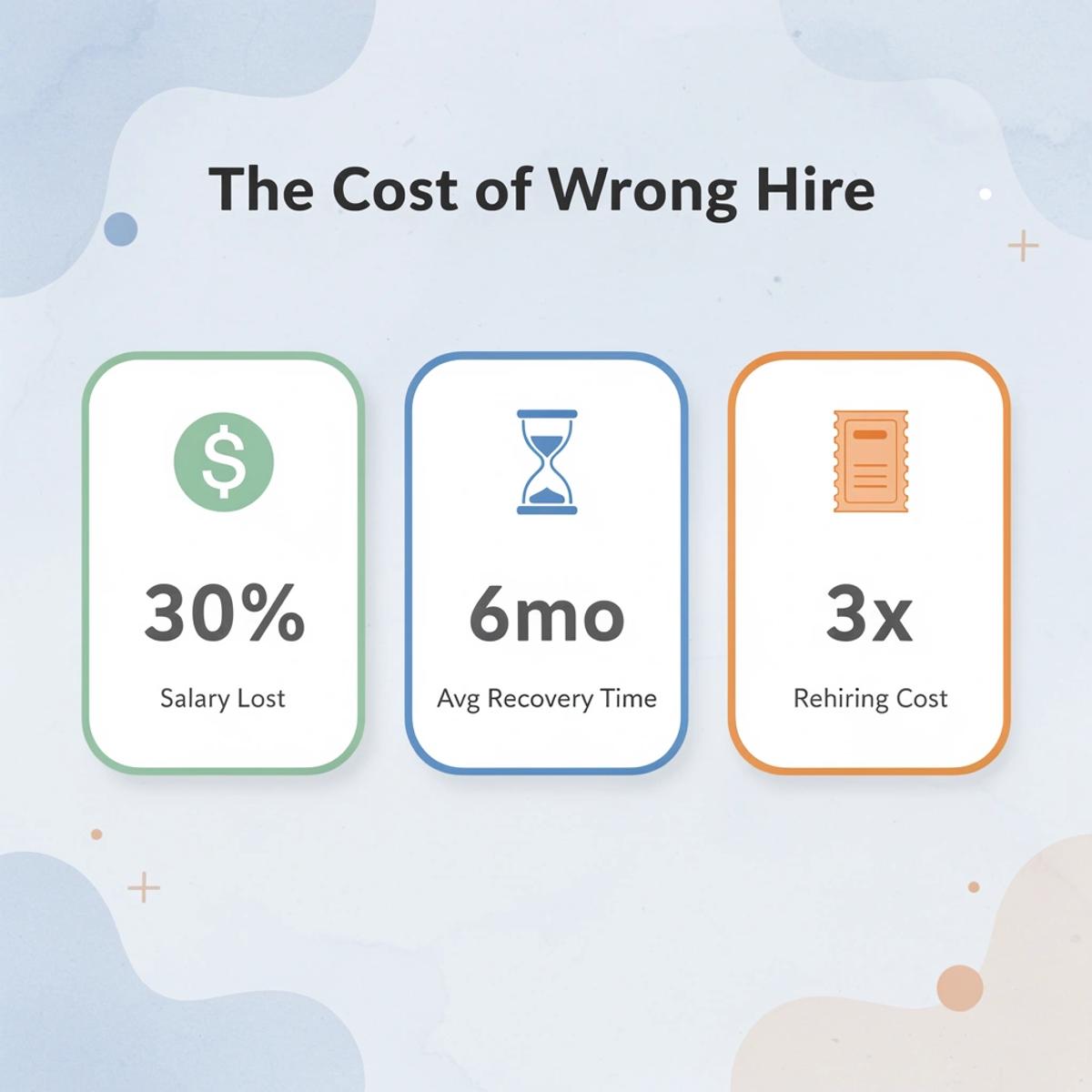
Choosing the wrong agency is expensive in ways that don't show up right away. According to the PeopleNTech Blog, a bad hire can cost a company up to 30% of what the employee makes in their first year. When the wrong agency uses up your ad budget for three months before anyone says the strategy isn't working, you lose not just money, but time, momentum, and important chances to move forward.
"A bad hire can cost a company up to 30% of what the employee makes in their first year — and the wrong agency can burn through your ad budget for three months before anyone admits the strategy isn't working." — PeopleNTech Blog
⚠️ Warning: The true cost of a wrong agency hire goes far beyond the invoice — you're also losing time, market momentum, and missed growth opportunities that are nearly impossible to recover.
🔑 Takeaway: A 30% first-year cost on a bad hire is a conservative estimate. Factor in wasted ad spend, lost momentum, and delayed strategy pivots, and the real damage to your brand can be significantly higher.
Choosing between price and portfolio alone
The failure point is usually a mismatch between what a brand needs and what an agency was built to do. A brand chasing growth through paid social hires an agency that built its reputation on email retention. A DTC store with a thin creative library signs with a media buying team that expects a constant stream of fresh assets. Fit matters more than reputation, and fit only becomes visible when you ask the right questions before signing.
What do brands forget to audit before the contract?
Most brands judge agencies based on case studies and charm, not how they actually work: their approach to creative testing, landing page optimization, and accountability when campaigns underperform. A good agency welcomes these questions; an average one deflects.
Why do product pages quietly drain campaign budgets?
The same issue arises when brands hand off product pages without careful review. Agencies can drive traffic, but cannot fix pages that fail to convert visitors into customers. Most store owners build product pages once and consider them complete. As campaigns evolve and new ad angles are tested, those pages remain static, quietly wasting budget. Tools like PagePilot's AI page builder fill this gap, enabling brands to build and update conversion-ready pages in minutes so the page always matches what the ad promised, without waiting on developers or designers.
Why do vanity metrics make poor agency results harder to spot?
When results disappoint, brands often tolerate it longer than they should because agencies produce reports full of impressions, reach, and click-through rates, creating the feeling of progress without proof. The brands that grow fastest demand a direct connection between agency work and business revenue, setting that expectation in the first conversation, not the fifth.
What happens when brands treat the agency relationship as a handoff?
The most avoidable mistake is treating the agency relationship as a handoff rather than a collaboration. Agencies need your product knowledge, customer insights, and honest feedback on what the market is telling you. When brands go silent after onboarding, agencies must guess, producing mediocre results. The brands that scale stay engaged.
Even with strong collaboration, one factor consistently separates campaigns that scale from those that plateau: it has nothing to do with budget.
Why Creative Speed Matters as Much as Media Buying
Creative quality is the single biggest variable most Shopify brands mismanage. According to Matthew Gattozzi on LinkedIn, 90% of the time when brand performance struggles, the issue is insufficient investment in creative on a regular basis. Media buying is typically sound; the creative pipeline is where growth stops.
"90% of the time when brand performance is struggling, the problem is they're not investing in creative on a regular basis." — Matthew Gattozzi, LinkedIn 2025
🚨 Warning: Most brands blame media buying when performance dips, but the real bottleneck is a starved creative pipeline.
🔑 Takeaway: Creative velocity is the primary growth lever separating scaling brands from stagnating ones.

What happens when a winning ad runs out of runway?
A store runs one strong ad, it converts well, and the team leaves it running. Weeks pass. The audience has seen it. Click-through rates soften. Cost per acquisition climbs. The instinct is to blame the algorithm or targeting, but the real issue is simpler: the creative got old, and nothing replaced it. Every winning ad has an expiration date, and the brands that plan for that reality outperform those that react to it.
Why does the spending gap make creative problems worse?
The spending gap worsens this problem. Matthew Gattozzi's 2025 analysis found that brands spending $100K or more on ad spend allocate only $5K toward creative: a 20-fold imbalance between media investment and distributed assets. Pouring money into distribution yields weak returns when the distributed content hasn't changed in two months.
How does sequential production slow campaigns down?
Most teams handle creative production sequentially: brief a designer, wait for revisions, agree on copy, build a landing page separately. By the time the asset is live, the campaign window has shifted. Platforms like PagePilot's AI page builder address this by enabling Shopify brands to build conversion-ready product pages in minutes, not days. When the ad and page tell the same story simultaneously, conversion rates reflect that alignment.
The speed advantage compounds
Fresh creative finds the next winning angle before competitors do. Consumer motivations shift: a hook that resonates in January may feel flat by March. Brands running continuous creative tests across different messaging angles, benefit statements, and visual formats learn what works faster than competitors, allowing them to allocate budget toward winners and pull back from underperformers.
Why does creative speed determine how fast you learn?
The best Shopify marketing agencies build systems that quickly find what works, rather than guessing. Creative speed is the engine powering those systems. Without it, even a sophisticated media buying strategy operates at a disadvantage.
How you use your agency relationship once that creative engine runs determines everything.
How to Get More Value From Your Shopify Marketing Agency
Think of your agency relationship as a system, not just a service. Agencies have expertise in buying media, targeting audiences, and building campaigns — but what they produce depends entirely on what information you give them. The best-performing brands make their agencies work faster, not just smarter.
"The best-performing brands don't just hire agencies — they fuel them with the right information, the right access, and the right feedback loops to unlock maximum output."
Here is a breakdown of what agencies bring to the table versus what you must provide to them:
- Media buying expertise: Driven by your brand guidelines and tone of voice.
- Audience targeting: Fueled by your customer data and purchase insights.
- Campaign building: Directed by your active offers, promotions, and overarching business goals.
🎯 Key Point: Your agency is only as effective as the inputs you provide — treat the relationship like a partnership, not a vendor transaction.
💡 Tip: Schedule a monthly alignment call to share business context your agency can't see on its own — upcoming launches, margin changes, or seasonal priorities that should shape campaign strategy.
⚠️ Warning: Brands that stay passive and wait for agencies to "figure it out" consistently underperform. Active collaboration is the real competitive advantage.
What slows agencies down more than anything?
The failure point is almost always asset scarcity. A media buyer can identify a winning audience segment in 48 hours, but if the creative to test against that segment takes three weeks to produce, the opportunity window closes. This production pipeline problem worsens with each campaign refresh or product launch.
Why does the lag between ads and landing pages hurt conversions?
Most brands create product pages through a traditional cycle: brief a designer, wait for drafts, revise multiple times, then hand off to a developer. When ad creative and landing pages must stay aligned to prevent conversion drop-off, the delay between what the ad promises and what the page delivers becomes critical. Our AI page builder at PagePilot lets brands generate brand-quality product pages in minutes, not weeks, ensuring agencies always have conversion-ready pages to match their creative.
More assets, more leverage
According to Funnel.io's 2025 Shopify analytics research, Shopify powers over 4.6 million online stores worldwide. Brands that stand out aren't spending more money; they're testing more angles, hooks, and page versions. This generates real data to improve against rather than guesses based on experience. Five-page versions that test different positioning statements create a learning engine, whereas a single product page with a single message provides only one data point.
The difference between brands that grow and those that stagnate often comes down to what they provide to their agency. Strong product photography, multiple copy angles, and pages built around specific audience segments expand an agency's ability to find what works. One image and one paragraph of copy leave an agency fighting with half the pieces.
Collaboration beats delegation
The best brand and agency partnerships share one trait: the brand stays actively involved in the creative process rather than handing off the account. This means reviewing tested work weekly, responding to asset requests promptly, and halting underperforming pages quickly. Agencies don't need brands to do their job—they need brands to remove obstacles that slow the system down.
Brands that figure this out treat their agency as a shared investment in speed rather than a vendor. Once that shift happens, something unexpected tends to follow.
Related Reading
- Best Shopify Email Marketing Apps
- How To Advertise a Shopify Store
- Shopify Marketing Strategies
- Best Shopify Marketing Apps
- Best Marketing Tools For Shopify
How PagePilot Helps Shopify Brands Get More Value From Their Marketing Agencies
Hiring a top Shopify marketing agency is only part of the answer. Agencies improve campaigns and manage budgets, but they work best with strong product pages, fresh creative ideas, and new assets to test. Even the most talented agencies cannot consistently grow campaigns with old creatives and generic supplier pages.
"Even talented agencies cannot consistently grow campaigns with old creatives and generic supplier pages." — Core PagePilot Insight
🎯 Key Point: Your agency is only as effective as the assets and pages you give them to work with — garbage in, garbage out.
⚠️ Warning: Brands that rely on static, outdated creatives will hit a growth ceiling no matter how skilled their agency is.
Here is a breakdown of what agencies need to scale versus what holds them back:

- Strong product pages: Held back by generic supplier pages.
- Fresh creative assets: Held back by old, recycled creatives.
- New concepts to test: Held back by a limited variety of assets.
- Fast iteration cycles: Held back by slow content production.
PagePilot helps Shopify brands and their agencies accelerate experimentation, spending less time waiting for assets and more time finding winners.
💡 Tip: The brands that scale fastest remove the bottleneck between creative ideation and live testing. PagePilot is built to do exactly that.
How does PagePilot remove the bottleneck of building product pages?
At its core, PagePilot's AI Page Builder lets brands enter a competitor or supplier URL and instantly generate a high-converting product page. This eliminates the need to start from scratch or wait days for custom builds, enabling faster product launches and rapid testing of new angles.
PagePilot's AI Product Image feature solves a key problem: many ecommerce businesses use identical supplier images and copy as competitors, making it difficult for agencies to differentiate campaigns. Our AI Product Image feature enhances product visuals, giving brands better assets and helping them stand out.
How does faster asset creation benefit both brands and their agencies?
This speed benefits both sides. Agencies can test more landing pages, update campaigns before audience fatigue sets in, and try different product positioning without waiting weeks for designers or developers. Brands find winning combinations faster and adapt to market changes more quickly.
PagePilot transforms marketing into continuous learning. Brands and agencies make changes quickly, launch ideas faster, and make decisions based on real data rather than guesses. Faster experimentation builds improvements over time and delivers better results.
Start a FREE Trial and Generate 3 Product Pages with Our AI Page Builder today
That shift from vendor to co-investor is where growth starts. Try PagePilot for free to give your Shopify marketing agency the raw material it needs to move faster. In your first session, generate three product pages from competitor or supplier URLs and receive upgraded AI product images for new creative angles and stronger pages to test immediately.
"The brands that grow fastest aren't waiting on production cycles — they're testing stronger pages with better creative from day one." — PagePilot
🎯 Key Point: Generating three product pages in your first session gives your agency real assets to test immediately, with no delays or bottlenecks.
💡 Tip: Use competitor or supplier URLs as your starting point to benchmark and outperform existing pages in your niche.

No extra weeks added to the production cycle. No waiting on designers to close the gap between ad creative and landing page. The right agency relationship paired with the right tools separates Shopify brands that grow from those that stay stuck.
Here is how building landing pages without PagePilot compares to using it:
- Weeks added to production: Upgraded to pages generated instantly.
- Waiting on designers: Replaced by AI product images that are ready now.
- Gap between ad and landing page: Solved with seamless creative alignment.
- Slower testing cycles: Transformed into faster iteration and growth.
✅ Best Practice: Pair your Shopify marketing agency with an AI page builder like PagePilot to eliminate every bottleneck between strategy and execution.
Related Reading
- Best Seo App For Shopify
- Best Shopify Theme for SEO
- Yotpo Alternatives
- Lucky Orange Alternatives