

Beautiful Shopify stores often struggle with visibility because their pages remain invisible to search engines. Without proper site architecture, optimized meta descriptions, strategic title tags, and effective internal linking, even the most stunning designs fail to communicate their value to Google. Most store owners focus on aesthetics while neglecting the technical elements that drive organic traffic and conversions.
Manually optimizing every product description, heading tag, and image alt text across hundreds of pages creates an overwhelming workload for busy entrepreneurs. PagePilot's AI page builder automatically handles technical optimization, creating SEO-friendly pages with proper keyword placement, mobile-responsive layouts, and fast load times.
Summary
- Most Shopify stores fail on four interconnected dimensions that search engines and buyers both evaluate: intent alignment, conversion architecture, content originality, and page experience. When product pages answer "wireless earbuds" but the searcher wants "wireless earbuds for small ears during workouts," keywords match, but context doesn't. Dwell time correlates more strongly with top rankings than keyword density or backlink count, according to Backlinko's 2024 analysis of 11.8 million Google search results, which means pages must hold attention to maintain visibility.
- The average Shopify conversion rate sits around 1.4%, while top-performing stores achieve closer to 4.7%. That gap rarely comes from keywords alone. It comes from how well product pages communicate value, match search intent, and stand out from competitors, optimizing for the same basic signals. A store improving its conversion rate from 1.5% to 3% doesn't make a modest gain; it doubles revenue from identical traffic.
- Copying supplier descriptions creates duplicate content issues that weaken search visibility, according to Shopify's ecommerce SEO guide. When 10 competitors use variations of the same supplier text, Google's Helpful Content system (updated March 2024) explicitly deprioritizes pages that appear to be created primarily for search engines rather than people. If your page offers nothing a buyer couldn't find on five other sites, algorithms have no reason to prioritize yours.
- BrightEdge reports that 53% of all website traffic comes from organic search, which means unique content isn't optional for ecommerce stores. Differentiation happens in the details: explaining specific use cases, addressing objections before they form, and showing how the product fits into the buyer's actual context. Generic descriptions create generic results because search engines need unique context to rank pages effectively.
- HubSpot found that 75% of users never scroll past the first page of search results, which means pages that do rank must immediately prove their value or lose the click to a competitor. Above-the-fold clarity determines whether someone stays or bounces. If your core value proposition requires scrolling to discover, engagement metrics weaken before the visitor even sees your best content.
- PagePilot's AI page builder generates complete product pages with structured copy, differentiated messaging, and optimized visuals in under two minutes, so optimization happens at the speed of product testing rather than becoming the bottleneck that prevents launching the next variant.
Shopify Stores Rely On Generic SEO Tactics
Most Shopify stores approach on-page SEO as a checklist: optimize title tags, fill in meta descriptions, sprinkle keywords across product pages, and install an app. The problem is that thousands of other stores do the same thing.
🎯 Key Point: Generic SEO tactics create an invisible competition where stores become indistinguishable to search engines.
When you use supplier descriptions, lightly rewrite competitor copy, or rely on template-driven optimization, you create pages search engines can't tell apart. According to Shopify's ecommerce SEO guide, copying supplier or manufacturer descriptions creates duplicate content, which can weaken search visibility. Most stores default to duplication because it's faster, but search engines need unique context to rank pages effectively.

"Copying supplier or manufacturer descriptions creates duplicate content issues that weaken search visibility." — Shopify's Ecommerce SEO Guide
⚠️ Warning: Template-driven optimization might feel productive, but it's creating the same SEO foundation as your competitors, making it nearly impossible to stand out in search results.

What happens when product pages look identical to competitors?
Product pages that look identical to competitor pages produce predictable results: search engines struggle to identify unique value, traffic stagnates, and conversion rates remain low even as traffic increases, since pages fail to demonstrate differentiation or match user search intent.
Recent ecommerce benchmark data shows the average Shopify conversion rate sits around 1.4%, while top-performing stores reach closer to 4.7%. That gap rarely stems from keywords alone—it comes from how well product pages communicate value, match search intent, and stand out from competitors optimizing for the same signals.
Why do most stores struggle with optimization bottlenecks?
Most store owners focus on basic SEO signals while missing factors that affect both visibility and conversion. When testing products quickly, manually optimizing every description, heading tag, and image alt text creates a bottleneck that slows progress.
Tools like PagePilot's AI page builder handle technical SEO implementation automatically, building pages with proper keyword placement, mobile-friendly layouts, and fast loading speeds in under two minutes. This removes the optimization bottleneck that typically prevents testing new products.
But even when the technical pieces are in place, something deeper prevents most stores from breaking through.
Why This Approach Fails To Drive Rankings Or Sales
The standard SEO playbook falls apart on product pages because it prioritizes visibility over helping people make decisions. A blog post can rank high through depth and keywords, then engage readers via storytelling. A product page has only seconds to match what the customer wants, demonstrate its unique value, and drive a purchase. When these elements misalign, traffic arrives, but sales don't follow.

🎯 Key Point: SEO visibility and conversion optimization require completely different strategies - what works for blog rankings often hurts product page performance.
"Product pages have only seconds to match what the customer wants, show how it's different, and get them to buy." — The reality of e-commerce conversion

⚠️ Warning: Many e-commerce sites see their organic traffic increase while conversion rates plummet because they're optimizing for the wrong metrics on product pages.
What are the four failure points for Shopify stores?
Most Shopify stores fail in four connected ways: intent alignment, conversion architecture, content originality, and page experience. These problems compound each other. A page using supplier descriptions might include target keywords but miss what buyers need to know. It might load fast, but it lacks a visual hierarchy to guide visitors toward action. It might rank temporarily, then drop as poor engagement metrics signal visitor dissatisfaction.
How does intent misalignment break the conversion process?
Intent alignment breaks first. The page answers "wireless earbuds" when the searcher wants "wireless earbuds for small ears during workouts." Keywords match, but context doesn't. Visitors scan for three seconds, see generic feature lists, and bounce.
Conversion structure follows. Most product pages present information as static blocks: image, description, specs, and reviews. This is documentation, not persuasion. There's no progression from curiosity to confidence, no moment where the page anticipates objections and addresses them.
Why does content duplication signal invisibility to search engines?
Content uniqueness disappears when competitors use variations of the same supplier text. Google's Helpful Content system, updated in March 2024, explicitly deprioritizes pages that "seem to have been primarily created for search engines rather than people." Duplication signals invisibility. If your page offers nothing a buyer couldn't find elsewhere, algorithms won't prioritize it, and buyers won't choose it.
How do engagement signals impact search rankings?
Page experience brings everything together. Pages that rank first but send weak behavioral signals lose their position: time on page drops, bounce rate climbs, and click-through from search results stays low. According to Backlinko's analysis of 11.8 million Google search results in 2024, dwell time correlates more strongly with top rankings than keyword density or backlink count.
Generic layouts with reused product images don't build the trust needed to keep visitors reading long enough to convert.
What creates the engagement feedback loop?
This creates a feedback loop: low conversion rates indicate the page isn't relevant to visitors. Search engines rank it lower, and traffic drops further. Many store owners respond by pursuing more backlinks or better keyword targeting, but the real problem is that the page itself isn't performing its intended function.
Tools like PagePilot's AI page builder create pages with clear steps that guide visitors toward buying and unique product stories in under two minutes. Optimization happens as fast as product testing rather than slowing everything down.
Why doesn't checklist SEO solve ranking problems?
Checklist SEO treats symptoms instead of systems. You can fix meta tags, compress images, and add schema markup, but if the page doesn't demonstrate distinct value or help people make decisions, those fixes won't increase revenue. Without conversions, engagement signals remain weak and rankings decline.
What breaks this pattern requires rethinking what product page optimization means.
Related Reading
- Shopify Web Design
- Shopify Conversion Rate Optimization
- Ai Tools for E-commerce
- Shopify Alternatives
- Ecwid Alternatives
- Shopify App Detector
- Shopify Website Optimization
What On-Page SEO For Shopify Actually Requires
Good on-page SEO for Shopify means building pages that work as decision-making systems, not containers for keywords. The page must satisfy two evaluators simultaneously: search algorithms seeking relevance and clarity, and buyers deciding whether your product solves their specific problem. When either fails, the whole page performs poorly.

🎯 Key Point: Your Shopify pages must serve dual masters - satisfying both Google's ranking factors and your customers' purchase decisions simultaneously.
"Effective on-page SEO requires balancing technical optimization with genuine user value - pages that rank well but don't convert are just expensive traffic generators."

⚠️ Warning: Many Shopify stores focus exclusively on keyword optimization while ignoring the user experience elements that actually drive conversions and long-term SEO success.
Structure That Guides, Not Just Displays
Your page needs a clear structure that shows what the product is, who can use it, and why it matters in the first three seconds. According to HubSpot, 75% of users never look past the first page of search results, so high-ranking pages must quickly demonstrate their value. Search engines read this structure through heading tags and idea connections; users understand it through visual design and ease of navigation.
Why does above-the-fold clarity determine visitor engagement?
What you see before scrolling matters significantly. If visitors must scroll to understand your offering, many will leave before seeing your best content. Your product name, main benefit, and images must match what people are seeking when they arrive. Misalignment causes confusion and departure.
Originality as Competitive Separation
Unique content is essential, given that BrightEdge reports 53% of all website traffic comes from organic search. If your product descriptions match supplier text or competitor pages, search engines have no reason to rank your version higher. Differentiate by explaining specific product uses, addressing common concerns, and demonstrating how the product works in the buyer's real life.
Product pages don't exist in isolation; they derive authority from category structure, internal linking, and site-wide technical health. Fixing one page teaches you what works. Fixing ten reveals patterns. The system improves through iteration, not perfection on the first attempt.
Speed Without Sacrificing Substance
Traditional SEO optimization takes weeks and requires copywriters, designers, and technical specialists, slowing product testing. Tools like AI page builder compress page creation from hours to minutes by automatically generating SEO-optimized structures with proper heading hierarchy, unique product descriptions, and conversion-focused layouts. PagePilot helps you launch products faster while maintaining the structural elements that search engines and buyers need.
The real requirement isn't better keyword placement, but alignment between what the page promises, what it delivers, and how quickly it proves value to both search algorithms and human decision-makers. Most stores miss this connection entirely.
Why Most Stores Still Get It Wrong
The Speed Trap
The workflow itself creates the problem. When you add a product to your Shopify store, you face a choice: publish quickly with minimal optimization, or invest hours crafting a proper page. Most choose speed because launching fast feels more important than page quality. Low-quality pages don't generate the data you need to make good decisions.
What happens when you copy supplier descriptions?
Copying supplier descriptions feels efficient: change a headline, swap an image, adjust the price, and you're live in ten minutes. But that approach produces pages that are identical to those of dozens of competitors. Search engines penalize duplicate content. Buyers see generic descriptions. Neither group finds reason to choose your store.
The real cost is the compounding effect of weak pages that never gain traction. According to Forbes research from August 2025, consumer optimism may keep 2025 holiday retail sales steady, but that stability depends on shoppers choosing stores that communicate clear value. Generic pages don't survive that selection process.
The Fragmentation Problem
Building a proper product page requires multiple disconnected tools: copy in one place, images in another, layouts in a third, performance testing in a fourth. Each tool switch adds friction and slows iteration, which discourages experimentation.
Why does fragmentation hurt ecommerce performance?
Stores that win in ecommerce test multiple angles, refine based on response, and scale what converts. Fragmented workflows make testing slow and expensive, so most stores publish once, hope it works, and move on. That pattern guarantees mediocre performance across the entire catalog.
How can consolidated tools improve optimization speed?
Tools like PagePilot consolidate this process into one system. The AI page builder creates optimized pages with proper heading structure, unique descriptions, and conversion-focused layouts in under two minutes. This speed enables faster product testing while maintaining the SEO fundamentals needed for higher rankings.
But here's what most stores miss: the problem isn't about making your workflow faster or fixing technical issues.
Related Reading
- Bigcommerce Alternatives
- Best Subscription Apps For Shopify
- Shopify Store Cost
- Ai Use Cases in E-commerce
- How To Edit Pages In Shopify
- Shopify Web Design Experts
- Shopify Website Optimization
What A High-Performing Shopify SEO Page Actually Looks Like
A high-performing Shopify SEO page ranks and converts. It immediately answers three questions: what the product solves, why it's different, and whether it's worth attention. This clarity separates stores converting at 1.4% from those hitting 4.7% or higher.
🎯 Key Point: The difference between mediocre and exceptional Shopify pages lies in the ability to turn visitors into paying customers through strategic clarity.
"This clarity separates stores converting at 1.4% from those hitting 4.7% or higher." — Uptek Shopify Statistics
🔑 Takeaway: High-converting pages communicate value, differentiation, and relevance to turn organic traffic into revenue.
Above-the-Fold Precision
The first screen decides whether someone keeps scrolling or leaves. Strong pages show what your product is worth in two seconds using clear headlines that focus on customer benefits, not features. Instead of "Premium Wireless Earbuds," high-performing stores write "Earbuds That Stay Put During Your Hardest Workouts." Visitors shouldn't have to figure out what you're selling and how it helps them.
Visual hierarchy is as important as the words you use. Product images should dominate the screen, with benefit callouts placed where eyes naturally look. When pages hide value propositions below generic specs, bounce rates climb past 45%: a communication failure, not an SEO problem.
Original Copy That Solves Problems
Most Shopify stores copy supplier descriptions with minor changes, creating pages identical to competitors'. High-performing stores write about customer outcomes instead, explaining how the product fits into daily routines, what concerns it addresses, and what changes occur after purchase.
This matters because modern SEO rewards engagement signals. Pages that keep visitors reading and scrolling send quality indicators that accumulate over time. According to Speed Boostr, SEO delivers 24/7 traffic once pages rank, but only if they hold attention long enough to demonstrate value.
Structure Built for Mobile Scanning
Users scan ecommerce pages for signs matching their needs. Layout directly affects SEO performance. Strong pages use short paragraphs, benefit-driven bullet points, clear section breaks, and strategic white space to guide the eye through content. Every element should answer an unspoken question or remove a friction point.
Mobile performance reveals structural weaknesses quickly. When conversion rates drop on smaller screens, the problem is usually cognitive overload, not device compatibility. Pages designed for desktops cram too much information into mobile viewports, forcing users to process dense text or navigate cluttered layouts. High-performing stores simplify aggressively for mobile, prioritizing clarity over completeness.
What separates exceptional Shopify stores from average ones?
The biggest difference between average and exceptional Shopify stores isn't budget or traffic volume: it's how fast they can test and improve. Top performers treat product pages as experiments, not finished products. They continuously try new hooks, product angles, visuals, and calls to action. Small improvements compound across dozens or hundreds of products.
Why does testing speed matter more than perfection?
A store that increases its conversion rate from 1.5% to 3% doubles its revenue with identical traffic. Speed matters more than perfection. The fastest-improving stores launch, measure, and refine pages faster than competitors can publish their first version.
But speed creates an unsolved problem for most stores.
How PagePilot Helps You Build SEO-Optimized Shopify Pages Faster
Most Shopify stores struggle to build good product pages at scale. The real challenge is creating pages fast enough to test different products, refine your messaging based on results, and grow what works before other stores copy your approach.

🎯 Key Point: Speed is everything in e-commerce. While you're perfecting one page, competitors are testing dozens of variations and finding what converts.
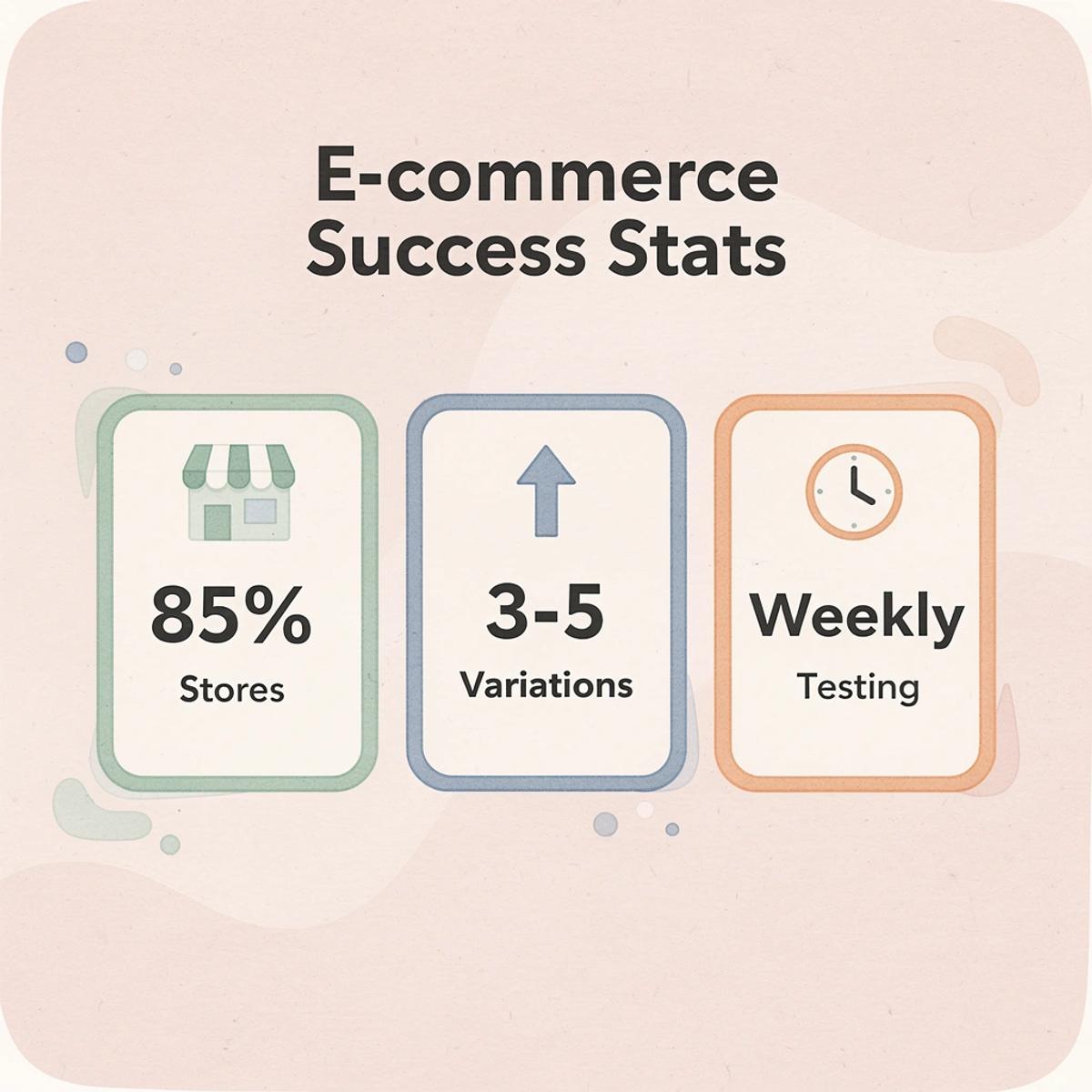
"85% of successful Shopify stores** launch 3-5 product page variations per week to stay ahead of competition." — E-commerce Growth Report, 2024
PagePilot solves this by providing pre-built templates optimized for SEO and conversions. Instead of starting from scratch, you get proven page structures that you can customize in minutes, not hours.
⚠️ Warning: Manual page building can take 2-4 hours per page. With PagePilot's automation, you can create the same quality pages in under 15 minutes.
Traditional Method vs PagePilot Method
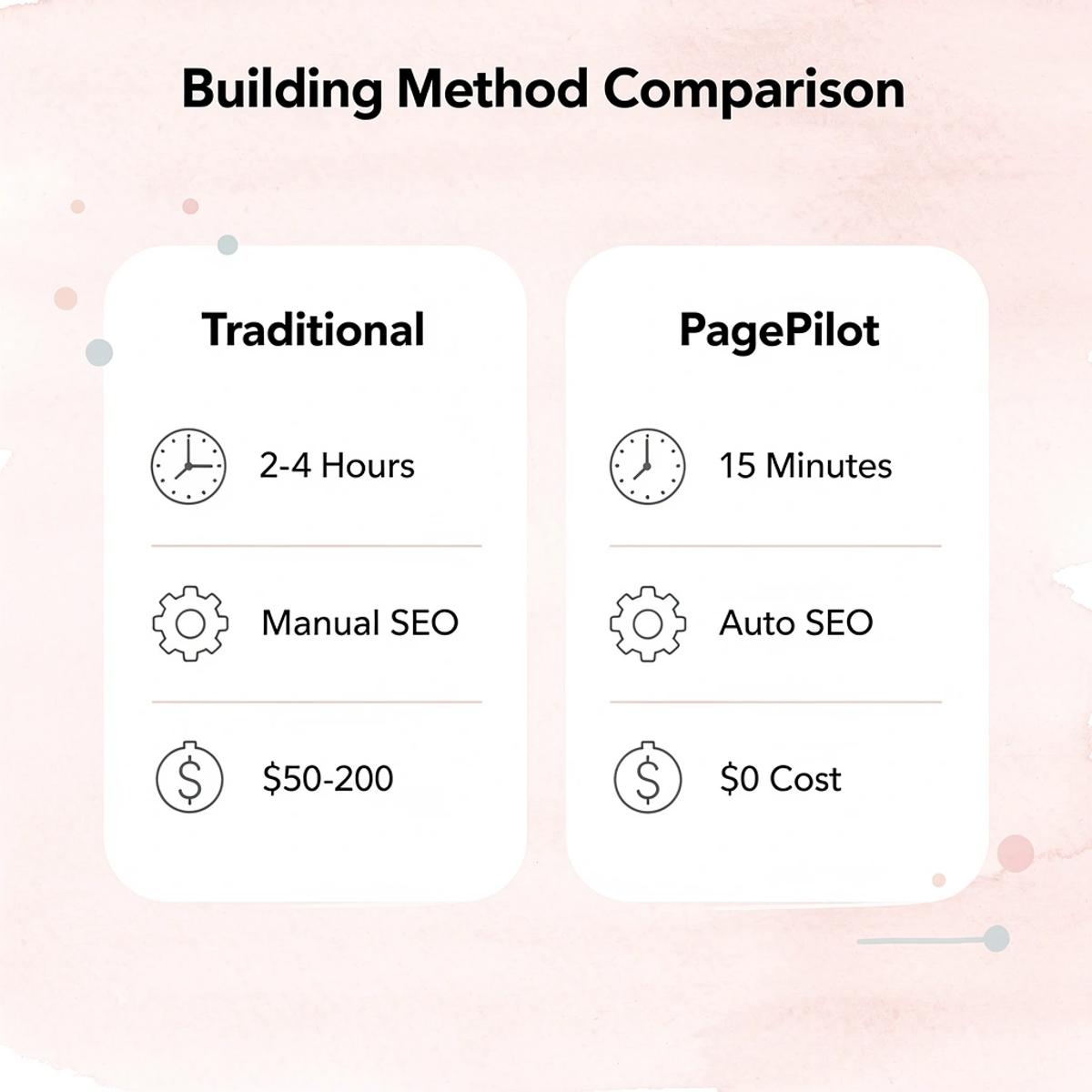
- Time per page
- Traditional: 2–4 hours per page
- PagePilot: ~15 minutes per page
- SEO
- Traditional: Manual SEO optimization required
- PagePilot: Automatic SEO built in
- Cost
- Traditional: $50–$200 designer cost per page
- PagePilot: $0 additional cost
- Templates
- Traditional: Limited templates
- PagePilot: 50+ proven templates
Consolidating Fragmented Workflows
Most stores use separate tools for each step of page creation: one for writing, another for images, a third for layout, plus additional tools for tracking performance and testing. Switching between tools causes delays, inconsistencies, and complicates decision-making.
Platforms like PagePilot consolidate this fragmented process into a single workflow. Input a competitor or supplier URL, and our AI page builder creates a complete product page with organized copy, distinct messaging, and optimized images aligned with conversion principles—all testable in minutes. That speed matters when evaluating dozens of products monthly or responding to seasonal trends before search volume peaks.
Creating Original, Intent-Driven Copy Automatically
Using supplier descriptions kills what makes your store different. When fifty stores use identical product text, Google's algorithms struggle to distinguish them, and shoppers see indistinguishable products. Hand rewriting takes considerable time, so most stores skip it or make minor changes that don't resolve the duplication problem.
How does automated copy generation improve rankings and conversions?
Automated copy generation creates benefit-focused content that speaks to specific buyer outcomes rather than generic features. Instead of "wireless earbuds with Bluetooth 5.0," you get "earbuds that stay secure during intense workouts without constant readjustment." This shift from specification to application improves both ranking and conversion.
According to PagePilot AI's Shopify App Store listing, merchants using the platform maintain a 4.9/5-star rating, indicating that the generated content meets quality thresholds.
Differentiating Visuals Without Competing On Identical Assets
Using the same product images as competitors makes your products look identical and signals lower quality before customers read anything. Getting unique photos for every product is expensive and time-consuming, especially when testing new products with uncertain sales potential.
AI-powered image enhancement creates visual differences without photoshoots or contractors. You can improve supplier images by adding context, lifestyle elements, or presentation improvements that make products feel unique. When shoppers compare tabs, your page must look like the premium choice.
How does rapid testing accelerate store optimization?
Most stores perfect one product page before launching, debating headlines and tweaking copy until it feels right. That approach optimizes for confidence rather than learning.
Generating multiple page variations in minutes transforms your approach. You can test different value propositions, headline angles, and content structures simultaneously. Instead of guessing which message resonates, you identify what converts through structured comparison.
What makes speed essential for conversion testing?
One store might test "longest battery life in its class" against "charges fully in 30 minutes" against "never dies mid-commute." The winning angle becomes your scaling template. Speed shortens the feedback loop between hypothesis and evidence.
But generating pages quickly matters only if they drive results when traffic arrives.
Related Reading
- Builder.ai Competitors
- How To Add Products To Shopify Page
- How To Add A Custom Popup In Shopify
- Best Shopify Plugins
- How To Edit Pages In Shopify
- Best Shopify Landing Pages
- Shopify Ai Apps
Start a FREE Trial and Generate 3 Product Pages with Our AI Page Builder today
If your pages aren't ranking or converting, start with a single test. Generate three product pages from a competitor URL using the AI page builder, each with upgraded copy and visuals built around different angles. PagePilot gets testable pages live in minutes, not days, so you can compare how search engines and real visitors respond to different value propositions.

💡 Tip: The fastest way to discover what converts is to test multiple page variations simultaneously rather than perfecting one page in isolation.
"The difference between stores that scale and stores that stall often comes down to how quickly you can move from hypothesis to evidence."

The difference between stores that scale and stores that stall often comes down to how quickly you move from hypothesis to evidence. When you compress the time between launching a page and learning what works, you gain the advantage of iteration while competitors debate headlines.
🔑 Takeaway: Speed of testing beats perfection of planning when it comes to discovering what actually drives conversions in your market.